Calm minds • Ages 2–8
Mindfulness Activities for Kids: 25 Simple, Calming Exercises for Ages 2–8 (+ Free Breathing Cards)
Some days your child seems to go from zero to sixty in a heartbeat: a sock that feels wrong, a tower that falls, a sibling who looked at them. And some days you feel the same way. Mindfulness won’t make big feelings disappear, but it can give both of you a pause button. This guide shares 25 simple mindfulness activities for kids, what pediatricians suggest about how long to practice, an age-by-age guide, a gentle 7-day starter plan and free printable breathing cards.
🌟 By the end of this page you’ll have…
- what mindfulness means for young kids, in plain language
- what the research and pediatricians actually say (honestly, without hype)
- 25 mindfulness activities: breathing, senses, movement, creative and bedtime ideas
- a 5-minute daily routine and a gentle 7-day starter plan
- a free 3-page printable: six breathing cards, a 5-4-3-2-1 senses page and a mindful coloring page
🎨 New here? Hi, we’re ColorJoy
ColorJoy is a small, family-focused site that makes bold, easy coloring books and printables for little hands, and writes practical, screen-light guides for parents. Every guide includes a free printable. Our books are on Amazon (author name Mr A G). For more calm-down help, see our overstimulated toddler guide and quiet time activities.

⭐ Featured ColorJoy book for this guide
Calming Mindful Coloring Book for All Ages
Relaxing patterns, mandalas and peaceful nature scenes with thick lines and single-sided pages, made for slowing down together: kids, teens and grown-ups.
See it on Amazon ($9.99) →Our own book; we earn money if you buy it.
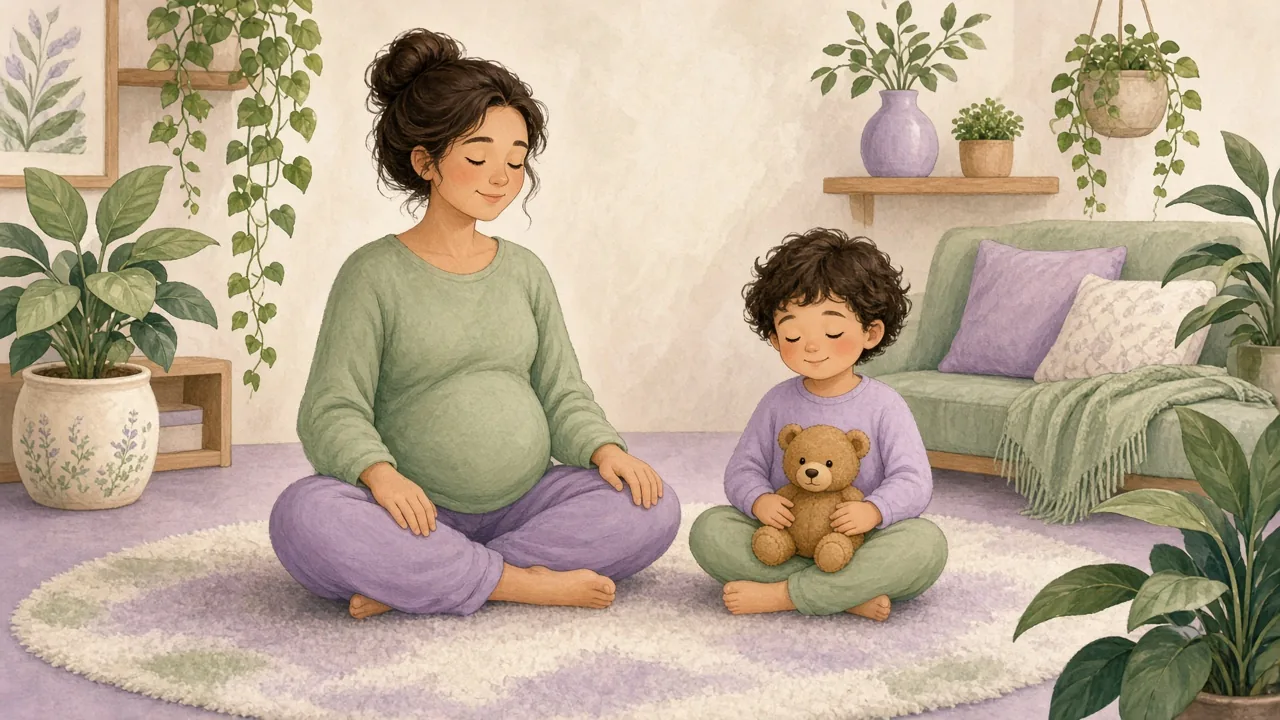
Real-life moments
Sound familiar?
Mindfulness is most useful in ordinary, messy moments like these.
The after-school explosion
Your five-year-old held it together all day at school. Thirty seconds after getting in the car, they’re crying because their water bottle is the “wrong” one.
Try this: offer a snack and a quiet “balloon breath” together before you ask about their day.
The bedtime motor
The lights are off, but your four-year-old is wide awake, wiggling, talking and asking for “one more” everything.
Try this: try a teddy-on-the-tummy breathing ride or a slow body scan in a whisper voice.
The grown-up who’s running on empty
It’s 6 p.m. Dinner is burning, the baby is crying, and you just snapped at your preschooler. You feel awful.
Try this: take three slow breaths out loud. Kids learn calm by watching you find it.
The basics
What mindfulness means for young kids
Mindfulness simply means paying attention to what’s happening right now, on purpose, with kindness. For a young child, that might mean noticing their breath going in and out, listening for three sounds outside the window, feeling the cool grass under their feet or watching a crayon fill a shape slowly.
It isn’t about sitting perfectly still or making the mind “empty.” Toddlers and preschoolers are wiggly by design. For them, mindfulness is short, playful and often moving. The goal is a tiny pause: a moment to notice, breathe and choose what comes next.
🧠 How the AAP describes it
HealthyChildren.org, from the American Academy of Pediatrics, explains that mindfulness meditation on the breath involves sitting quietly, resting or closing your eyes and bringing attention to your breath, gently bringing it back when it drifts. It also notes that sitting still can be hard for some kids, so movement-based practice like yoga may be a good introduction (HealthyChildren.org).
The evidence
What the research says (honestly)
You’ll see big promises about mindfulness online. Here’s what trustworthy sources actually say:
- The AAP encourages parents to share meditation with their children and teachers to include mindfulness in lessons, and notes that meditation practices are generally safe (HealthyChildren.org).
- The AAP also lists mindfulness practices like belly breathing, gratitude and noticing the five senses as ways that can help calm the stress response and support self-regulation (HealthyChildren.org).
- The National Center for Complementary and Integrative Health (NIH) says mindfulness, yoga, guided imagery and biofeedback are among the mind and body practices with the best evidence of being effective for children, and are low-risk (NCCIH).
- A 2026 systematic review for the U.S. Agency for Healthcare Research and Quality found that school- and community-based mindfulness programs produce small, short-term benefits compared with no program. For 3- to 8-year-olds, that meant improved behavior and social skills. It also found mindfulness didn’t clearly beat other structured programs like social-emotional learning, and that evidence has limitations (AHRQ review).
In other words: mindfulness is a gentle, low-risk tool that may help, especially as one part of a warm, predictable routine. It’s not a cure-all, and it’s not a replacement for professional help.
💬 When to talk to someone
The AAP suggests talking with your child’s pediatrician before adding meditation practices to their wellness routine. If your child’s worries, tantrums, sleep or mood are affecting daily life, or you’re worried, reach out to your pediatrician or a licensed mental health professional.
By age
By age: how long to practice and what works
Pediatricians typically recommend a few minutes a day for preschool children and 3–10 minutes twice a day for grade-school children (HealthyChildren.org). Start smaller than you think. One minute that goes well is better than ten that end in tears.
| Age | Realistic length | What works best | Try first |
|---|---|---|---|
| 2–3 years | 30 seconds to 1 minute, a few times a day | Copying you, movement, sensory play, silly sounds | Smell the flower, blow the candle; bubble breathing; bunny breaths |
| 3–4 years | 1–3 minutes | Stories, pretend play, animals, props like a teddy or pinwheel | Teddy ride, turtle shell, listening walk |
| 5–6 years | 3–5 minutes | Games, simple counting, coloring, choices | Starfish hand, 5-4-3-2-1 senses, mindful coloring |
| 7–8 years | About 5–10 minutes, once or twice a day | Understanding why, journaling or drawing feelings, leading the practice | Body scan, gratitude list, “teach me a breath” role swap |
💡 Practice when it’s calm
The best time to learn a breathing exercise is when your child is already relaxed: at breakfast, in the bath, at bedtime. Then the skill is “ready” for harder moments. Trying a brand-new exercise in the middle of a meltdown rarely works.

Breathe
5 breathing exercises for kids
Breathing is the heart of most mindfulness for kids, and the AAP suggests adding deep breathing to the bedtime routine and using it as children learn to manage strong emotions (HealthyChildren.org). These five are all on our free printable cards.
- Balloon breathHands on the belly. Breathe in through the nose and fill your belly like a balloon. Let it out slowly with a “sssss.”
- Smell the flower, blow the candlePretend to sniff a flower, then gently blow out a birthday candle. A favorite for toddlers.
- Bunny breathsThree quick sniffs in through the nose, then one long breath out. Great for kids who need to move.
- Starfish handTrace up and down each finger of an open hand, breathing in on the way up and out on the way down. Five fingers, five breaths.
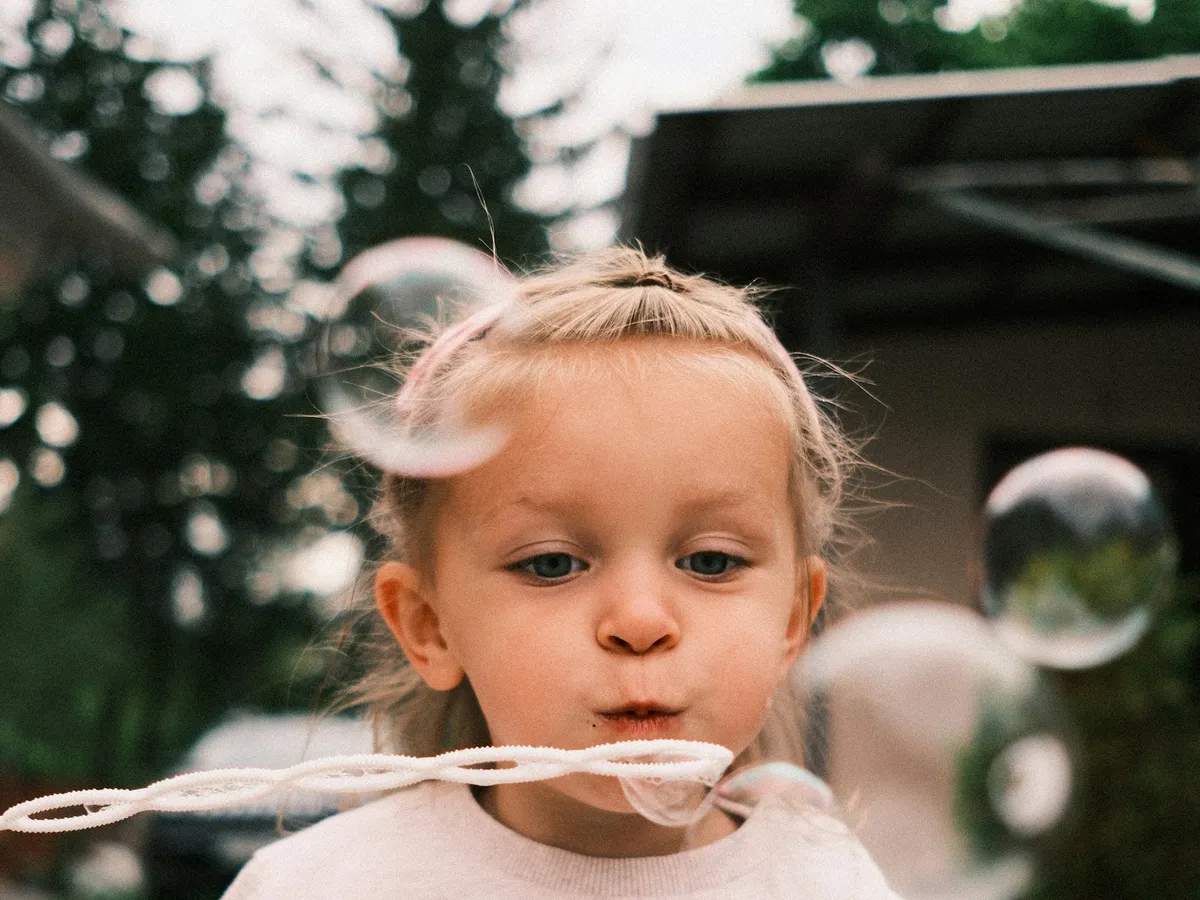
- Bubble breathingBlow bubbles slowly to make the biggest bubble you can. Slow breath out = bigger bubble.
🪄 Parent hack
Give each breath a picture and a name, and keep the cards in one spot (on the fridge, in a calm corner, by the bed). In a hard moment, you can just hold up a card instead of talking. Fewer words often work better when emotions are high.
Notice
5 senses activities that bring kids back to “right now”
Noticing the five senses is one of the mindfulness practices the AAP mentions (HealthyChildren.org). These games are especially good for curious preschoolers.
- 5-4-3-2-1 sensesName 5 things you see, 4 you can feel, 3 you hear, 2 you smell and 1 you taste. Our printable has a page for it.
- Listening walkWalk slowly and quietly. Stop every so often and whisper what you hear: a bird, a car, leaves, your own steps.
- Mindful snackEat one raisin, apple slice or cracker very slowly. How does it look, smell, sound and taste?
- Feely bagPut a few safe objects in a bag. Your child feels one without looking and describes it: bumpy, soft, cold.
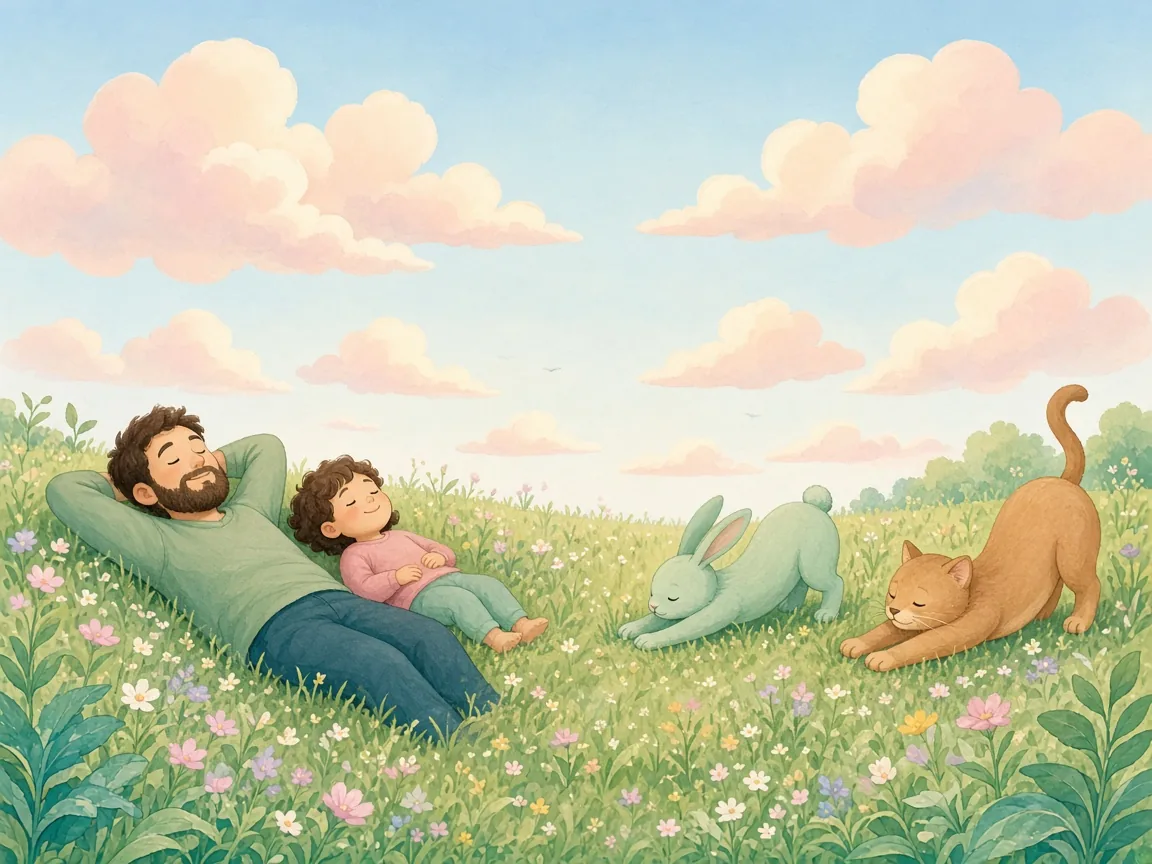
- Cloud and sky watchingLie on a blanket and watch the clouds. What shapes do you see? How slowly do they move?


Move
5 mindful movement activities for wiggly kids
For many young kids, moving is easier than sitting. The AAP notes that movement-based practice like yoga may be a good introduction for children who find sitting still difficult (HealthyChildren.org).
- Animal yogaCat, cow, cobra (snake), dog and butterfly poses. Hiss, meow and flutter as you go.
- Slow-motion walkWalk across the room as slowly as you can, feeling your heel, then toes. Like walking on the moon.
- Tree poseStand tall, put one foot against the other ankle or leg, and sway like a tree in the wind. Hold for three breaths.
- Shake it offShake your hands, arms, legs and whole body for ten seconds, then freeze and notice how your body feels.
- Squeeze and releaseSqueeze your fists like lemons for five seconds, then let go. Try shoulders, toes and face too.
For bigger energy, try our indoor gross motor activities first, then finish with one slow movement to cool down.

Create
Mindful coloring and art: 5 creative activities
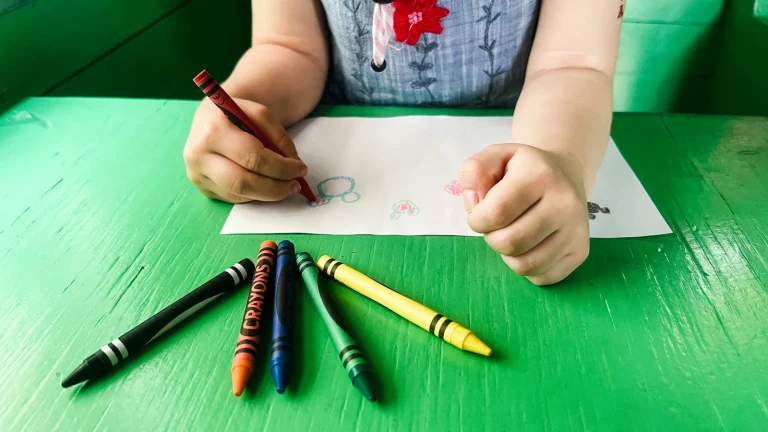
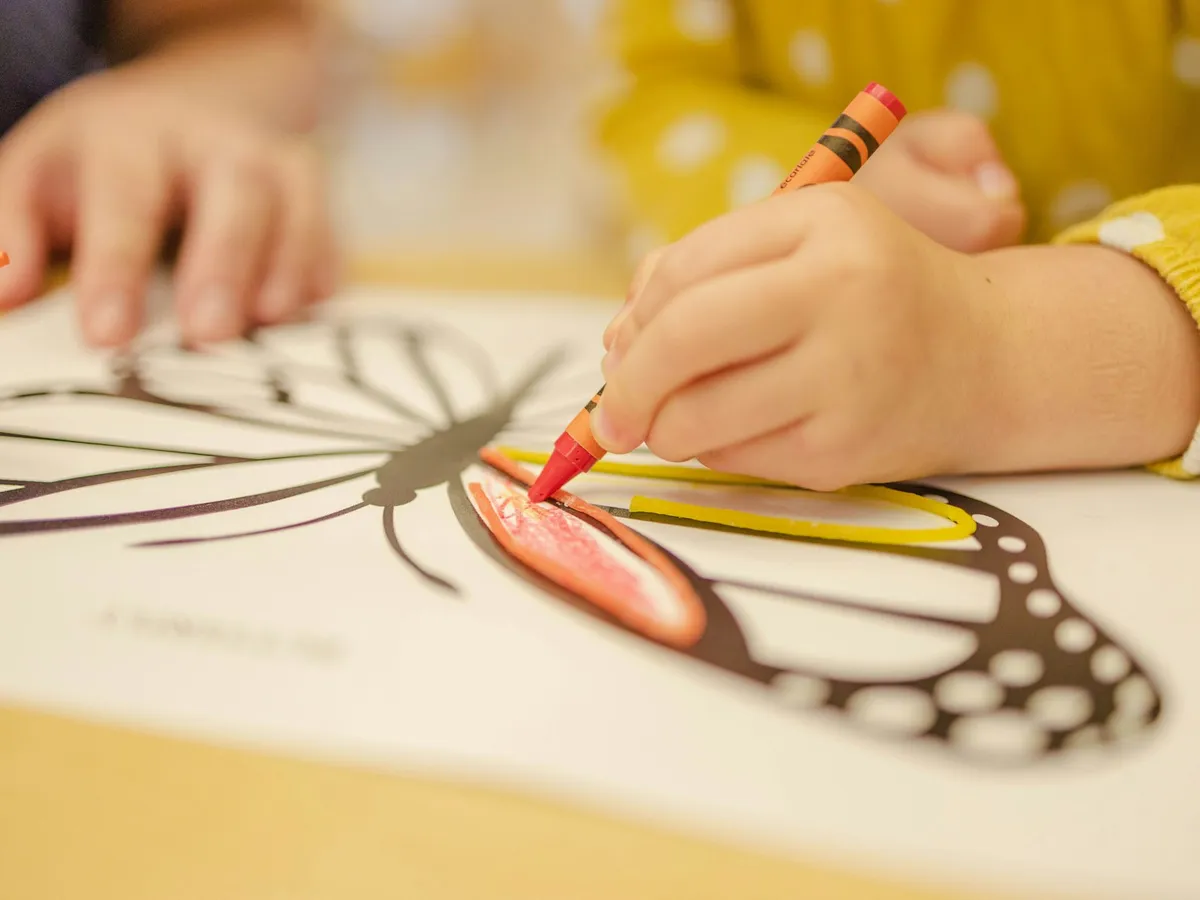
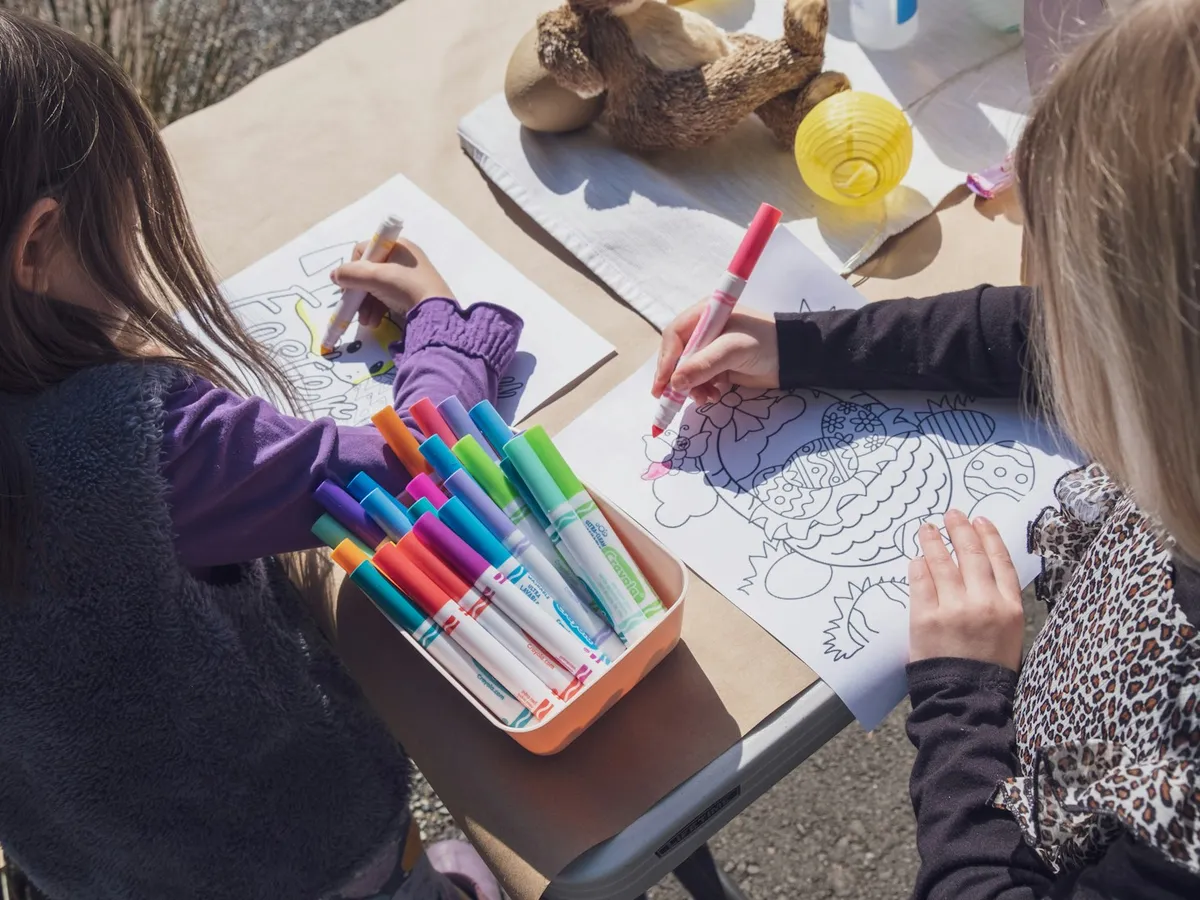
- Mindful coloringColor slowly, noticing the crayon, the sound and each color filling a space (see the step-by-step below).
- Glitter jar watchingShake a sealed glitter jar and watch the glitter slowly settle, like busy thoughts calming down.
- Feelings drawingDraw how your body feels right now: a storm, a sunny sky, a bouncy ball. No right answers.
- Gratitude drawingDraw one thing that made you smile today. Older kids can add a word or two.
- Play dough squeezeRoll, press and squeeze play dough slowly while you breathe. Notice how it feels in your hands.
How to do mindful coloring with your child, step by step
- Set the scene. Clear a small space, dim bright lights if you can, and put away screens.
- Choose a simple page. Bold, thick lines and big shapes are easiest for young children: a butterfly, a flower, a simple pattern.
- Take three breaths first. Balloon breath, together.
- Color slowly. Invite your child to notice the crayon in their fingers, the sound it makes and how the color fills each space.
- Wandering is okay. If they start chatting or rushing, gently come back: “Let’s choose a color for the next wing.”
- Finish kindly. No grading or fixing. Ask, “How does your body feel now?”

📘 From the ColorJoy shelf
Made for slowing down
Our Calming Mindful Coloring Book has relaxing patterns, mandalas and peaceful nature scenes with thick lines, single-sided pages and a handy 6 × 9 size. Kids, teens and grown-ups can color side by side.
See it on Amazon ($9.99) →Our own book; we earn money if you buy it.
Wind down
5 bedtime mindfulness activities
The AAP suggests trying deep breathing as part of your child’s daily bedtime routine, both to wind down and to make it easier to use in other situations (HealthyChildren.org).
- Teddy rideLie down with a teddy on the tummy and watch it rise and fall. Can you rock it to sleep with your breathing?
- Body scanIn a whisper voice, “visit” each part of the body from toes to head and let it get heavy and sleepy.
- Three good thingsName three good things from today. Big kids can add one thing they’re looking forward to tomorrow.
- Turtle shellCurl up small in your “shell,” take three slow breaths, then stretch out long under the blanket.
- Goodnight sensesWhisper one thing you can hear, one you can feel (the soft blanket) and one you can see in the dim room.
If bedtime is a nightly battle, our 7-night toddler sleep routine pairs well with these, and a picture-based daily routine chart helps kids know what comes next.

Hard moments
Using mindfulness in big-feeling moments
Mindfulness works best as a skill you practice in calm times and then use gently in hard ones. During a meltdown, your child needs you first, and the breathing second.
- Stay close and calm. Your calm body is the first tool. Lower your voice and get down to their level.
- Breathe out loud yourself. Don’t ask them to breathe yet. Just do a slow balloon breath where they can see and hear it.
- Name the feeling. “You’re so frustrated. The tower fell down.”
- Offer one tool. When the storm passes a little, hold up a card: “Want to blow out the candle with me?”
- Reconnect after. A hug, a drink of water, then talk (briefly) once everyone is calm.
💛 It’s okay if it doesn’t “work”
Some days your child will refuse every breath. That’s normal. You’re still showing them, over and over, that big feelings can be handled. Our guide to toddler hitting and big feelings has more gentle scripts.

Your week
A gentle 7-day mindfulness starter plan
Try one small practice each day this week. Five minutes or less. Do it at the same time each day (after breakfast or at bedtime is easiest).
| Day | Practice | Time |
|---|---|---|
| Day 1 | Smell the flower, blow the candle (5 rounds) | 1 minute |
| Day 2 | Listening walk around the block or the yard | 5 minutes |
| Day 3 | Mindful snack: one apple slice, very slowly | 2 minutes |
| Day 4 | Animal yoga: cat, cow, snake, butterfly | 5 minutes |
| Day 5 | Mindful coloring: one butterfly or pattern page | 5–10 minutes |
| Day 6 | 5-4-3-2-1 senses on a walk or in the car | 3 minutes |
| Day 7 | Teddy ride and three good things at bedtime | 3 minutes |
- Print the breathing cards and put them somewhere visible
- Pick one daily time slot
- Do it with your child (they copy you)
- Keep it short and stop while it’s still fun
- Notice and praise effort: “You took such slow breaths!”

Freebie
Free printable: breathing cards, senses page and mindful coloring
🎁 Free printable
The ColorJoy Calm Kids Pack (3 pages)
Page 1 has six picture breathing cards: balloon breath, smell the flower and blow the candle, bunny breaths, starfish hand, teddy ride and turtle shell. Page 2 is a 5-4-3-2-1 senses calm-down page with a feelings check. Page 3 is a slow-down butterfly coloring page from our Magical Butterfly Coloring Book.

Download the free printable (PDF) →
Free for personal and classroom use. No email or sign-up needed.
We share a new free printable every week. If this one helps, you might also like our gratitude activities (gratitude is another AAP-mentioned practice) and how to reduce screen time without the meltdowns.
Your plan
What to do tonight (about 10 minutes)
Start small. Tonight is about one calm, connected moment.
3 minutes
Teach one breath at bedtime
Try “smell the flower, blow the candle” five times, together, in a whisper.
3 minutes
Three good things
Lights low, share three good things from today. You go first.
2 minutes
Breathe for you
After lights out, take three slow breaths yourself. You matter too.
💛 Be kind to yourself
Mindfulness isn’t one more thing to get right. It’s a few gentle seconds where you and your child notice the world, and each other.
From the ColorJoy shelf
Our calm-down pick: Calming Mindful Coloring Book for All Ages
Our calm-down pick
Calming Mindful Coloring Book for All Ages: Relaxing Patterns, Mandalas & Nature Scenes
Soothing patterns, mandalas and peaceful nature scenes with thick lines and single-sided pages. Made for quiet evenings, self-care time and family coloring.
$9.99paperback · 69 pages · 6 × 9 in · all ages
Our own book; we earn money if you buy it. Price as listed on Amazon.com when we checked on 26 October 2026; please confirm on the product page.
Here’s how it fits this guide. Mindful coloring is one of the easiest ways to bring mindfulness into an ordinary day, because it doesn’t ask a child to sit still and “do nothing.” Their hands are busy, their eyes are focused, and their breathing naturally slows. This book gives you calm, thick-line pages that work for that, and because it’s made for all ages, you can color right beside your child. That’s the real magic: they learn calm by sharing it with you.
Pages with simpler shapes suit preschoolers; patterns and mandalas give older kids and grown-ups something more absorbing. Keep it in your calm corner with a small box of crayons. Browse every title in the Mr A G author store on Amazon. Prefer printables? Our Kids Printable Mega Bundle on Payhip ($14.99) has 11 coloring, tracing and flashcard PDFs (a separate product, not this book).
📚 Related books from ColorJoy
If this topic is on your mind, these titles from our own shelf fit well alongside it.
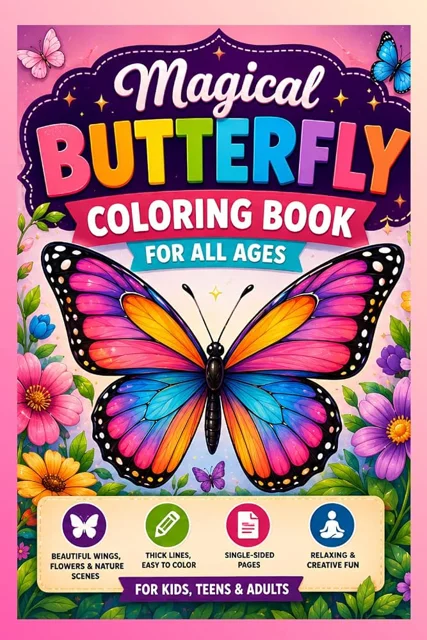
Magical Butterfly Coloring Book for All Ages
Bold, thick-line butterflies, flowers and nature scenes for all ages: the art on our free mindful coloring page comes from this book.
$8.99 paperback on Amazon.com · Paperback, shipped by Amazon

Understanding Your Child’s Emotions (PDF guide)
A plain-language parenting guide to children’s emotional development, ages 0–12, for understanding what’s behind big feelings.
$5.99 printable PDF on Payhip · Instant PDF download; print at home
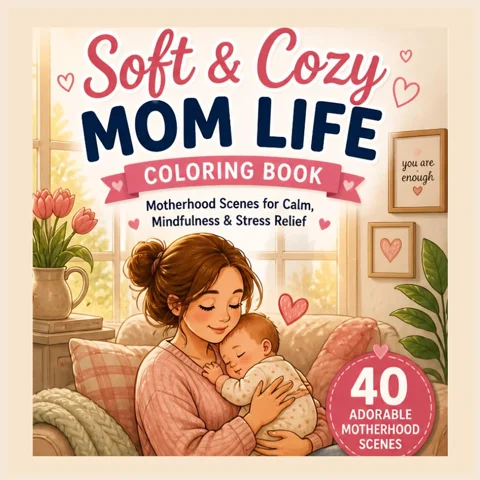
Soft & Cozy Mom Life Coloring Book
Cozy motherhood scenes for calm and stress relief, so parents can color alongside their kids.
$9.99 paperback on Amazon.com · Paperback, shipped by Amazon
These are our own books and printables, and we earn money if you buy them. Prices as listed on Amazon.com and Payhip when we checked on 26 October 2026; prices can change, so please confirm on the product page.
Frequently asked questions
What are some easy mindfulness activities for kids?
Easy mindfulness activities for kids include balloon breathing, “smell the flower, blow the candle,” bubble breathing, a listening walk, the 5-4-3-2-1 senses game, animal yoga, mindful coloring, cloud watching, a mindful snack and a teddy-on-the-tummy breathing ride at bedtime.
How long should kids practice mindfulness?
Pediatricians typically recommend a few minutes a day for preschool children and 3 to 10 minutes twice a day for grade-school children, according to HealthyChildren.org from the American Academy of Pediatrics. Toddlers do best with 30 seconds to a minute at a time.
At what age can kids start mindfulness?
Even toddlers can try simple, playful mindfulness like copying a grown-up’s slow breaths, blowing bubbles slowly or noticing sounds on a walk. Keep it very short, make it a game and practice when your child is already calm.
Does mindfulness really help children?
Trusted sources describe mindfulness as low-risk with some evidence of benefit. A 2026 systematic review for AHRQ found small, short-term benefits from school and community programs, including improved behavior and social skills in 3- to 8-year-olds, but no clear advantage over other structured programs. It works best as one part of a warm routine.
Is coloring a mindfulness activity?
Coloring can be a mindfulness activity when it’s done slowly and with attention: noticing the crayon, the colors and the shapes, and gently coming back when the mind wanders. Simple, thick-line pages are best for young children.
What should I do if my child won’t do breathing exercises?
Don’t force it. Practice at calm times, do the breathing yourself where your child can see, use playful versions like bubbles or a teddy ride, offer a choice of two exercises and keep sessions very short. If you’re worried about your child’s emotions or behavior, talk with your pediatrician.
Breathe in, breathe out 🦋
ColorJoy makes bold, easy coloring books and free printables for little hands, plus practical, warm guides for parents. New guides and printables go up every week, so come back soon.
For calm, side-by-side coloring, our pick is the Calming Mindful Coloring Book for All Ages.
Get the Calming Mindful Coloring Book →
Next up: independent play ideas that stick or the Magical Butterfly Coloring Book.
Photos: Unsplash (Unsplash License). Illustrations: AI-generated for ColorJoy. Book images and printable art: ColorJoy / Mr A G. This guide is general information, not medical or mental health advice.