Rainy-day rescue • Ages 1–5
Indoor Gross Motor Activities for Toddlers and Preschoolers: 30 Energy-Burning Ideas for Cold, Rainy Days (+ Free Move Cards)
It’s cold, it’s dark by dinnertime, and your toddler is bouncing off the couch, literally. Little bodies need to move, and winter makes that hard. This cheat sheet gives you 30 indoor gross motor activities that burn energy safely in a normal living room, sorted by skill and age, plus a 10-minute obstacle course, a weekly move plan and free printable animal move cards.

🌟 By the end of this page you’ll have…
- what gross motor skills are and how much active play U.S. guidelines suggest for little kids
- CDC movement milestones from 18 months to 5 years, with indoor activities matched to each age
- a 5-minute safety setup so big-body play doesn’t end in tears (or a broken lamp)
- 30 indoor activities sorted by skill: jumping, balance, crawling, ball skills, dance and animal moves
- a free 3-page printable: animal move cards with art from our coloring books, an obstacle course planner and wiggle bingo
🎨 New here? Hi, we’re ColorJoy
ColorJoy is a small family-focused site that makes bold, easy coloring books and printables for little hands, and writes practical, screen-light guides for parents. Every guide includes a free printable. Our books are on Amazon (author name Mr A G) and our printables are on Payhip. For calmer indoor days, see our quiet time activities and fine motor activities.
⭐ Featured ColorJoy book for this guide
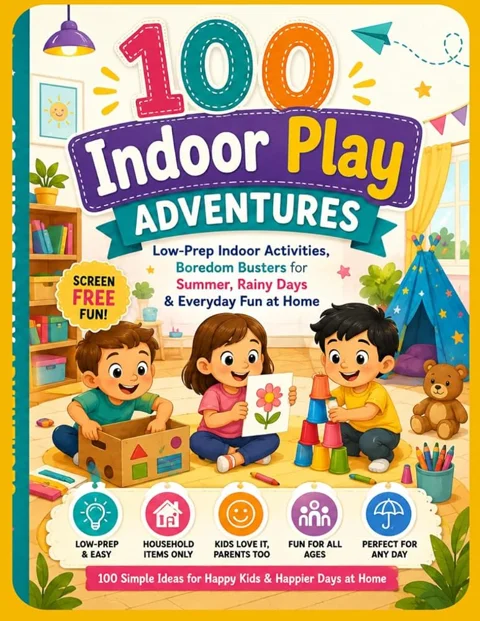
100 Indoor Play Adventures
One hundred low-prep, screen-free indoor activities using everyday household items, including ideas that burn energy and calm-down options, for kids about 3 to 11.
See it on Amazon ($14.99) →Our own book; we earn money if you buy it.
Real-life moments
Sound familiar?
If your home feels like a bounce house by 4 p.m., you’re in very good company.
The couch launch
Your toddler has discovered that the sofa cushions make an excellent runway. You’ve said “we don’t jump on the couch” eleven times today.
Try this: give the energy a yes: pull the cushions onto the floor and make a “lily pad” jumping path.
The 4 p.m. wild hour
Dinner isn’t ready, it’s already dark outside, and your preschooler is running laps around the kitchen island, shrieking.
Try this: try a 10-minute obstacle course or a freeze-dance song before you start cooking.
The snow day that lasts forever
School is canceled, it’s too cold to stay outside long, and by 10 a.m. everyone has run out of ideas.
Try this: grab the move cards and wiggle bingo from our free printable and let your child pick the next move.
The why
Why big-body play matters (especially in winter)
Gross motor skills use the large muscles of the body: arms, legs and core. Walking, running, jumping, climbing, throwing, kicking and balancing all count. They help children move confidently, and they’re the foundation for playground fun, sports and even sitting still at a table.
The CDC says children aged 3 to 5 should be physically active throughout the day, and that grown-ups should encourage active play, like jumping or riding a tricycle (CDC). The U.S. Physical Activity Guidelines don’t set an exact number for preschoolers, but a summary in JAMA notes that a reasonable target may be about 3 hours a day of activity at any intensity, light, moderate or vigorous (Physical Activity Guidelines summary). That’s spread across the whole day, not one long session, and it includes ordinary play.
🧠 The winter problem
When it’s cold, wet or dark early, kids lose a lot of their easy, everyday movement: the playground, the walk to the car, running in the yard. Indoor gross motor games put some of that movement back, and an active afternoon can make for a calmer evening.
By age
Movement milestones and indoor ideas by age
These milestones come from the CDC’s “Learn the Signs. Act Early.” program and show what most children (75% or more) can do by each age. Use them to pick activities that fit, not as a test.
| Age | Most children can… (CDC) | Indoor activities to try | Watch out for |
|---|---|---|---|
| 18 months | Walk without holding on; climb on and off a couch or chair without help (CDC) | Push a laundry basket, cushion climbing, rolling a ball back and forth | Climbing onto high furniture |
| 2 years | Kick a ball, run, and walk up a few stairs with or without help (CDC) | Soft ball kicking, follow the leader, stair practice holding hands | Running on slippery floors in socks |
| 30 months | Jump off the ground with both feet (CDC) | Pillow jumps, bunny hops, freeze dance | Jumping from furniture |
| 4 years | Catch a large ball most of the time (CDC) | Balloon keep-up, beach ball catch, bean bag toss | Hard balls near windows and TVs |
| 5 years | Hop on one foot (CDC) | Tape hopscotch, one-foot balance challenges, obstacle courses with rules | Wobbly step stools as obstacles |
💬 If you have concerns
The CDC encourages parents to talk to their child’s doctor if a child isn’t meeting milestones, loses skills, or if something worries you. You know your child best.
Safety first
The 5-minute safety setup
Big-body play indoors is wonderful, as long as the room is ready for it. Do this quick sweep before you start.
- Anchor furniture and TVs. The U.S. Consumer Product Safety Commission’s Anchor It! campaign urges families to secure TVs, dressers and bookcases so they can’t tip over (AnchorIt.gov).
- Clear a play zone. Push the coffee table aside, move breakables, and check for sharp corners.
- Socks off or grippy socks on. Bare feet or grip socks are safer on hard floors than regular socks.
- Soft equipment only. Pillows, cushions, balloons, soft balls, rolled-up socks and painter’s tape.
- Balloons need supervision. Never leave a young child alone with a balloon, and pick up broken pieces right away.
- No jumping from furniture. Jump on the floor, onto cushions, and over low lines instead.
- Stay close. Toddlers need a grown-up within arm’s reach for climbing and balance games.
The cheat sheet
30 indoor gross motor activities
Thirty ideas, grouped by skill. You don’t need to do them all. Pick two or three, or let your child choose with the free move cards.
Jump and hop
- Lily pad jumpsLay pillows or paper plates across the floor and jump from one to the next without touching the “water.”
- Painter’s tape hopscotchTape a hopscotch grid on the floor. Toddlers jump with two feet; 4–5 year olds try hopping on one.
- Bunny hop raceHop like a bunny from the couch to the door. Then hop backwards.
- Jump the riverMake two tape lines close together and jump over the “river.” Move them farther apart each round.
- PopcornCrouch down small, then “pop” up as high as you can when the grown-up says “POP!”
Balance
- Tape balance beamStick a long line of painter’s tape on the floor and walk it forward, sideways, backwards and on tiptoes.
- Statue freezeDance, then freeze in a funny pose. Can you hold it while everyone counts to five?
- Flamingo standStand on one foot like a flamingo. Count how long you can balance, then switch feet.
- Bean bag head walkWalk across the room with a small pillow or bean bag balanced on your head.
- Follow the leaderThe CDC suggests walking in a line, turning, walking backwards and tiptoeing for 2-year-olds, then letting your child lead.

Crawl and climb
- Couch cushion mountainPile cushions on the floor (not on the couch) and let your toddler climb up and slide down.
- Table tunnelDrape a blanket over a table and crawl through. Add a cardboard box tunnel at the end.
- Bear crawl and crab walkWalk on hands and feet, tummy down (bear) and tummy up (crab). Race across the room.
- Laser mazeTape crepe paper or yarn across a hallway at different heights and crawl or step through without touching it.
- Laundry basket pushFill a basket with stuffed animals and push it around a “track.” Great for new walkers.

📘 From the ColorJoy shelf
Need 100 more ideas?
Our 100 Indoor Play Adventures book is packed with low-prep indoor activities, including ideas that burn energy and calmer ones for winding down. Open any page and start playing.
See it on Amazon ($14.99) →Our own book; we earn money if you buy it.
Throw, catch and kick
- Balloon keep-upKeep a balloon off the floor with hands, heads and knees. Count your hits together.
- Sock basketballRoll socks into balls and throw them into a laundry basket. Step back after each basket.
- Soft ball soccerKick a soft ball between two shoes or into a cardboard box goal.
- Bowling alleySet up empty plastic bottles or paper cups in the hallway and roll a ball to knock them down.
- Beach ball catchToss a big, light beach ball back and forth. Start very close, then take a step back.

Dance and music
- Freeze dancePlay music and dance. When it stops, freeze! The CDC’s tips for 5-year-olds include playing music and dancing together.
- Scarf danceWave scarves or dish towels high, low, fast and slow to different songs.
- March like a bandStomp, march and play pretend instruments around the house.
- Simon Says movesSimon says jump, spin, touch your toes, reach for the ceiling.
- ParadeWalk like different characters in a parade: giant steps, tiny steps, robot steps, slow-motion steps.
Animal moves
- Lion pounceCrouch low, then pounce forward with a roar.
- Giraffe tiptoeStretch your arms up tall like a long neck and walk on tiptoes.
- Hippo stompBig, heavy stomps in place while counting to ten.
- Frog jumpsSquat low with hands on the floor and leap forward.
- Snake slitherLie on your tummy and wiggle across the floor.
Step by step
The 10-minute living-room obstacle course
An obstacle course combines many skills in one game and gives kids a clear goal. Here’s a simple version you can build in about five minutes.
- Crawl under the table tunnel (blanket over a table).
- Jump onto three pillow lily pads.
- Walk the tape-line balance beam without stepping off.
- Crab walk to the couch.
- Throw three rolled-up socks into a laundry basket.
- Spin once and freeze like a statue. Done!
🪄 Make it last longer
Time each run and write it down (the obstacle course planner in our free printable has a column for this). Kids love trying to beat their own time. Then let them redesign the course: planning it is great thinking practice too.
| Age | Make it easier or harder |
|---|---|
| 1–2 | Three stations only, hold hands on the beam, crawl instead of jump |
| 3 | Five or six stations, add bunny hops between them |
| 4–5 | Add one-foot hops, carry a ball on a spoon, go backwards, add a rule (“don’t touch the lava!”) |

Plan it
A weekly indoor move plan for cold months
A little routine makes movement automatic. Here’s a sample week of 15–20 minute “move breaks.” Two short breaks a day work well for many families: one mid-morning, one in the late afternoon.
| Day | Morning move break | Late-afternoon move break |
|---|---|---|
| Monday | Freeze dance (3 songs) | Tape balance beam challenges |
| Tuesday | Animal move cards | Sock basketball |
| Wednesday | Lily pad jumps | Obstacle course (beat your time) |
| Thursday | Follow the leader | Balloon keep-up and bowling alley |
| Friday | Wiggle bingo | Family parade and scarf dance |
| Weekend | Outdoor walk if weather allows | Kids design their own obstacle course |
💡 Let them choose
The CDC’s tips for 5-year-olds note that children have more fun when they can choose the activity. Offer two choices (“Freeze dance or animal moves?”) and let your child decide.

Wind down
Move first, then calm down
Active play is great for sleep, with one catch: timing. The American Academy of Pediatrics notes that getting enough exercise during the day can help kids sleep better, but suggests avoiding too much physical activity close to bedtime and choosing quiet activities like stretching or yoga later in the day (HealthyChildren.org).
- End each move session with a “cool down”: three slow stretches and three big breaths.
- Keep the wildest games (obstacle courses, freeze dance) to the morning and afternoon.
- After dinner, switch to slow moves: animal yoga, a quiet parade, or a coloring page.
- Dim the lights and lower the music as bedtime gets closer.
With daylight saving time ending on November 1 and evenings getting darker, a solid afternoon move break plus a calm evening routine can help. Our overstimulated toddler guide has more calming ideas for wound-up evenings, and our 7-night sleep routine helps with bedtime.

Checklist
Printable move kit checklist
Keep these things in one basket or bin so you can start a move break in seconds. Most are already in your home.
- Painter’s tape (for lines, beams and hopscotch)
- 2–4 balloons (adult supervision)
- A soft ball and a beach ball
- Rolled-up socks or bean bags
- A laundry basket
- Scarves or dish towels
- Paper plates for lily pads
- Empty plastic bottles for bowling
- A blanket for tunnels
- A music playlist of 5–6 favorite songs
- Our free move cards and wiggle bingo
- A timer (phone or kitchen timer)
Freebie
Free printable: animal move cards, obstacle course planner and wiggle bingo
🎁 Free printable
The ColorJoy Indoor Move Pack (3 pages)
Page 1 has six animal move cards (lion pounce, giraffe tiptoe, hippo stomp, monkey jumps, rhino charge and snake slither) with animals from our Cute Wild Animals Coloring Book that kids can color later. Page 2 is a living-room obstacle course planner with a safety checklist. Page 3 is a 25-square wiggle bingo for rainy and snowy days.

Download the free printable (PDF) →
Free for personal and classroom use. No email or sign-up needed.
We add a free printable to every guide, and new ones go up every week. For more indoor ideas, see things to do when kids are bored, winter break activities at home and our guide to keeping kids happily busy indoors.
Your plan
What to do tonight (about 15 minutes)
Set up tomorrow’s move break tonight, while the kids are asleep.
5 minutes
Fill a move basket
Painter’s tape, a soft ball, rolled socks, two balloons and a scarf.
2 minutes
Do the safety sweep
Check that the TV and bookcases are anchored and clear a play zone.
5 minutes
Tape one line
Stick a balance-beam line in the hallway. Watch your child find it in the morning.
💛 Be kind to yourself
You don’t have to entertain your child all day. A couple of short, playful move breaks give their body what it needs, and give you a calmer afternoon.
From the ColorJoy shelf
Our indoor-days pick: 100 Indoor Play Adventures
Our indoor-days pick
100 Indoor Play Adventures: Low-Prep Indoor Activities & Boredom Busters
One hundred screen-free indoor activities that need almost no setup and use everyday household items, for rainy days, snow days, quiet afternoons and “I’m bored!” moments.
$14.99paperback · 53 pages · 8.5 × 11 in · ages 3–11
Our own book; we earn money if you buy it. Price as listed on Amazon.com when we checked on 25 October 2026; please confirm on the product page.
Here’s how it fits this guide. The 30 ideas above will carry you through a few weeks, but winter is long. This book gives you a whole shelf of backup plans in one place: indoor play ideas that burn energy, calm-down options for quieter times, and activities that use things you already have. Every idea is designed to start in minutes, which is exactly what you need at 4 p.m. on a dark, rainy Tuesday.
It’s written for parents, grandparents, babysitters and teachers, and works across a wide age range (listed for ages 3–11), so older siblings can join in too. Keep it in the move basket and let your child pick a page. Browse every title in the Mr A G author store on Amazon.
📚 Related books from ColorJoy
If this topic is on your mind, these titles from our own shelf fit well alongside it.

No-Prep Screen-Free Indoor Activities (printable PDF guide)
A separate printable guide of no-prep, screen-free indoor ideas with household items, including high-energy and calm options.
$6.99 printable PDF on Payhip · Instant PDF download; print at home
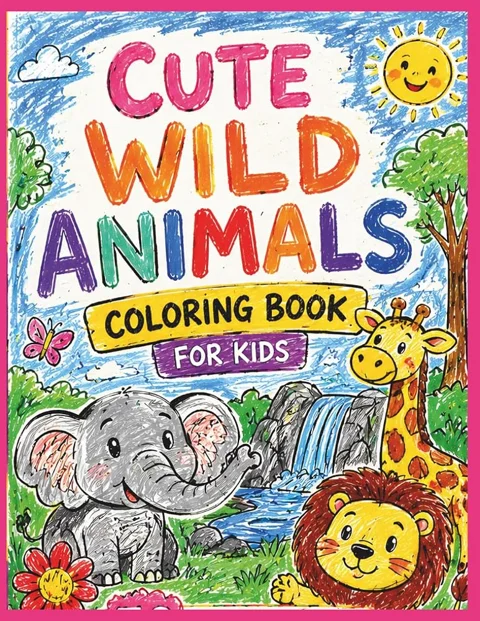
Cute Wild Animals Coloring Book (Ages 4–8)
The happy lions, giraffes and hippos on our free move cards come from this thick-line coloring book: a calm-down after the moves.
$12.99 paperback on Amazon.com · Paperback, shipped by Amazon
Preschool Coloring & Activity Bundle (printable PDF)
Seven kinds of printable preschool activities for quieter indoor time between move breaks.
$8.99 printable PDF on Payhip · Instant PDF download; print at home
These are our own books and printables, and we earn money if you buy them. Prices as listed on Amazon.com and Payhip when we checked on 25 October 2026; prices can change, so please confirm on the product page.
Frequently asked questions
What are gross motor activities for toddlers indoors?
Good indoor gross motor activities for toddlers include pillow lily pad jumps, a painter’s tape balance beam, crawling through a blanket tunnel, pushing a laundry basket, rolling or kicking a soft ball, balloon keep-up with supervision, freeze dance and animal walks like bear crawls and frog jumps.
How much active play does a preschooler need?
The CDC says children aged 3 to 5 should be physically active throughout the day. U.S. guidelines don’t set an exact number for this age, but a JAMA summary of the Physical Activity Guidelines suggests about 3 hours a day of activity at any intensity may be a reasonable target, spread across the day.
How can I burn my toddler’s energy inside on a rainy day?
Try a short obstacle course, freeze dance, lily pad jumps, sock basketball, animal moves or wiggle bingo. Two short move breaks, one in the morning and one in the afternoon, often work better than one long session.
Is it safe to do gross motor play indoors?
Yes, with a quick setup. Anchor TVs and furniture, clear a play zone, use soft equipment like pillows and balloons, have kids go barefoot or wear grip socks, avoid jumping from furniture, supervise balloons closely and stay within arm’s reach of toddlers.
What gross motor skills should a 2-year-old have?
According to the CDC, most children can kick a ball, run and walk up a few stairs with or without help by age 2, and jump off the ground with both feet by 30 months. Talk to your child’s doctor if you have concerns.
Should kids exercise before bed?
The American Academy of Pediatrics notes that exercise during the day can help kids sleep better, but suggests avoiding too much physical activity close to bedtime. Choose calm activities like stretching, yoga or coloring in the evening.
Happy wiggling 🦁
ColorJoy makes bold, easy coloring books and free printables for little hands, plus practical guides for parents. New guides and printables go up every week through the winter, so come back soon.
For a whole winter of indoor ideas, our pick is 100 Indoor Play Adventures: low-prep, screen-free and ready when you are.
Get 100 Indoor Play Adventures →
Next up: reduce screen time without the meltdowns or independent play ideas.
Photos: Unsplash (Unsplash License). Book images and printable art: ColorJoy / Mr A G. This guide is general information, not medical advice.