Thanksgiving • Ages 2–8
Gratitude Activities for Kids: 25 Thanksgiving Ideas That Actually Stick (+ Free Printable Pack)
You don’t want a child who mumbles “thank you” because you told them to. You want a child who notices kindness and feels it. This guide shows you how to grow that, gently, at the age your child is right now: 25 simple gratitude activities, a research-based four-step method, a Thanksgiving-week plan and a free printable pack to start with tonight.
🌟 By the end of this page you’ll have…
- a clear picture of what gratitude looks like at 2, 4, 6 and 8, so your expectations fit your child
- the Notice–Think–Feel–Do method from University of North Carolina researchers, with words you can borrow
- 25 gratitude activities for kids: at the table, crafts, out and about, bedtime and giving back
- a five-day Thanksgiving-week plan and what to say when your child seems ungrateful
- a free printable pack: a roll-a-thank-you cube, gratitude jar slips and a color-and-give thank-you card
🎨 New here? Hi, we’re ColorJoy
ColorJoy is a small family-focused site that makes bold, easy coloring books and printables for little hands, and writes practical, screen-light guides for the parents holding the crayons. Every guide comes with a free printable. Our own books (paperbacks on Amazon under the author name Mr A G, and printable PDFs on Payhip) are there if you want more. This guide is part of our Thanksgiving series, alongside Thanksgiving activities for toddlers and kids’ table ideas.

⭐ Featured ColorJoy book for this guide
Delicious Food Coloring Book
Home cooking, snacks, meals and desserts in bold, easy designs for kids, teens and adults. A whole-family way to “color what we’re thankful for” while the turkey roasts.
See it on Amazon ($15.99) →Our own book; we earn money if you buy it.
Real-life moments
Sound familiar?
Gratitude is one of those values every parent wants and almost every parent feels a little embarrassed about at some point. These are moments we hear about again and again.
The robot “thank you”
Grandma hands over a gift. You whisper “What do you say?” and your child mumbles “thankyou” without looking up, then asks if there’s another one.
Try this: model the whole thought out loud first: “Grandma remembered you love dinosaurs. She went to the store just for you.” The words come later.
The candy-haul crash
After Halloween, your preschooler has a full bucket and still melts down because a friend got the “good” candy.
Try this: name the feeling first (“You really wanted that one”), then play a quick noticing game at bedtime: three good things from the night, no matter how small.
The silent Thanksgiving table
Someone asks “What are you thankful for?” and every child at the table says “Um… my iPad” or nothing at all.
Try this: give kids a prompt they can answer, like the roll-a-thank-you cube in our free printable: “Someone who helped me this week.”
Set your expectations
What gratitude looks like at 2, 4, 6 and 8
Here’s something that takes the pressure off. Feeling true gratitude, the kind where you understand that someone chose to be kind to you, involves brain areas that are still developing in young children. Psychologists quoted by the American Psychological Association say even toddlers can understand gratitude on some level, and suggest starting by simply talking about small moments of joy, like how lovely the day is or how good the food tastes.
Researchers at Harvard’s Making Caring Common project note that around age six, kids can probably start to understand the nuances behind gratitude, and that by seven or eight, adults can generally expect children to engage in each part of it (source). So a two-year-old who doesn’t say thank you isn’t ungrateful. They’re two.
| Age | What you’ll usually see | What to aim for | Try this |
|---|---|---|---|
| 2–3 | Big joy in the moment, little awareness of the giver; “thank you” only when prompted | Noticing good things and enjoying them out loud together | Narrate: “Mmm, warm pie. Auntie made it for us!” |
| 4–5 | Can say who gave something; starting to notice others’ feelings; still very “me first” | Linking a gift to a person and a feeling | Ask: “How do you think Grandpa felt when you hugged him?” |
| 6–7 | Beginning to understand that kindness is a choice; can make and give a card | Thinking about why someone helped | Ask: “Why do you think she drove all that way?” |
| 8+ | Can reflect, write a real thank-you, and want to give back | Choosing a way to say thanks or pay it forward | Let them plan a thank-you for a helper in your town |
🧠 Why it works
Gratitude grows in layers. First children enjoy good things. Then they connect good things to people. Then they understand that those people chose to be kind. If you match your expectations to the layer your child is on, gratitude feels like a warm family habit instead of a manners test.
The method
The Notice–Think–Feel–Do method (with words you can borrow)
Psychologist Andrea Hussong and her colleagues at the University of North Carolina at Chapel Hill study how parents raise grateful children. In their work they describe a gratitude moment in four parts: Notice, Think, Feel and Do. One 6-year-old in their study put the problem perfectly: “She said thank you, but she didn’t mean it.”
In one of their studies, parents of 6- to 8-year-olds were more likely to talk to children about manners and saying thank you than about noticing, thinking and feeling. In other words, most of us skip straight to “Do.” Here’s how to fill in the first three steps.
- Notice. Help your child see what they have or were given, however small. “Look, Grandpa saved you the last pancake.”
- Think. Wonder together about why someone gave it. “Why do you think he saved it for you?”
- Feel. Connect the gift to a feeling. “How does it feel when someone remembers your favorite thing?”
- Do. Choose a way to show thanks. “What could we do to tell him? A hug? A drawing? Save him a pancake next time?”
💬 Model it out loud
Children learn a lot by watching us, so say your own thinking out loud. That way they see the whole process, not just the “thank you” at the end. Try it at dinner tonight: “I noticed our neighbor shoveled our walk. I think he knew we were busy with the baby. That made me feel really cared for. I’m going to bake him some muffins.”

The list
25 gratitude activities for kids
Twenty-five gratitude activities for kids, grouped by where they happen. You don’t need all of them. Pick two or three that suit your family, and repeat them. Repetition is what turns an activity into a habit.
🍽️ At the table
- Roll-a-thank-you cubeUse the cube in our free printable. Each person rolls and answers the prompt on top. Grown-ups go first.
- Thankful tableclothCover the table with butcher paper. Everyone draws or writes one good thing each night of Thanksgiving week.
- Thank the cookBefore eating, each child names one dish and who made it. Then everyone says “Thank you, ___!” together.
- Rose and thornOne good part of the day (rose) and one hard part (thorn). Gratitude grows best when hard feelings are welcome too.
- Pass the complimentGo around the table and say one thing you appreciate about the person on your left.
🎨 Make and create
- Color the feastKids color foods they’re thankful for (our free card uses pages from the Delicious Food Coloring Book) and tape them around the table.
- Gratitude treeA branch in a jar plus paper leaves. Add one leaf a day. Our toddler Thanksgiving guide has a free thankful tree printable.
- Thank-you drawing for a helperDraw a picture for a mail carrier, teacher, bus driver or nurse. Pre-writers dictate; you write the words.
- Handprint “helping hands” wreathTrace each family member’s hand, cut out, and write one way that person helps on each hand.
- Gratitude jarThe AAP suggests a family “gratitude jar” for collecting what went right. Use our printable slips.
- Placemat portraitsKids draw the people coming to dinner on paper placemats. Guests love finding “themselves.” Pair it with our kids’ table ideas.

📚 For calm after-dinner coloring
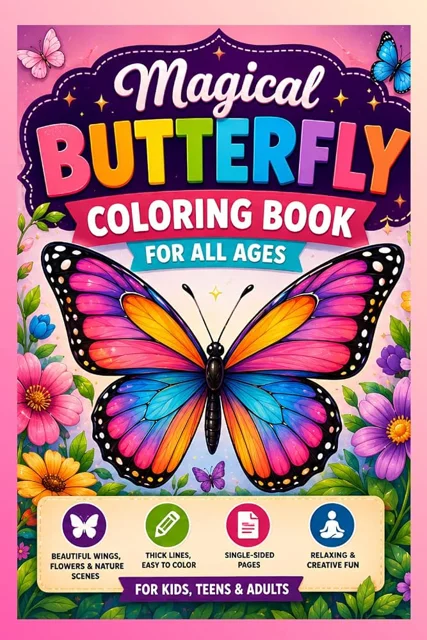
Magical Butterfly Coloring Book for All Ages
Butterflies, flowers and nature scenes in thick lines that kids and grown-ups can color side by side while the dishes soak.
See it on Amazon ($8.99) →Our own book; we earn money if you buy it.
🍂 Out in the world
- Thankful walkWalk around the block and point out things you’re glad about: a big tree, a friendly dog, the playground.
- Helper huntOn errands, spot people who help: the cashier, the crossing guard, the librarian. Say thank you to one of them together.
- Nature treasure trayCollect leaves, acorns and pinecones. At home, sort them and talk about one thing nature gives us.
- Thank-you deliveryDrop a drawing or a muffin at a neighbor’s door. Little kids love ringing the bell and running.
- Library lovePick a book about kindness, then let your child hand the librarian a thank-you note.

🌙 Bedtime and everyday
- Three good thingsAt bedtime, name three good things from today. The AAP suggests focusing on what went “right” each day.
- Gratitude in the carHarvard’s Making Caring Common suggests setting a regular time, like a dinnertime or car ride on “Thankful Thursdays.”
- “Who helped?” storyTell the story of your child’s day and pause for them to name who helped at each step.
- Thank-you voice noteRecord a short voice message for a grandparent far away. No writing needed.
- Savor a memoryLook at an old photo and remember who was there and why it was special.
💛 Giving back
- Food bank bagLet your child choose a few cans for the food drive and carry them in. Talk about why.
- Toy clear-outBefore the holidays, choose toys in good condition to give away. Let your child decide which ones.
- Kindness couponKids give a family member a coupon for help: setting the table, a hug, a song.
- Share the leftoversPack a plate of Thanksgiving leftovers for a neighbor who lives alone. Kids can carry the plate and ring the bell.
Plan the week
A Thanksgiving-week gratitude plan (Nov 23–26, 2026)
Thanksgiving falls on Thursday, November 26 this year. Here’s a gentle plan for the four days leading up to it. Each day takes about 10 minutes.
| Day | Activity | Notice–Think–Feel–Do focus |
|---|---|---|
| Monday, Nov 23 | Start the gratitude jar. Everyone adds one slip at dinner. | Notice |
| Tuesday, Nov 24 | Thankful walk or helper hunt on the way to school or the store. | Notice + Think |
| Wednesday, Nov 25 | Bake or prep together; kids color a thank-you card for the cook. | Think + Feel |
| Thursday, Nov 26 | Roll-a-thank-you cube at the table, then read the jar slips aloud. | Feel + Do |
| Friday, Nov 27 | Deliver leftovers, a drawing or a thank-you voice note to someone. | Do |
🪄 Parent hack
Put the cube and a cup of crayons at the kids’ end of the table. When conversation stalls between courses, roll it. It gives shy kids something to say and keeps little hands busy while grown-ups finish eating.

Keep it gentle
What to say when your child seems ungrateful
It will happen. A gift gets tossed aside, or a child complains about the food Grandma spent all morning on. It helps to see these as teaching moments, not proof that you’re failing. A missed thank-you is a chance to walk through Notice, Think, Feel and Do together, later, when everyone is calm.
- Pause the lecture. In the moment, a quick, calm “Let’s say thank you to Grandma” is enough. Save the conversation for later.
- Get curious later. At bedtime: “I noticed you didn’t want the sweater. What were you hoping for?” Kids often reveal a disappointment you can empathize with.
- Walk through the four steps. “Grandma knitted that for weeks (Notice). Why do you think she did? (Think) How might she feel? (Feel) Is there something you want to do? (Do)”
- Offer a do-over. A phone call, a drawing or a hug the next day counts.
- Lower the bar for little ones. For under-5s, a smile and a prompted “thank you” is a normal, healthy start.
- Model it again. Thank your child for small things: “Thanks for carrying the napkins. That helped me.”

If holiday gatherings tend to end in tears for your youngest, our guide to big feelings and gentle limits has calm scripts that work at Grandma’s house too, and a predictable daily routine chart helps on busy holiday weeks.

In pictures
Gratitude, pictured
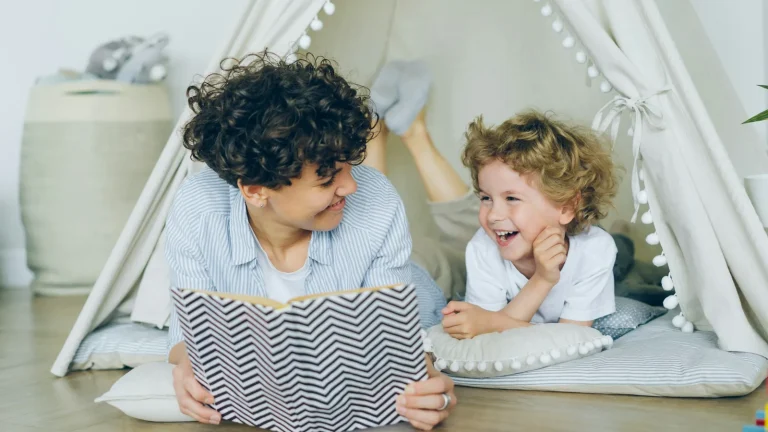
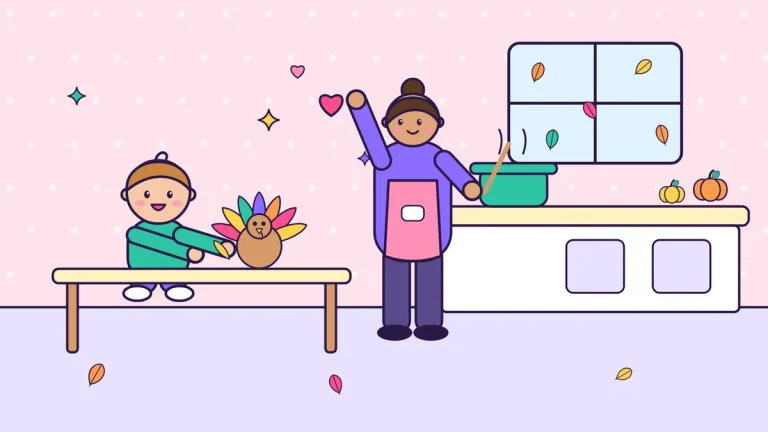
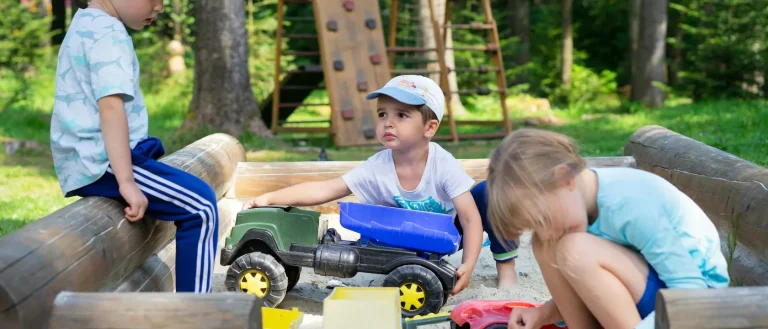
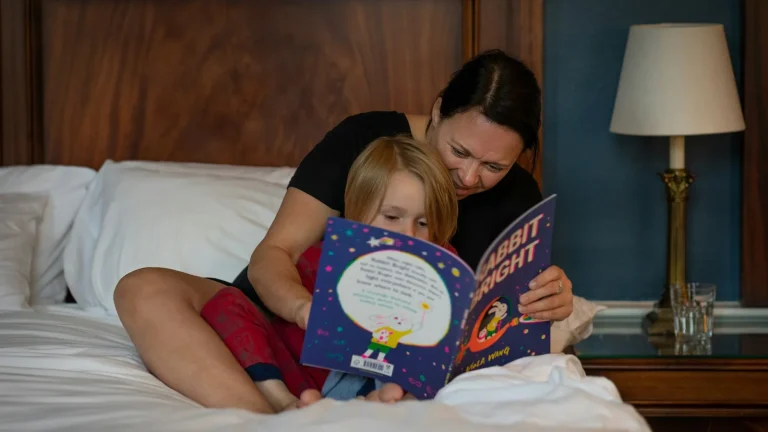
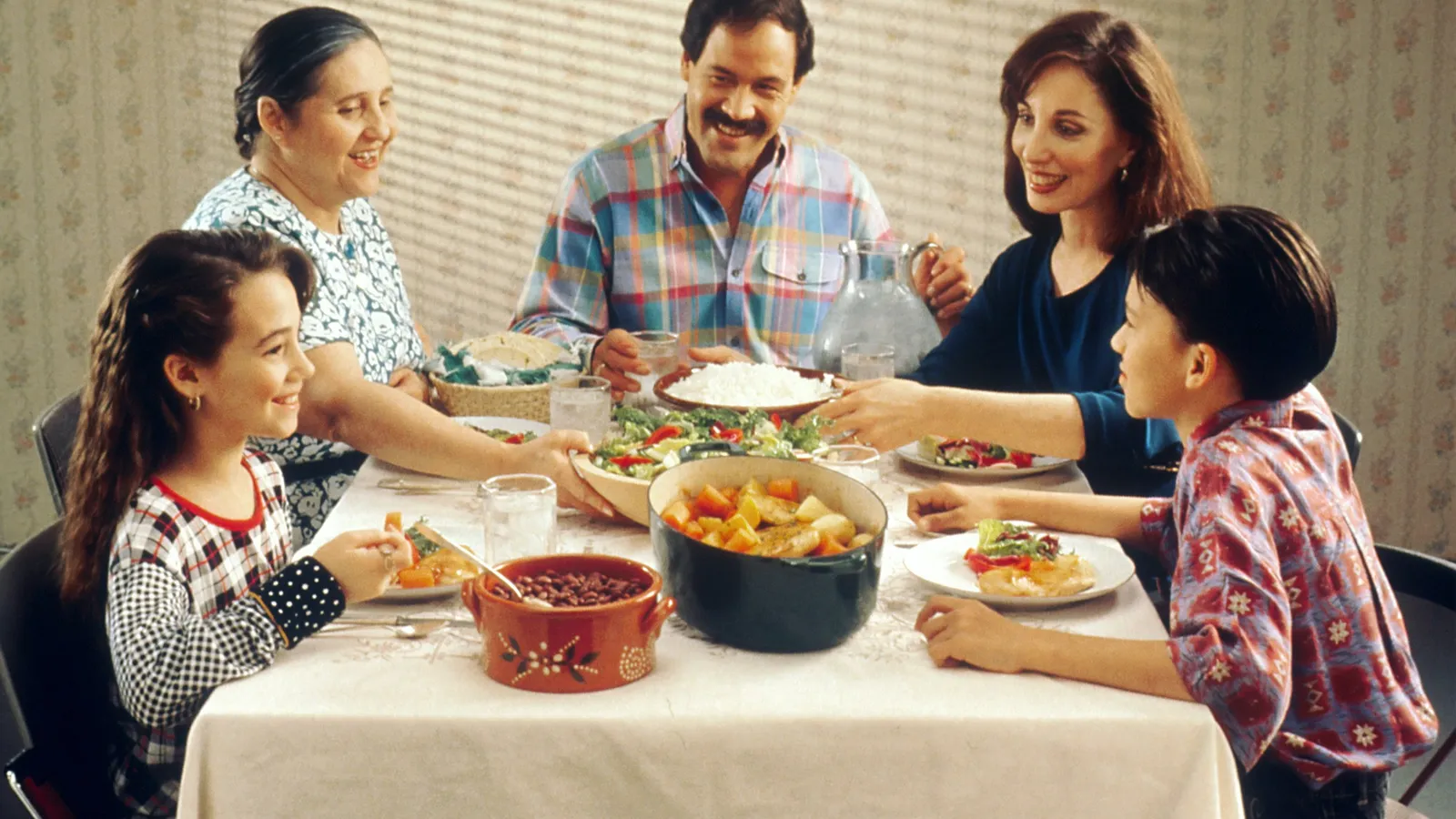
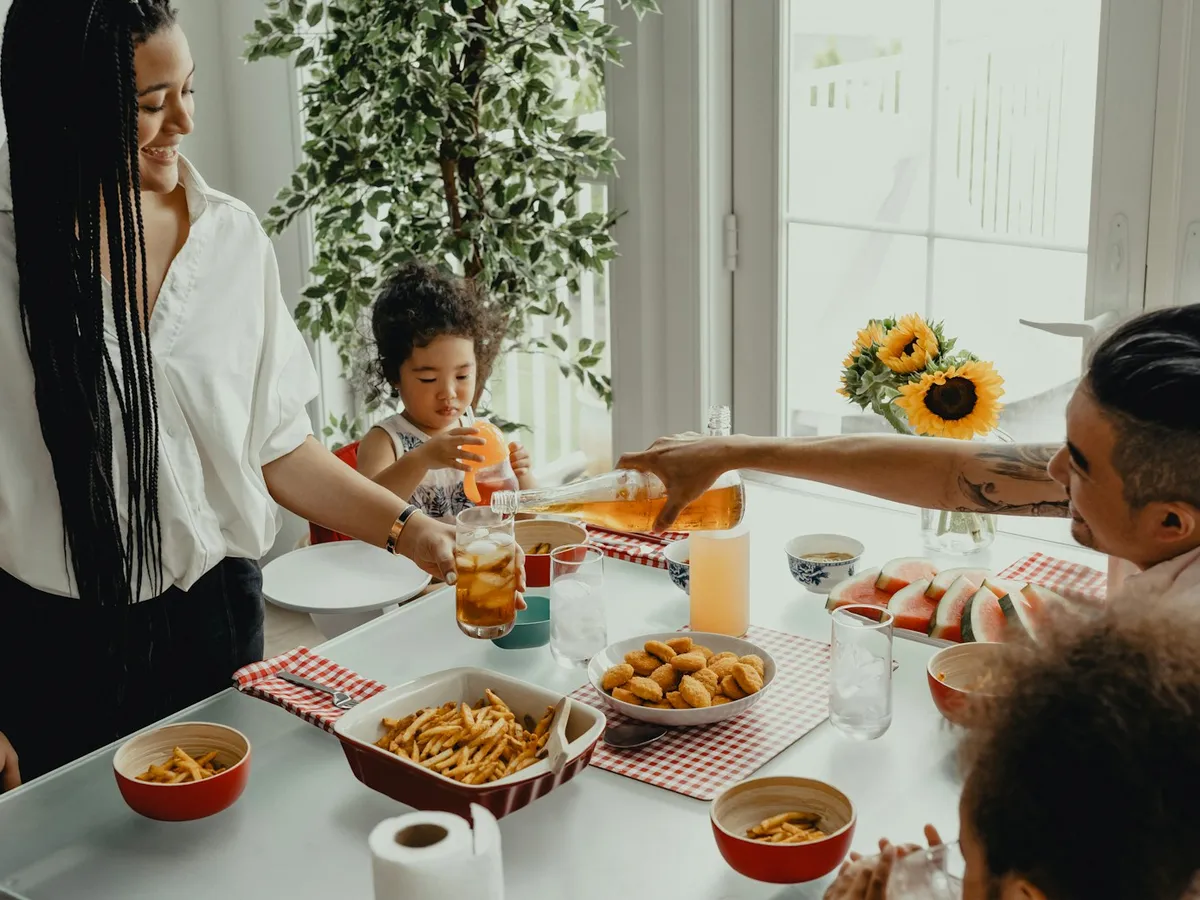
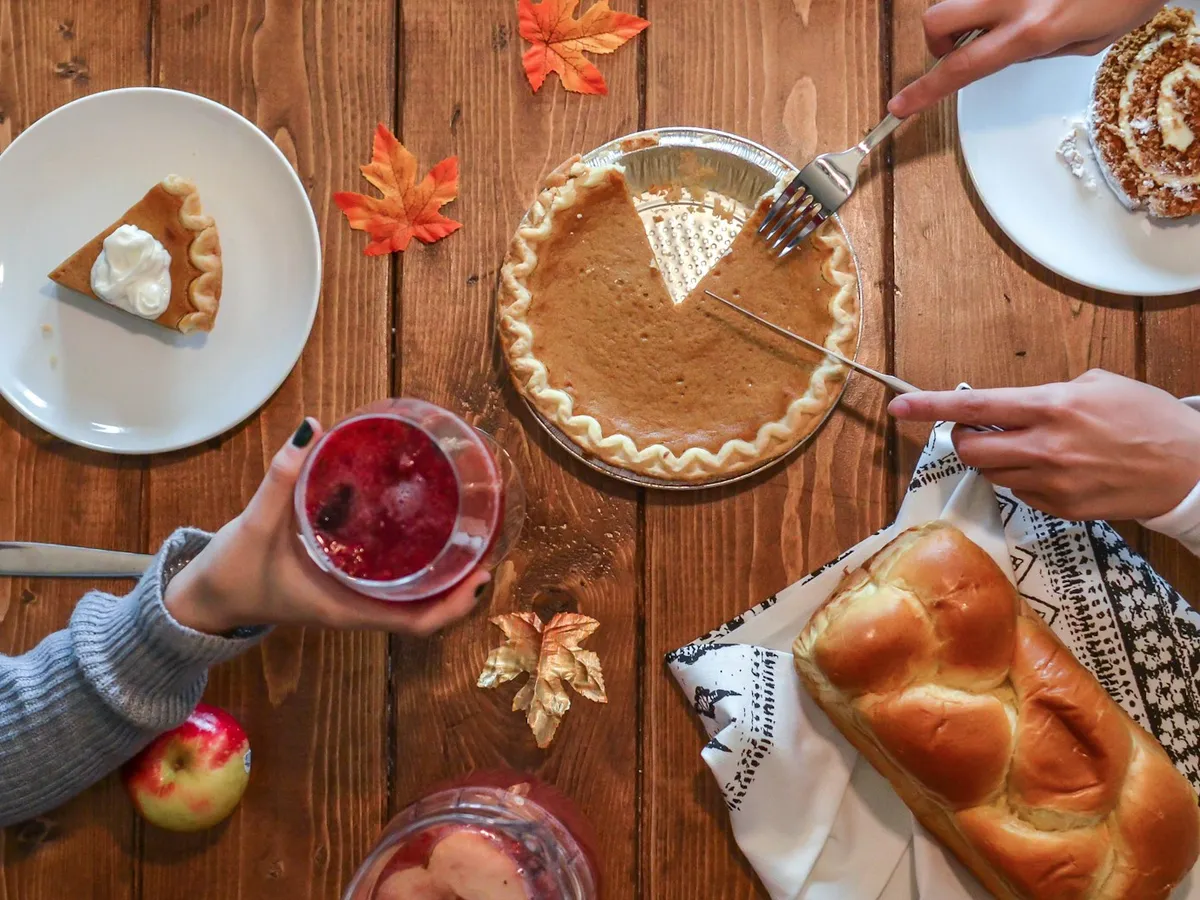
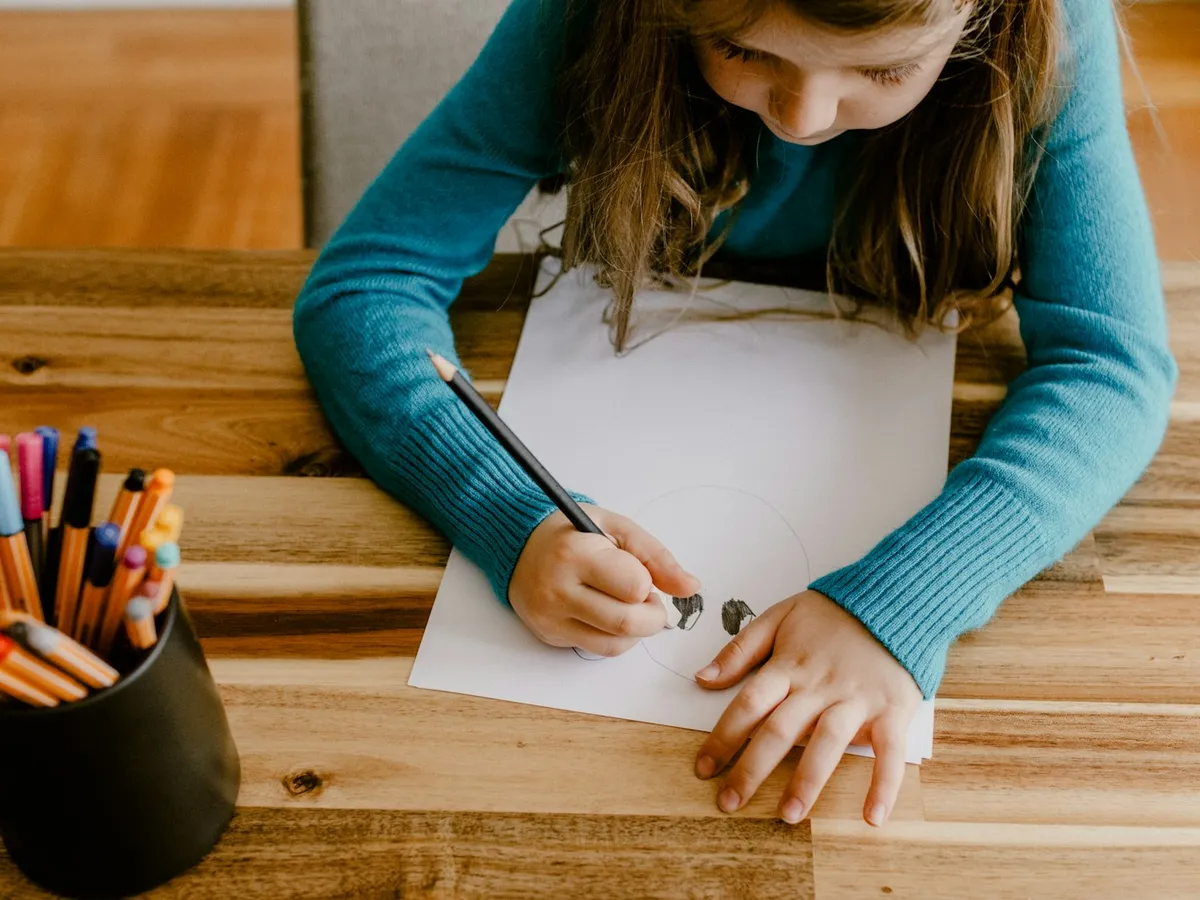
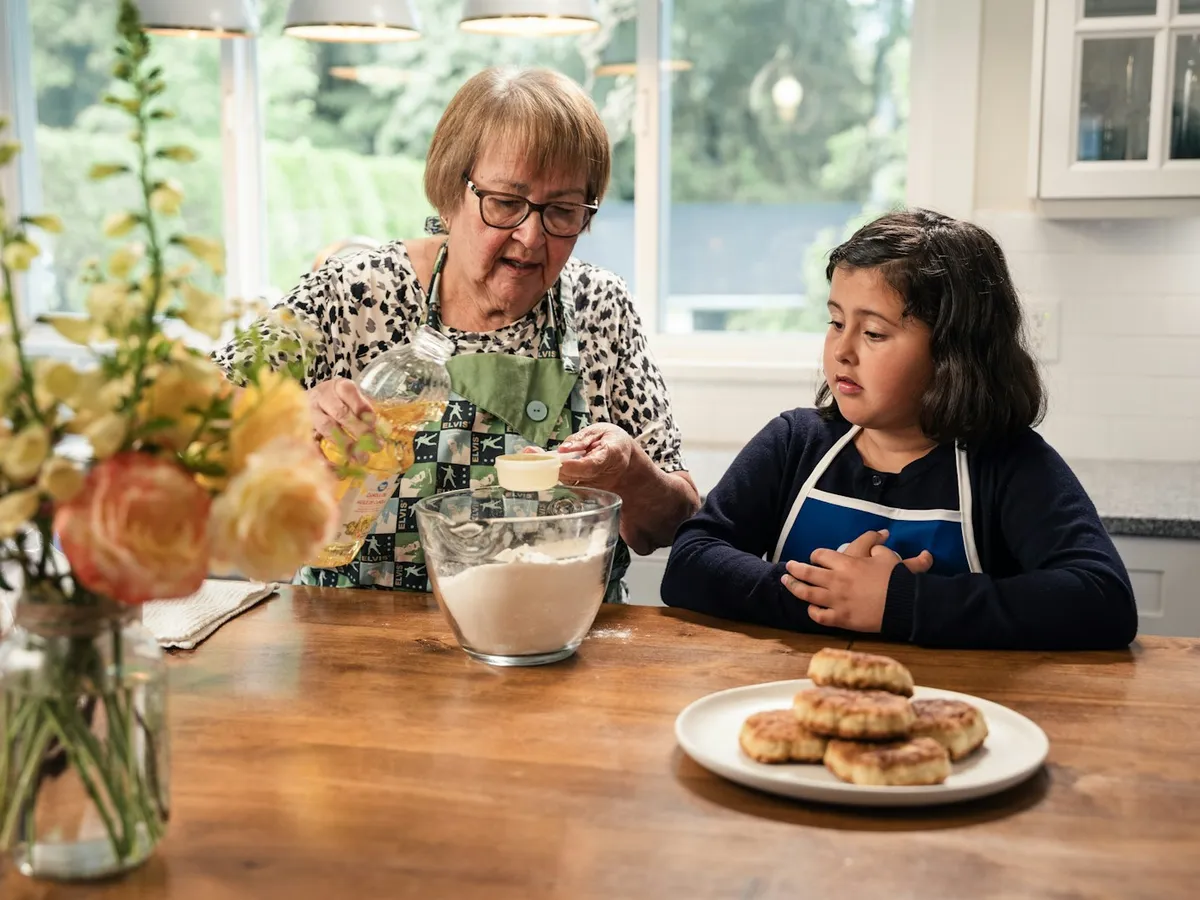
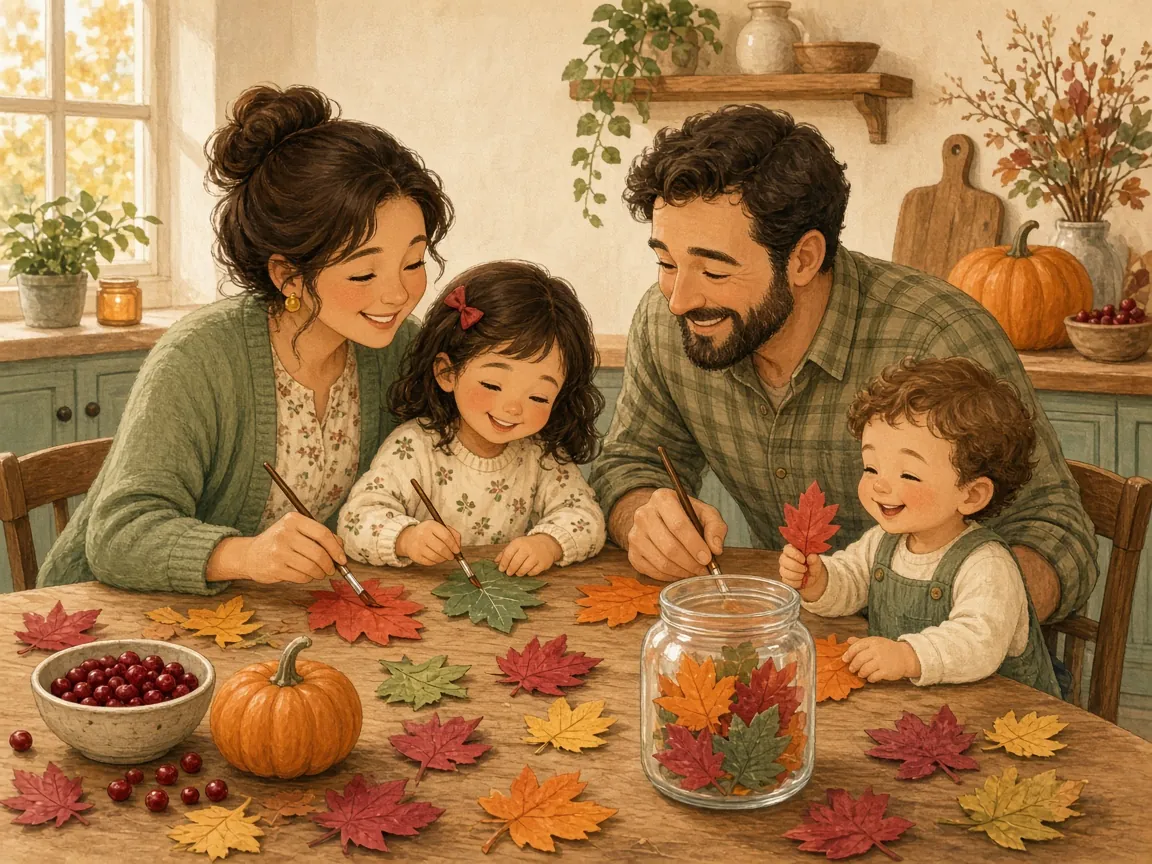
A few everyday moments where gratitude grows: the table, the kitchen and the leaf pile.
Freebie
Free printable: gratitude cube, jar slips and thank-you card
🎁 Free printable
The ColorJoy Gratitude Pack (3 pages)
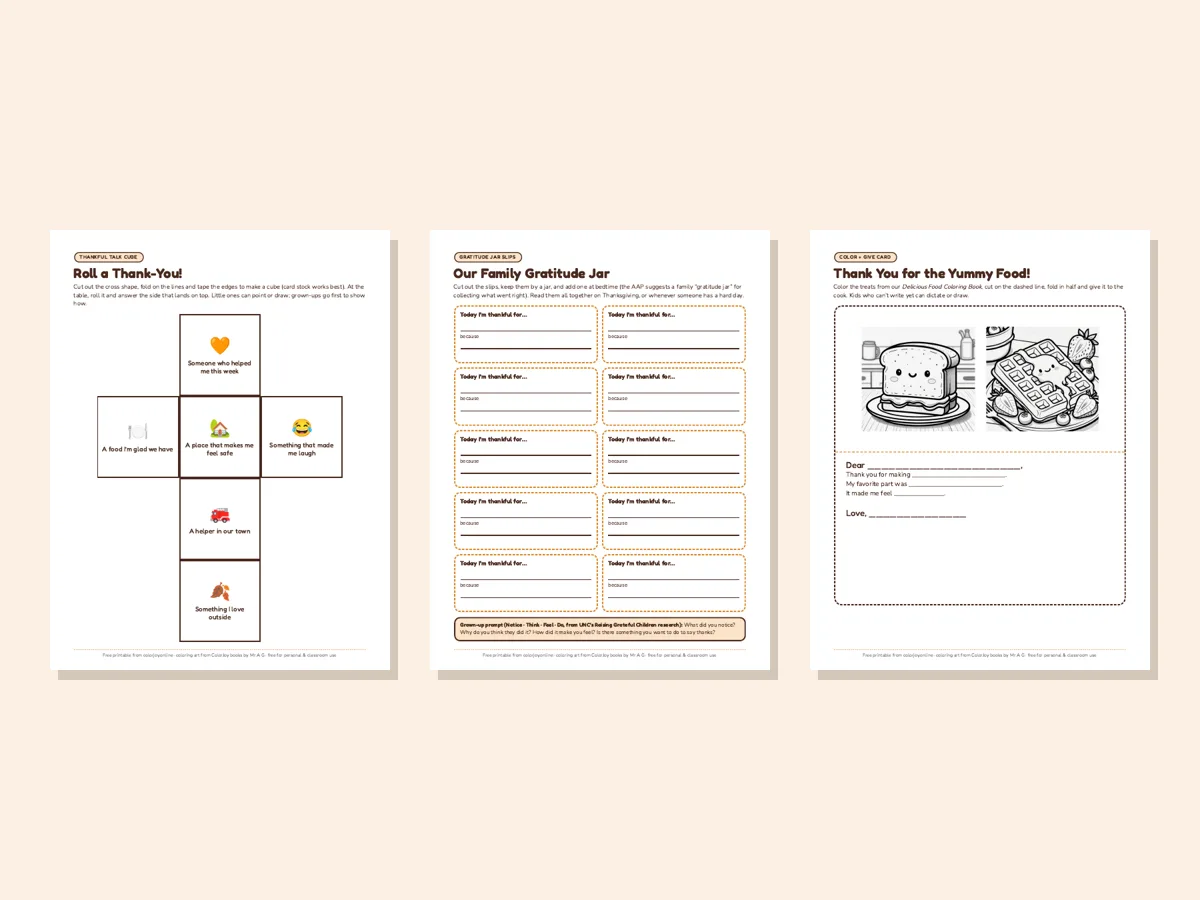
Page 1 is a roll-a-thank-you cube to cut, fold and tape. Page 2 has ten gratitude jar slips plus a Notice–Think–Feel–Do prompt for grown-ups. Page 3 is a color-and-give thank-you card with a smiling sandwich and waffles from our Delicious Food Coloring Book.
Download the free printable (PDF) →
Free for personal and classroom use. No email or sign-up needed.
Print the cube on card stock if you can. We add a new free printable to every guide, so you can build a little holiday library: try the pumpkin counting pack and the cute food coloring pages next, and come back in December for our advent activity cards.
Your plan
What to do tonight (about 15 minutes)
You don’t need a perfect Thanksgiving to raise a grateful kid. You need a few small, repeated moments. Here’s how to start this evening.
2 minutes
Find a jar
Any clean jar or box works. Let your child decorate a label.
5 minutes
Model one slip
At dinner, fill in your own slip out loud using Notice, Think, Feel and Do.
5 minutes
Three good things
At bedtime, ask for three good things from today. Accept any answer, even “my snack.”
💛 Be kind to yourself
Some nights your child will say “nothing.” That’s fine. Share yours and try again tomorrow. Gratitude is planted in small moments over many years, not in one dinner.
Keep reading
From the ColorJoy shelf
Our Thanksgiving pick: the Delicious Food Coloring Book
Our family-table pick
Delicious Food Coloring Book for Kids, Teens & Adults
Home cooking, restaurant dishes, comfort food, snacks, meals and desserts in bold, easy, relaxing designs. Bold outlines leave room for crayons, colored pencils or markers, so everyone from a preschooler to Grandma can join in.
$15.99paperback · 87 pages · 8.5 × 11 in
Our own book; we earn money if you buy it. Price as listed on Amazon.com when we checked on 24 October 2026; please confirm on the product page.
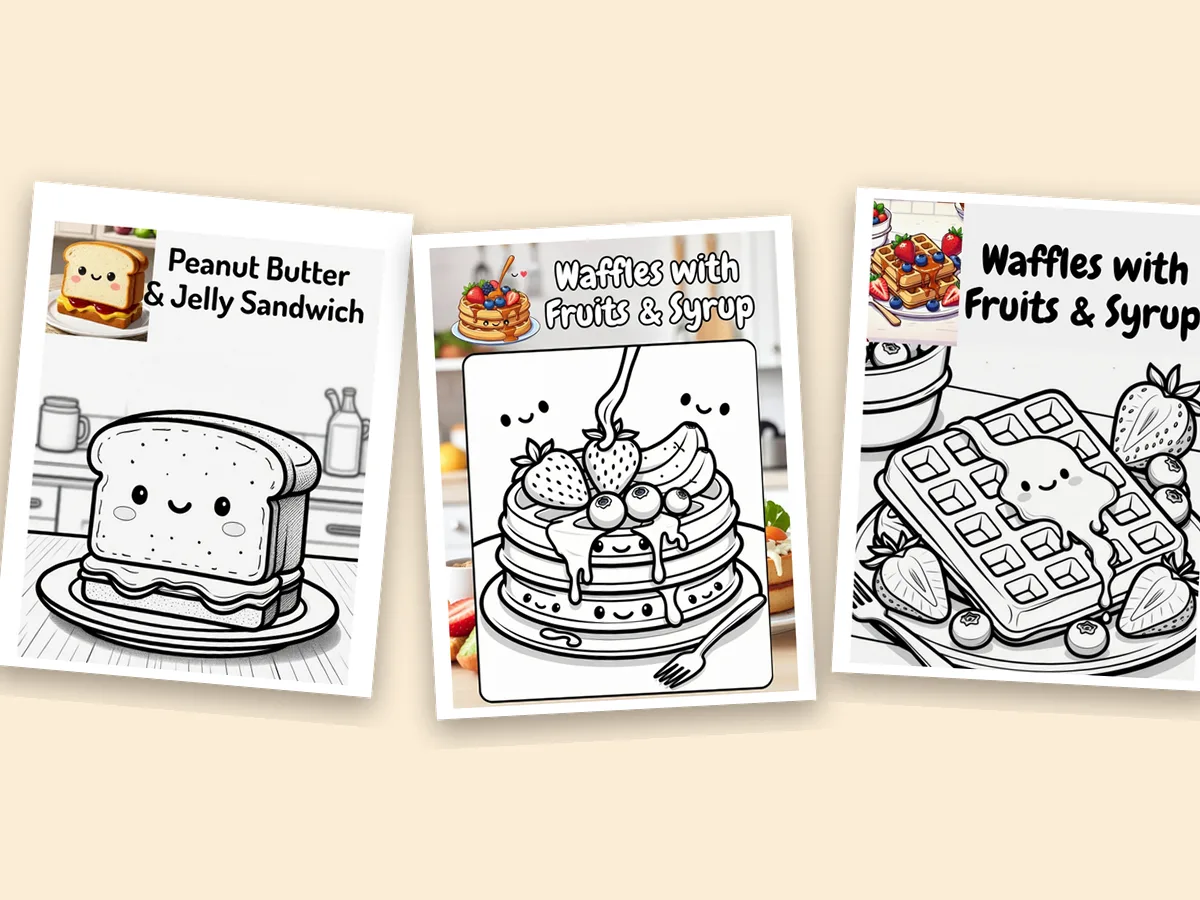
Here’s why it fits a gratitude Thanksgiving. Food is the easiest thing for young children to feel thankful for, because they can see it, smell it and taste it. That’s exactly the “sensory joy” psychologists suggest starting with for toddlers and preschoolers. Coloring a favorite dish, then telling the cook “I colored your mashed potatoes!” turns a craft into a real thank-you.
It also works across ages, which matters on a day with cousins from 3 to 13. Big, friendly food characters suit younger kids, while teens and grown-ups can relax with the more detailed meals. Tear out a page per guest and you have a quiet activity for the half hour before dinner, when hungry kids are at their wiggliest. Want to try before you buy? Print our free cute food coloring pages or read more on our Delicious Food book page. Browse every title in the Mr A G author store on Amazon. Prefer printables? The Kids Printable Mega Bundle ($14.99 on Payhip) includes 11 coloring, tracing and flashcard printables for the long weekend.
📚 Related books from ColorJoy
If this topic is on your mind, these titles from our own shelf fit well alongside it.
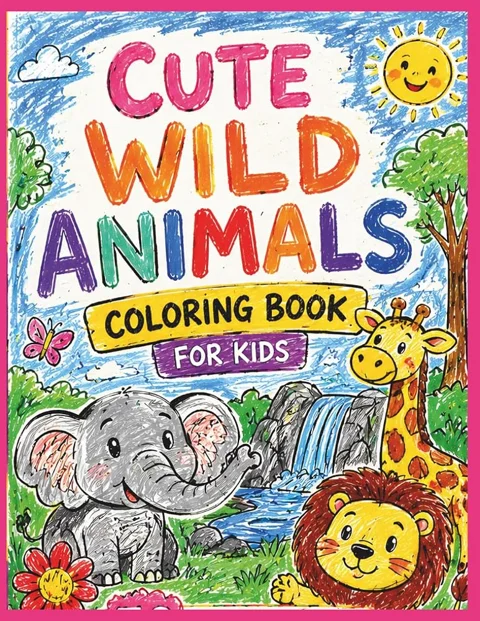
Cute Wild Animals Coloring Book (Ages 4–8)
50 happy wild animals in their habitats, a gentle way to talk about being thankful for nature and animals.
$12.99 paperback on Amazon.com · Paperback, shipped by Amazon

Fruit Coloring Pages for Toddlers (printable PDF)
Printable fruit pages for toddlers: color an apple, then eat one together and talk about where food comes from.
$0.99 printable PDF on Payhip · Instant PDF download; print at home

No-Prep Screen-Free Indoor Activities (printable PDF guide)
A printable idea guide for grown-ups with no-prep indoor activities for the long Thanksgiving weekend.
$6.99 printable PDF on Payhip · Instant PDF download; print at home
These are our own books and printables, and we earn money if you buy them. Prices as listed on Amazon.com and Payhip when we checked on 24 October 2026; prices can change, so please confirm on the product page.
Frequently asked questions
What are good gratitude activities for kids?
Simple, repeatable ones work best: a family gratitude jar, three good things at bedtime, a roll-a-thank-you game at dinner, thank-you drawings for helpers, a thankful walk, and giving back together, like choosing food for a food drive. Pick two or three and repeat them.
At what age can children understand gratitude?
Toddlers can enjoy and notice good things, and psychologists suggest talking with them about small moments of joy. Harvard’s Making Caring Common project notes that around age six children start to understand the nuances of gratitude, and by seven or eight they can generally engage in each part of it.
What is the Notice, Think, Feel, Do method?
It is a way of describing a gratitude moment from University of North Carolina researchers: notice what you have been given, think about why someone gave it, feel the emotions that come with it, and do something to show appreciation. Parents can ask questions for each step.
How do I teach my toddler to say thank you?
Model it often, narrate kindness out loud (“Grandpa saved this for you”), and gently prompt in the moment. For children under five, a prompted thank you is a normal, healthy start. Real understanding grows with age.
What should I do if my child seems ungrateful?
Stay calm in the moment, then talk later with curiosity about what they were hoping for. Walk through noticing, thinking and feeling, offer a do-over like a call or drawing, and keep modeling gratitude yourself.
What can kids do for gratitude on Thanksgiving Day?
Roll a gratitude cube at the table, thank the cook for a specific dish, read the family gratitude jar aloud, color a thank-you card for a host, and plan to share leftovers or a drawing with a neighbor the next day.
Here’s to a warm, thankful Thanksgiving 🍂
ColorJoy makes bold, easy coloring books and free printables for little hands, plus calm, practical guides for the grown-ups. New guides and printables go up every week through the holidays, so come back soon.
For the family table, our pick is the Delicious Food Coloring Book: color the feast, then thank the cook.
Get the Delicious Food Coloring Book →
Next up: Thanksgiving activities for toddlers or browse our printable shop.
Photos: Unsplash (Unsplash License). Book pages and printable art: ColorJoy / Mr A G. Research summaries link to the original sources; this guide is general information, not professional advice.