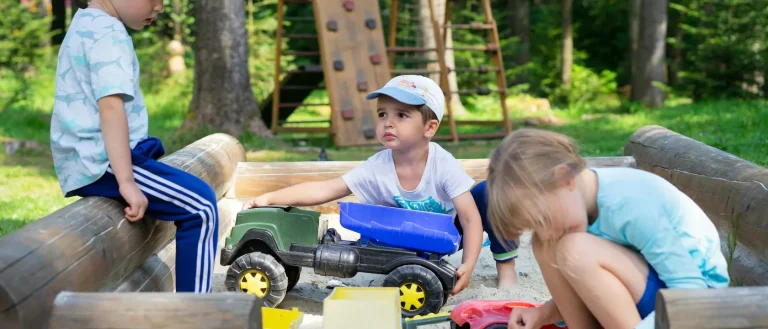
Halloween with little ones • Ages 1–5
Trick-or-Treating with Toddlers: A Calm, Safe and Fun Halloween Plan for Ages 1–5 (+ Free Printable Kit)
You’ve bought the tiny pumpkin costume. You’ve imagined the cute photos. And you’re quietly wondering whether your toddler will melt down at the first doorbell, refuse the costume, or try to eat a lollipop wrapper. This guide gives you a realistic, step-by-step plan for trick-or-treating with toddlers: what age to start, what time to go, how many houses is “enough,” the safety basics from pediatricians, and a free printable kit that makes the night feel familiar before it even starts.
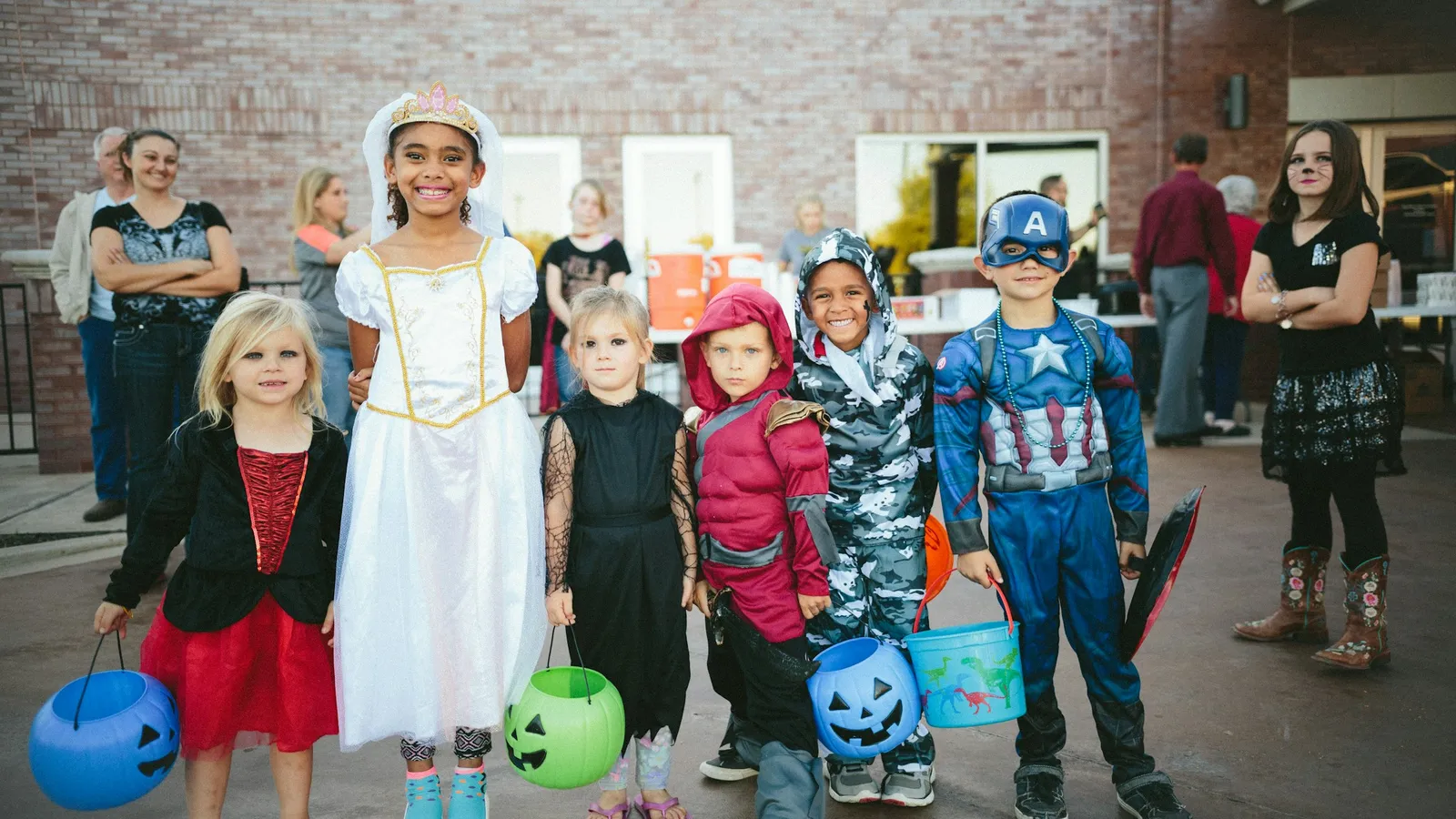
🌟 By the end of this page you’ll have…
- a simple answer to “is my child old enough?” and what to expect at 1, 2, 3, 4 and 5
- the best time to go, how long to stay out, and a route that protects bedtime
- costume, candy and street-safety tips from the American Academy of Pediatrics
- a calm-down script for the moment your toddler says “NO!” on the first porch
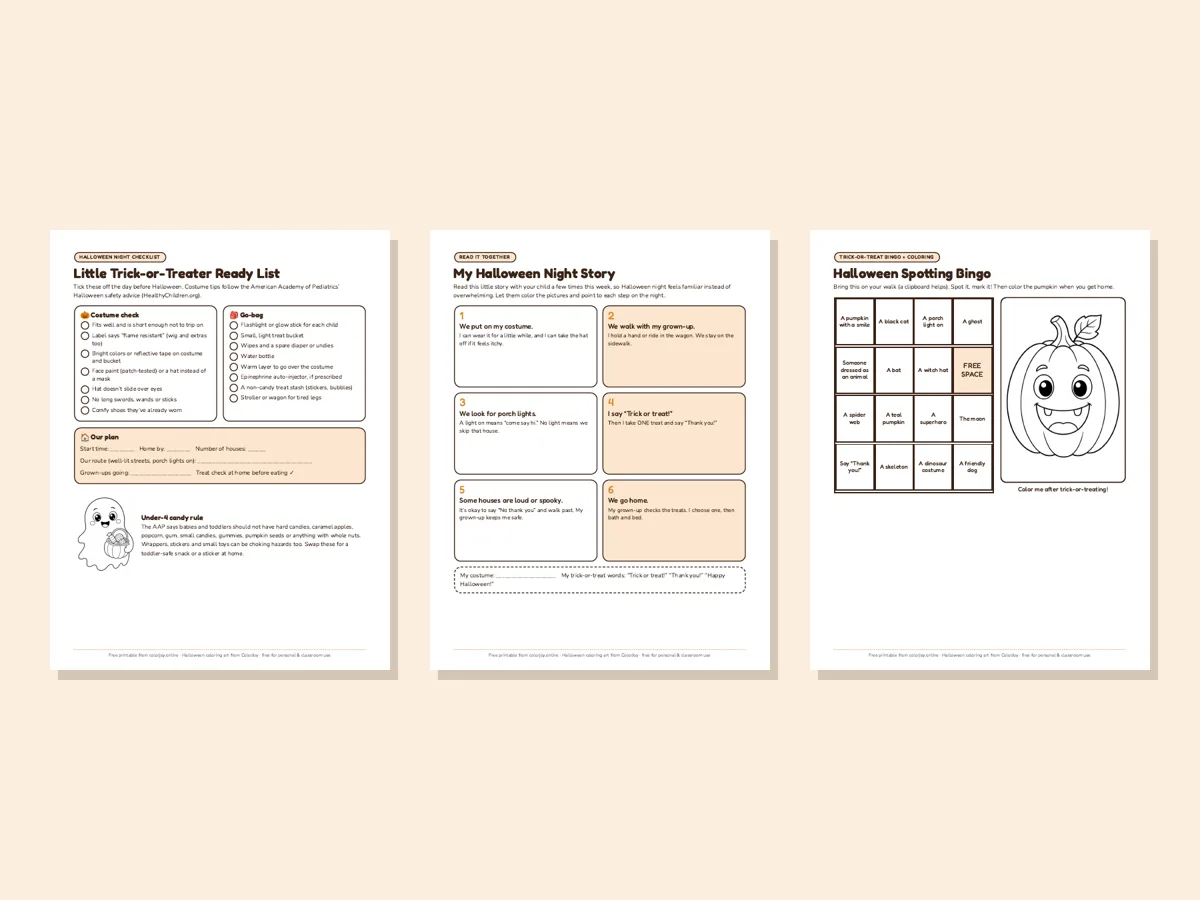
- a free 3-page printable: a ready list, a Halloween night picture story and spotting bingo with a coloring page
🎨 New here? Hi, we’re ColorJoy
ColorJoy is a small, family-focused site that makes bold, easy coloring books and printables for little hands, plus practical, screen-light guides for parents. Every guide comes with a free printable. Our books are on Amazon (author name Mr A G). If you’re still planning the week, see our screen-free Halloween activities and easy homemade costume ideas.

⭐ Featured ColorJoy book for this guide
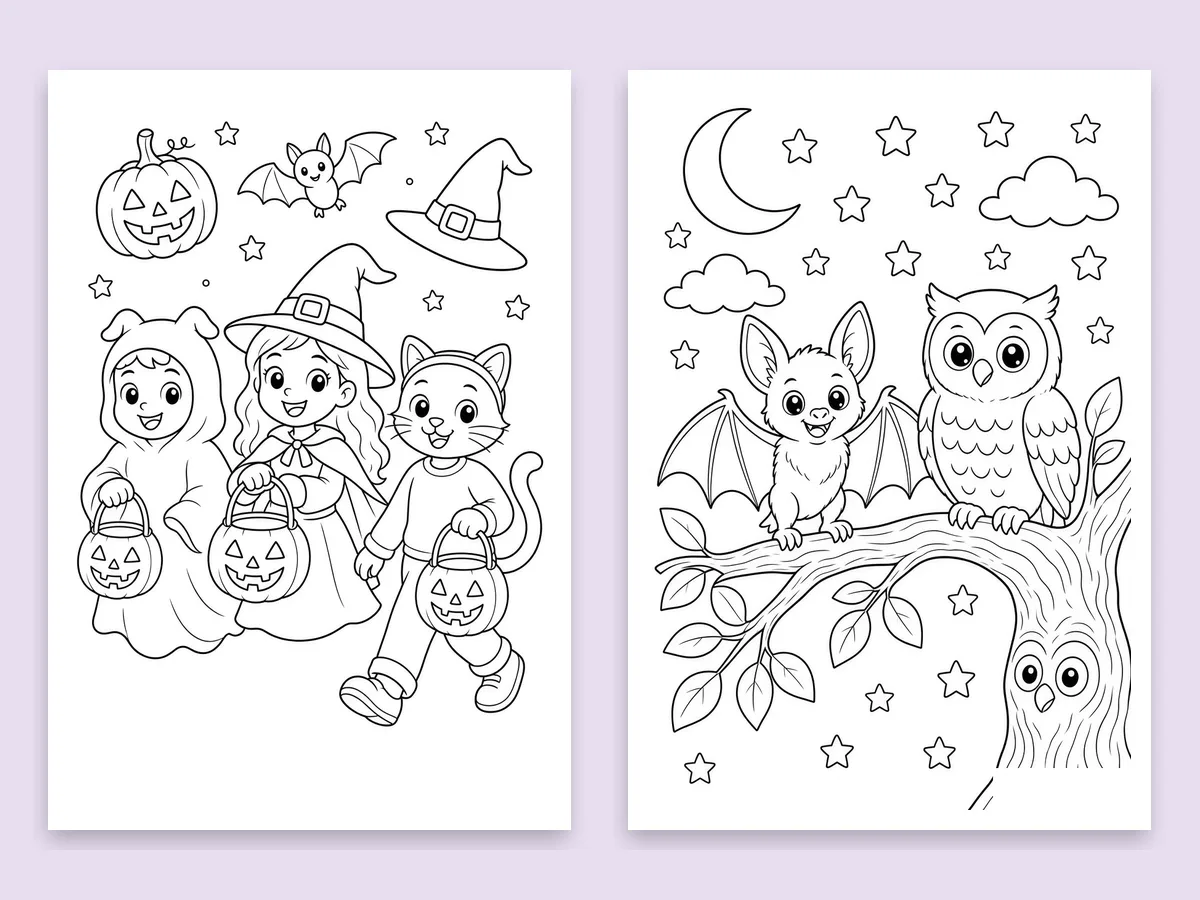
Halloween Coloring Book for Kids Ages 4–8
Cute (not frightening) pumpkins, friendly ghosts, bats, witches and trick-or-treat scenes: a calm, screen-free way to count down to Halloween and wind down after.
See it on Amazon ($9.99) →Our own book; we earn money if you buy it.

Real-life moments
Sound familiar?
Every family with a toddler has a Halloween story. Here are three of the most common, and what helps.
The costume standoff
The dinosaur suit fit perfectly in the store. Tonight, your two-year-old is lying on the floor screaming “NO DINO!” and you have ten minutes before the neighbors start handing out candy.
Try this: make the costume optional and comfy: pajamas plus a hat or a pair of ears still count. Bring the costume in a bag.
The first-porch freeze
Your three-year-old has talked about trick-or-treating for weeks. Then a man in a werewolf mask opens the door, and she buries her face in your leg.
Try this: skip that house without fuss, name the feeling (“That mask was surprising!”) and head for a house with a pumpkin and the porch light on.
The sugar-and-bedtime crash
It’s 8:15 p.m., your toddler has a fistful of candy, a sticky face and zero intention of going to sleep.
Try this: go early, keep it short, swap candy for one small treat at home and follow your normal bedtime routine.
Start here
Is my toddler old enough to go trick-or-treating?
There isn’t an official “right” age. If your child is walking (or happy in a stroller or wagon) and enjoys seeing people, they can join in. For many families, the first “real” trick-or-treat happens somewhere between 2 and 3, when a child can say a few words, walk a short distance and understand the simple routine: knock, say “trick or treat,” take one treat, say “thank you.”
For babies and young toddlers, Halloween is really for the grown-ups and older siblings, and that’s completely fine. A cute costume, a short stroll at dusk and a few porch-light visits is plenty. Don’t worry that you are “missing” anything if you keep it tiny or skip it. Your toddler won’t remember the number of houses; they’ll remember (or you will) the feeling of walking hand in hand in the twilight.
🧠 What actually matters
Toddlers do best with three things: predictability (knowing what will happen), short bursts (before they get tired or hungry) and a calm grown-up close by. Plan for those three and the rest is a bonus.
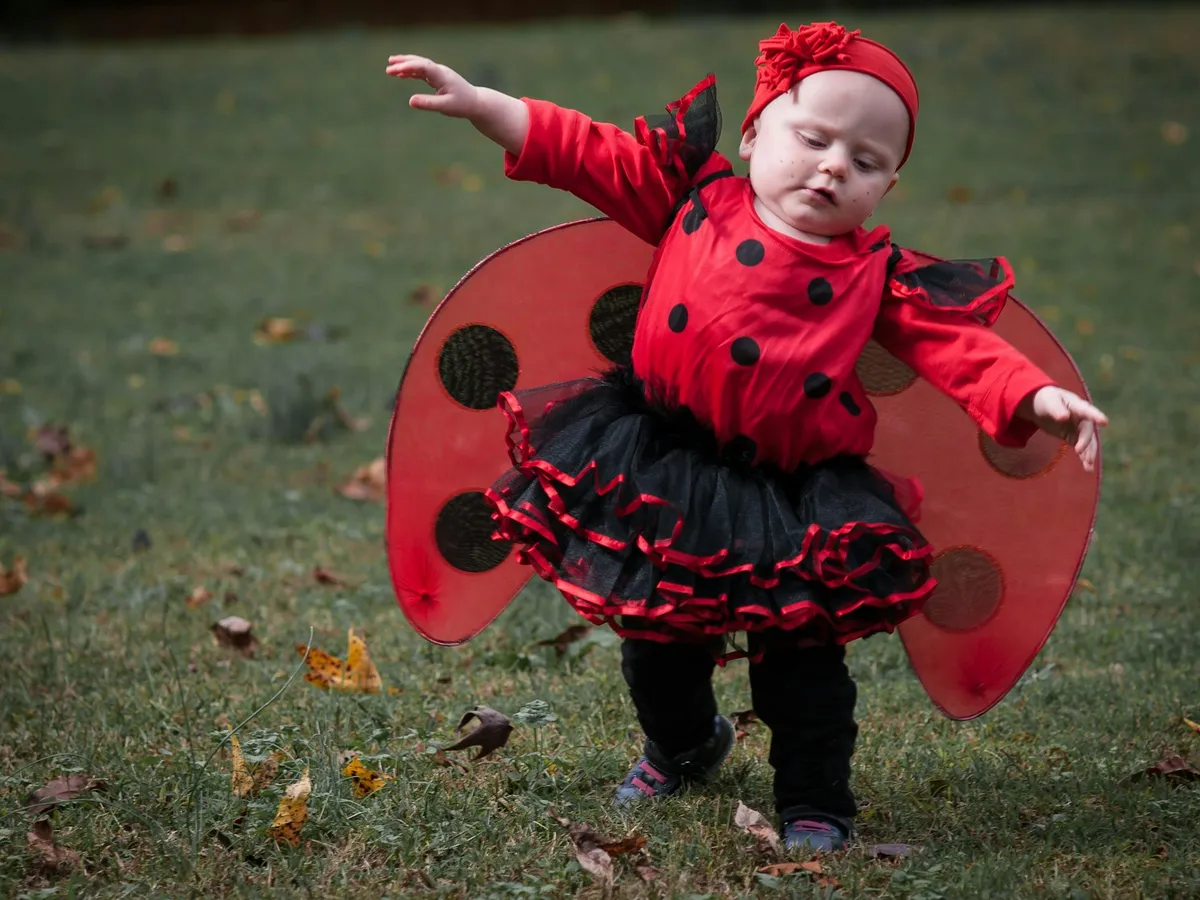
By age
What to expect, age by age
Every child is different, but these ranges help you set realistic expectations and choose a plan that fits.
| Age | What’s realistic | Plan that works | Watch out for |
|---|---|---|---|
| 12–18 months | Enjoys lights, pumpkins and being carried; won’t understand the routine | 15–20 minutes in a stroller or carrier, 3–5 houses with friends or family | Anything that goes in the mouth: wrappers, stickers, small candies |
| 18–24 months | Toddles to the door with help, may hand out candy at home | 20–30 minutes, 5–10 houses on your own street | Masks and loud decorations; cold hands and tired legs |
| 2–3 years | Can say “trick or treat” (sometimes!), loves the ritual, may freeze or get overwhelmed | 30–45 minutes, early evening, wagon on standby | Costume refusals, overtired meltdowns, running toward the street |
| 3–4 years | Understands the routine and the costume pretend play; scary decorations can still upset | 45 minutes to an hour, a planned loop with a halfway “home base” | Animatronic decorations, crowds, rushing across driveways |
| 4–5 years | Wants to choose the costume and route, can follow simple safety rules | About an hour with breaks, holding hands at every crossing | Darting ahead, eating candy before it’s checked |
💡 Siblings with different ages
If you have an older child too, split up for part of the night: one grown-up does a short toddler loop and heads home, the other continues with the big kid. Nobody feels held back, and the toddler gets to bed on time.
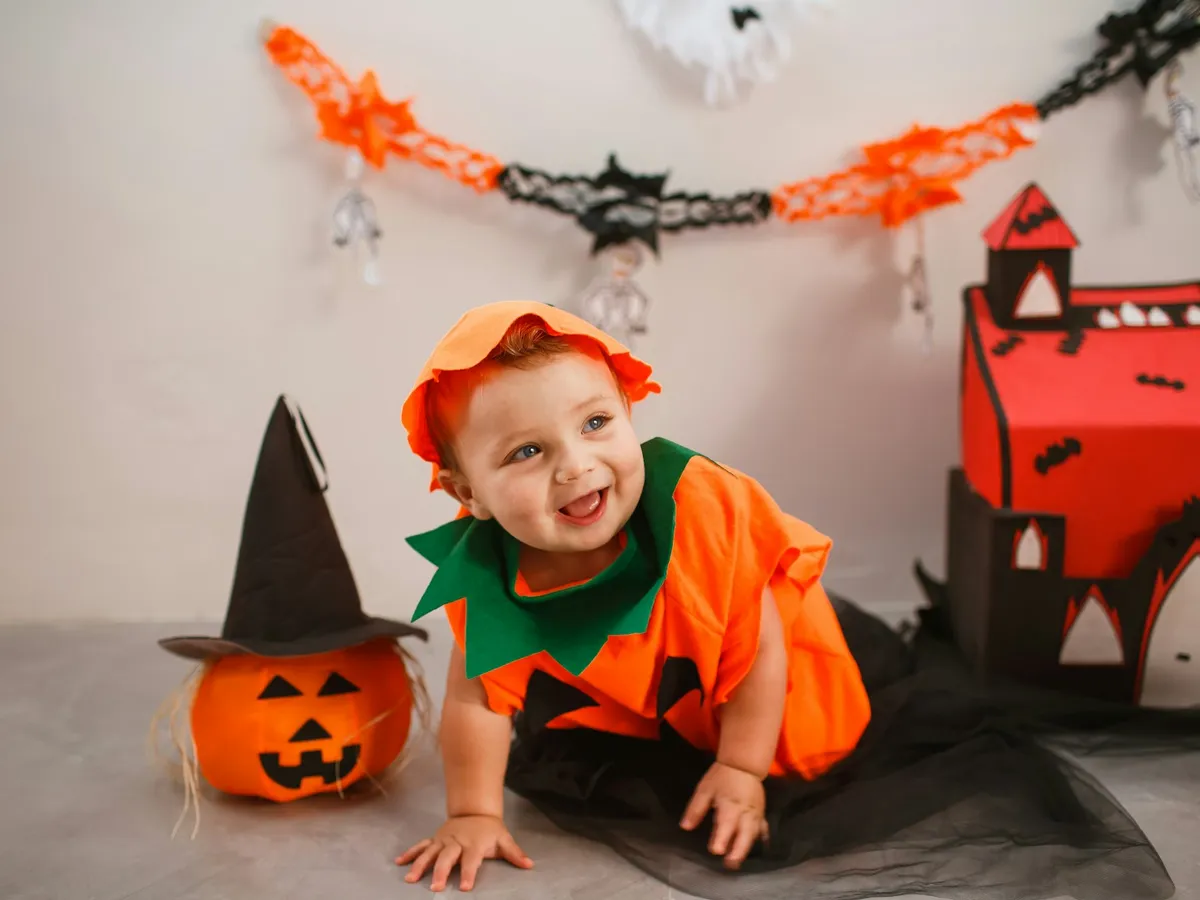
Timing
When to go and how long to stay out
Halloween 2026 falls on a Saturday, so you’ll likely see more trick-or-treaters out earlier than on a school night. That’s good news for toddler families.
- Go early. Start at dusk or just before, when it’s still a little light. The American Academy of Pediatrics suggests that if trick-or-treating doesn’t start until after dark where you live, you check with your town or park district for activities offered earlier in the day, which helps you stick to your child’s regular bedtime (HealthyChildren.org).
- Eat first. A proper dinner before you head out means less snacking along the way and a calmer child. The AAP also suggests a good meal before trick-or-treating to discourage sampling.
- Set a time, not a number. Decide in advance: “We’ll go until 6:30.” It’s easier to stop when the clock says so than when the bucket is “full.”
- Choose a loop. A short circle that ends at home is better than a long out-and-back walk. If your toddler gets tired, you’re never far away.
- Stop on a high note. Leave while everyone is still smiling. “Three more houses, then home for bath” works better than staying until the tears start.
Clocks go back one hour on Sunday, November 1 when daylight saving time ends, so the evenings after Halloween will get dark even earlier. Our telling-time guide includes a free “fall back” bedtime plan, and our 7-night sleep routine helps if bedtimes go sideways.

Costumes
Costumes toddlers will actually wear
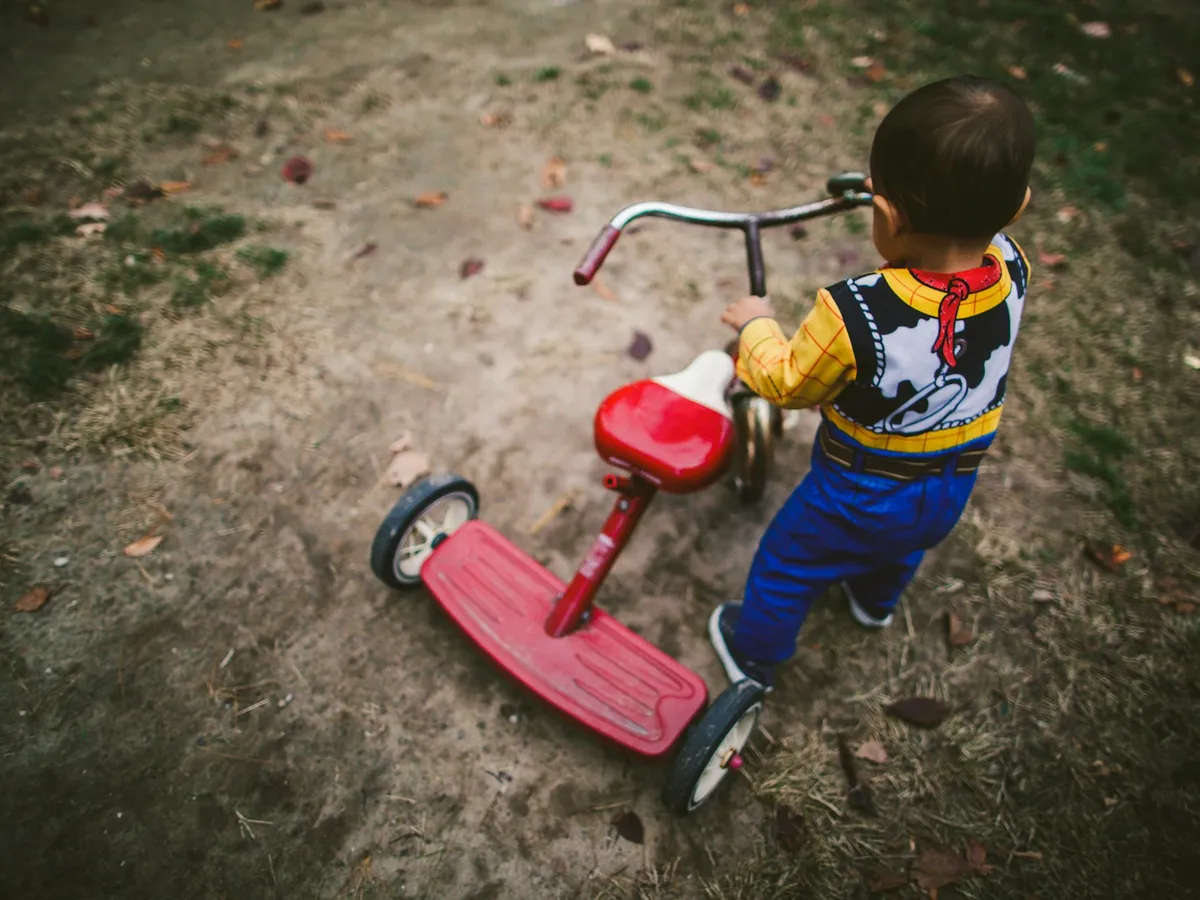
The most common toddler Halloween problem isn’t candy or crowds. It’s the costume. Toddlers hate feeling hot, itchy, squeezed or unable to see, and they hate anything on their face. A few simple rules solve most of it.
The pediatricians’ costume basics
- Costumes and shoes should fit well, and be short enough to prevent tripping and catching on things (AAP).
- Use non-toxic face paint or a hat instead of a mask, test makeup on a small patch of skin first, and make sure hats don’t slide over the eyes.
- Skip sharp or long swords, wands, canes and sticks: kids can get hurt if they stumble.
- Choose bright, reflective costumes and add glow-in-the-dark elements or reflective tape to the costume and the treat bag.
- Look for “flame resistant” on costume labels, and on wigs and accessories too.
- Never use decorative contact lenses without an eye exam and a prescription.
Toddler comfort hacks
- Build it on pajamasFleece pajamas or a cozy sweatsuit in the right color is the base of half the best toddler costumes: a black cat, a pumpkin, a bear.
- Make it weather-proofSize up so a warm layer fits underneath. A cold toddler is a cranky toddler.
- Practice “dress-up time”Let your child wear the costume (or part of it) for 10 minutes a day this week while playing, so it feels normal.
- Give them a choiceToddlers like control. “Do you want to wear the cat ears or the cat tail?” often works better than “Put this on.”
- Pack a plan BBring the costume in a tote. If it comes off after three houses, that’s fine. Ears or a hat still say “Halloween.”
- Shoes they’ve already wornNew shoes plus walking in the dark is a recipe for tired, sore feet. Stick with favorites.
Need ideas? Our easy homemade costume guide has simple, comfy options, and our Halloween costume coloring pages let kids “design” their costume first.
Safety
Street-smart safety for little trick-or-treaters
The AAP notes that child pedestrian injuries are more likely on Halloween than on any other night of the year (HealthyChildren.org). With toddlers, safety is mostly about you: they’re small, fast, excited and hard for drivers to see.
- Always go with your young child. Hold hands, or keep them in a stroller or wagon near roads and driveways.
- Light them up. A flashlight or glow stick for every child, plus reflective tape on the costume or bucket.
- Use the sidewalk and crosswalks. Cross as a group, avoid crossing mid-block or between parked cars, and don’t assume cars will stop.
- Stick to well-lit streets and only visit homes with the porch light on and, ideally, a well-lit path.
- Never go inside a home or car for a treat. Stay on the porch.
- Teach one simple rule: “We stop at the edge.” Practice stopping at the curb or end of a driveway this week like a game.
- Carry a phone and the basics. Wipes, a water bottle, a warm layer and any prescribed medicines.
⚠️ At your own front door
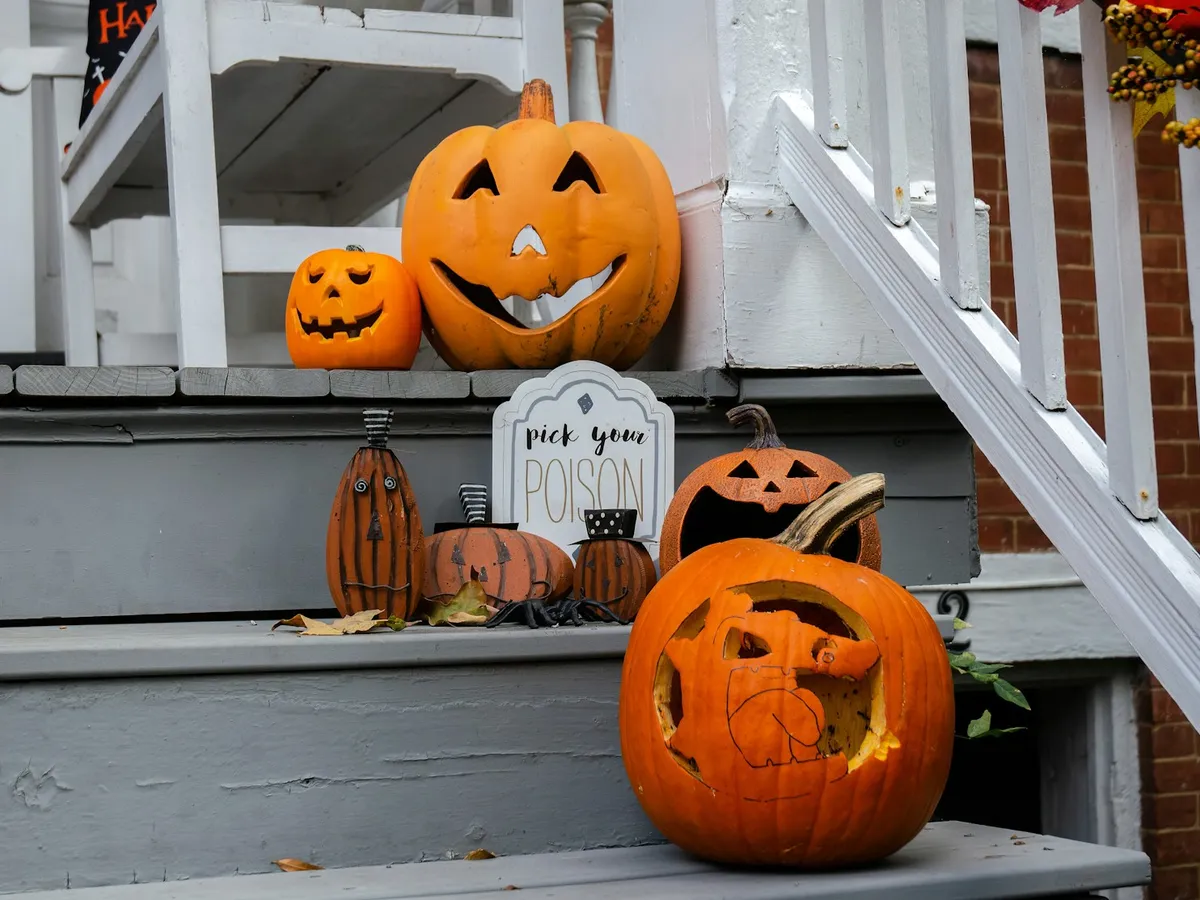
Expecting visitors? The AAP suggests removing tripping hazards like hoses, toys and bikes, sweeping wet leaves from steps, checking outdoor lights and keeping pets away from the door. For jack-o’-lanterns, use battery candles, a flashlight or a glow stick rather than a real flame where little ones walk past.
Candy
The toddler candy plan (without the battles)
Here’s the honest truth: much of what goes into a Halloween bucket isn’t safe for a toddler to eat. That doesn’t mean you need to ban the fun. It means you need a plan, ideally one your child helps make.
⚠️ Choking hazards for babies and toddlers
The AAP says babies and toddlers should not have hard candies, caramel apples, popcorn, gum, small candies like jellybeans, gummy candy, pumpkin seeds, or anything with whole nuts. Candy wrappers, stickers, small toys and temporary tattoos can be choking hazards too. Keep an eye on what’s in your child’s mouth at all times while trick-or-treating (HealthyChildren.org).
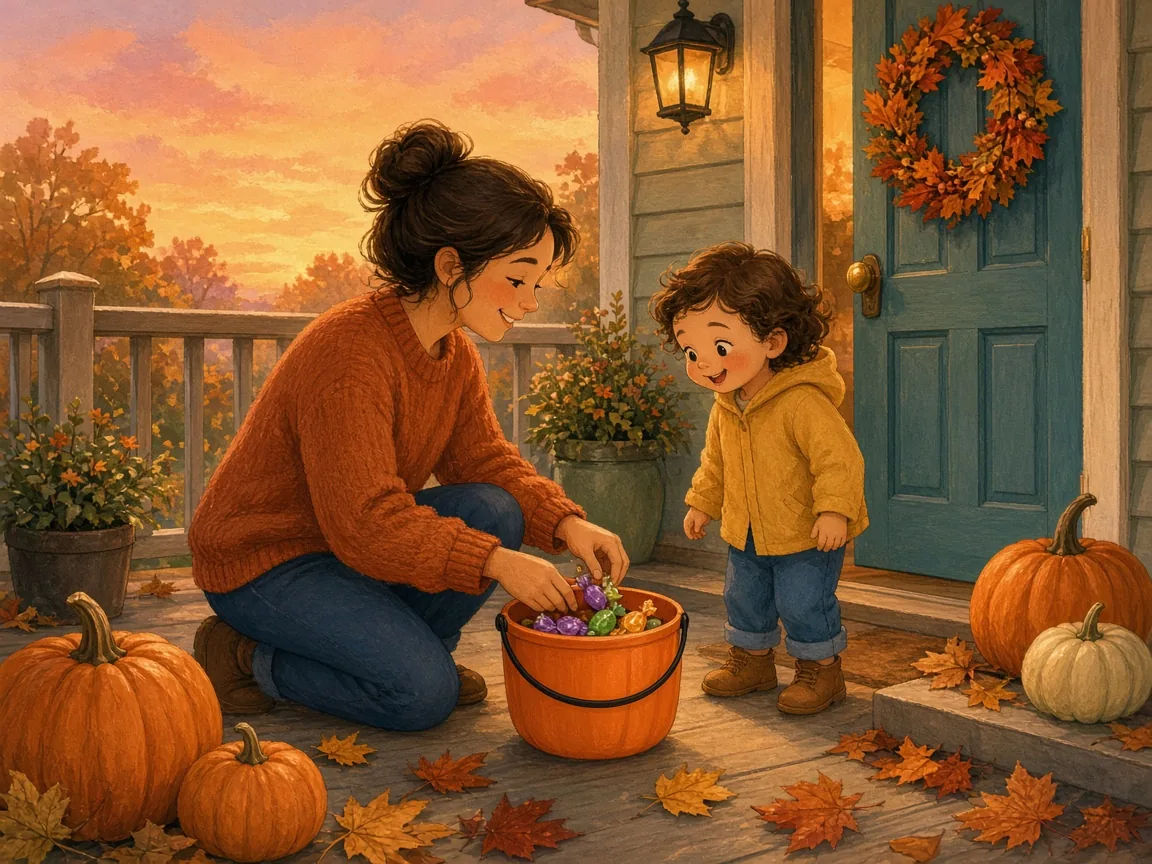
- Agree on the plan before you leave. “We collect treats in the bucket, and we look at them together at home.”
- Nothing gets eaten on the walk. The AAP suggests waiting until you’re home to sort and check treats, and throwing away anything spoiled, unwrapped or suspicious.
- Sort together. Little kids love sorting. Make piles by color or shape. Older siblings can help.
- Trade up. Swap the unsafe candy for a toddler-friendly treat, a sticker sheet or a new coloring page. Many toddlers care more about the bucket than what’s in it.
- Ration the rest. One small treat after dinner for a few days works for many families. The AAP recommends keeping candy rules realistic, consistent and positive.
Food allergies and the Teal Pumpkin Project
The AAP calls Halloween one of the trickiest days of the year for children with food allergies, and suggests offering non-edible goodies. FARE’s Teal Pumpkin Project uses a teal pumpkin or sign on your doorstep to show you have non-food treats available, so kids with food allergies and other conditions can join in (FARE). FARE’s idea list includes glow sticks, crayons, bubbles, stickers, bookmarks and finger puppets, kept in a separate bowl from candy (FARE non-food treat ideas). If your child has a food allergy, carry their prescribed emergency medicine and make sure every adult with you knows what to do.
🪄 Parent hack
Hand out non-food treats at your own door. Your toddler can “help” by offering stickers or crayons, which gives them a job, a sense of pride and a way to enjoy Halloween without walking far. Our candy-free Boo basket ideas work as treats too.
Rehearse
The practice week: make Halloween feel familiar
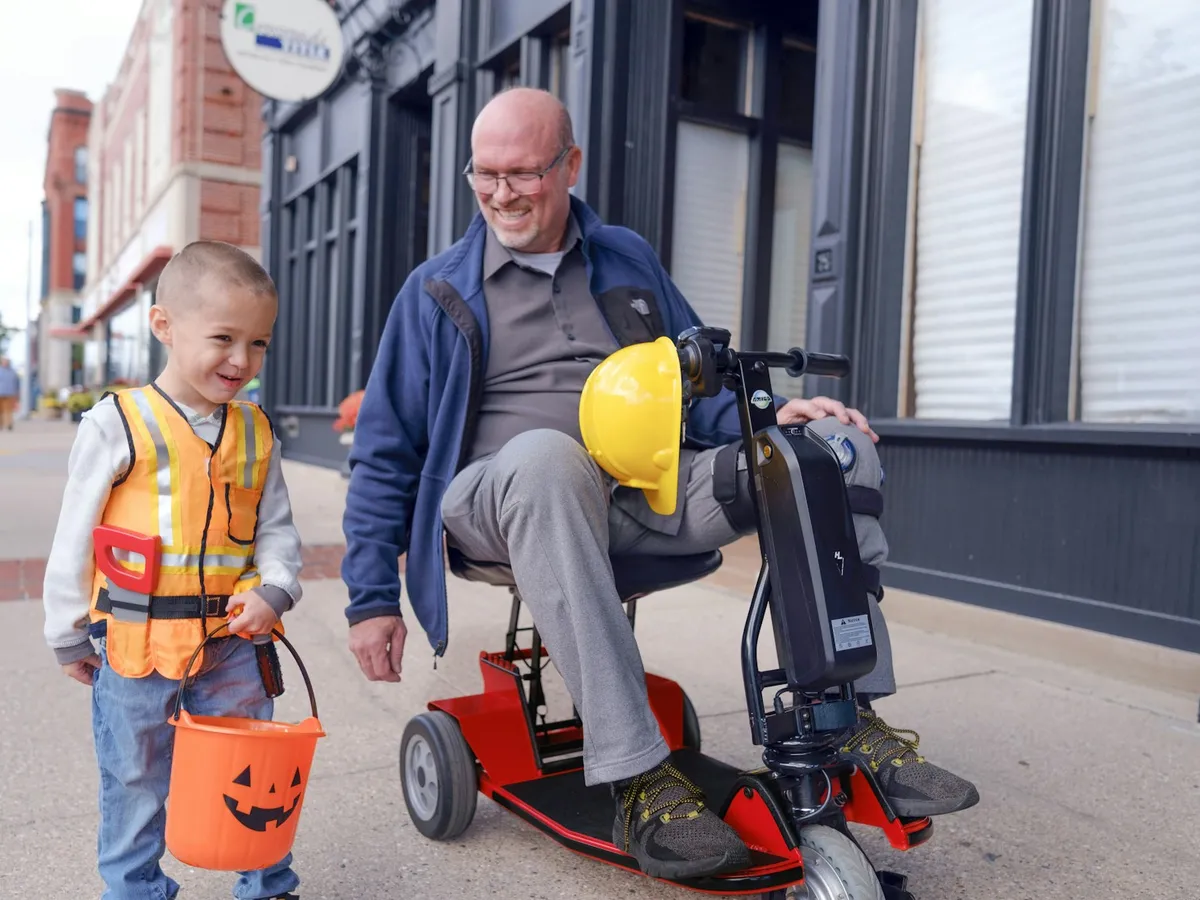
Toddlers handle new experiences best when they’ve “rehearsed” them. You have a few days, which is plenty. Five or ten minutes a day is enough.
| Day | Practice | Why it helps |
|---|---|---|
| Mon | Read the Halloween night picture story from our free printable | Shows each step so nothing is a surprise |
| Tue | Costume play: wear it for 10 minutes while playing | Gets them used to how it feels |
| Wed | Pretend trick-or-treat at home: knock on bedroom doors, say “Trick or treat!” and “Thank you!” | Practices the words and the routine |
| Thu | A dusk walk around the block with a flashlight | Darkness, decorations and porch lights become familiar |
| Fri | Color a Halloween page together and talk about “silly spooky” vs. “too scary” | Gives words for feelings and a calm activity |
| Sat (Halloween) | Early dinner, short loop, home for bath and bed | Keeps the night calm and predictable |
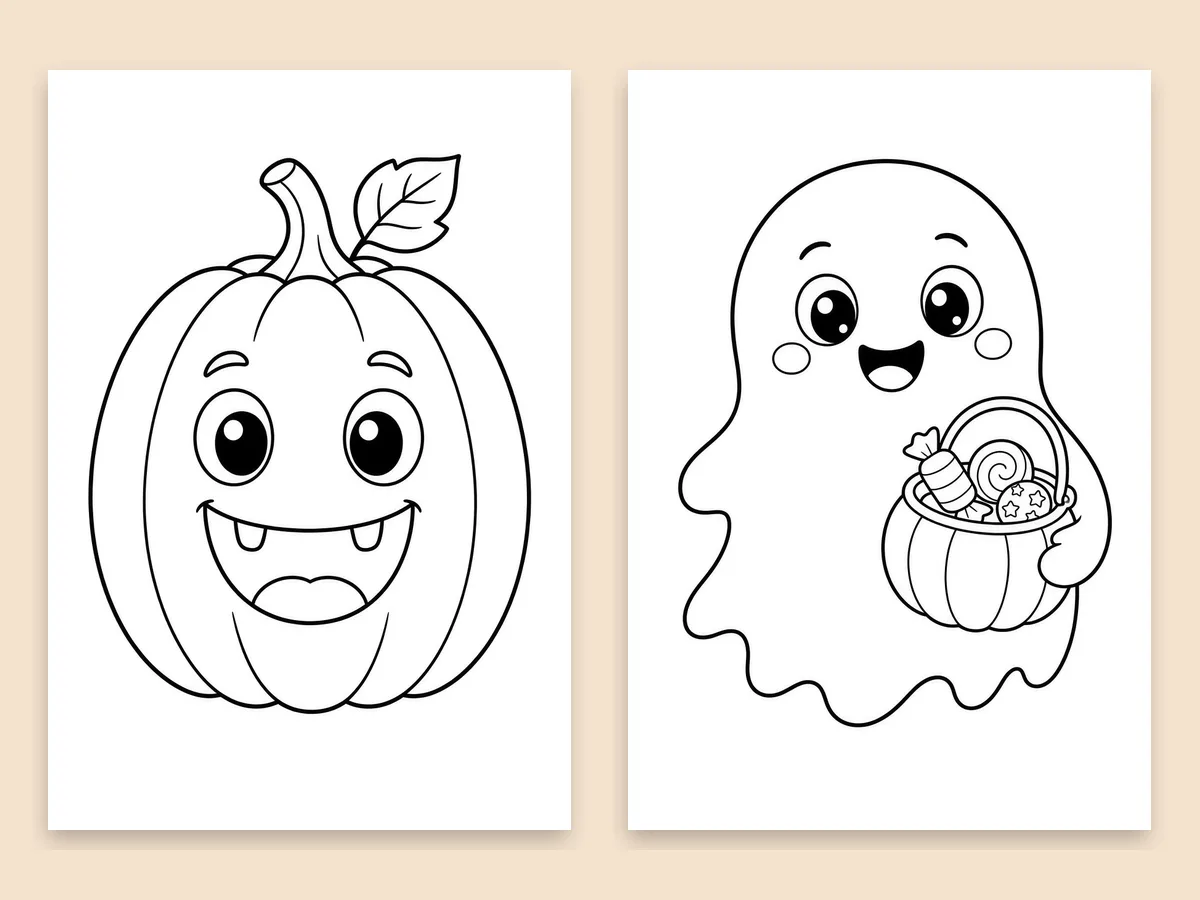
Talking about “pretend” helps a lot. Explain that the people in masks are “neighbors dressed up, like you,” and practice a brave phrase together: “That’s a costume!” Cute, friendly coloring pages (pumpkins with big smiles, ghosts holding candy buckets) are an easy, low-stakes way to talk about Halloween before the night.
📘 From the ColorJoy shelf
Cute-not-scary coloring for the countdown
Our Halloween Coloring Book for Kids Ages 4–8 is full of smiling pumpkins, friendly ghosts, bats and trick-or-treat scenes: a calm activity for the practice week, the car ride or the wind-down after.
See it on Amazon ($9.99) →Our own book; we earn money if you buy it.
The plan
Halloween night, step by step
- 4:30 p.m. Early dinner and a calm activity at home (a coloring page, a short story). Keep the TV and screens off to avoid extra stimulation.
- 5:15 p.m. Bathroom, diaper, warm layer, then costume on. Take a photo now, at home, while they’re happy.
- 5:30 p.m. Glow sticks on, flashlights on. Grab the go-bag and the wagon or stroller.
- 5:45 p.m. Start your loop. Visit friendly houses first: grandparents, neighbors you know, homes with pumpkins and porch lights.
- 6:30 p.m. Head home on a high note: “Three more houses, then home!”
- 6:45 p.m. Sort and check treats together. Choose one (toddler-safe) treat.
- 7:00 p.m. Bath, pajamas, a Halloween story, and your usual bedtime routine.
💡 Adjust for your family
These times are an example for a 7:30 p.m. bedtime. If your toddler goes to bed at 7:00, shift everything 30 minutes earlier, or try a daytime event instead.
Big feelings
Meltdown rescue: what to say when it all goes wrong
Even with a perfect plan, toddlers sometimes fall apart. It doesn’t mean Halloween failed. It means your child is tired, overwhelmed or scared, and they need you to be the calm one.
- Step away. Move to a quiet spot on the sidewalk, away from the door and the noise.
- Get low and name it. “That was really loud and surprising. You feel scared.”
- Offer comfort, not a lecture. A hug, a sip of water, a snack from the go-bag.
- Give a simple choice. “Do you want one more house with a pumpkin, or go home and see your candy?”
- Respect the answer. Going home early is a win, not a defeat.
If your toddler is easily overwhelmed by crowds, noise and lights, our overstimulated toddler guide has more calming steps and a holiday plan. And for sensory-friendly ways to celebrate at home, try our Halloween sensory activities for toddlers.
Other ways
Easier alternatives to door-to-door trick-or-treating
Trick-or-treating isn’t the only way to celebrate. Many families with young toddlers prefer one of these, and they’re just as magical at this age.
- Daytime eventsMany towns, libraries, malls and park districts host earlier Halloween events. The AAP suggests checking for these if trick-or-treating starts after dark.
- Trunk-or-treatDecorated cars in one parking lot: short distances, no crossing streets, lots to see.
- Family-and-friends routeVisit three or four homes of people your toddler knows. Short, familiar and warm.
- Door greeterStay home and let your toddler help hand out non-food treats. They see every costume without walking.
- Indoor treasure huntHide small treats or stickers around the house and “trick-or-treat” bedroom to bedroom.
- Halloween coloring partyPajamas, a pumpkin snack and cute Halloween coloring pages. Calm, cozy and perfect for under-3s.
Want a full list? Our screen-free Halloween activities have plenty, and our Halloween coloring pages for toddlers are made for little hands.
Checklist
Printable go-bag checklist
Pack this the afternoon of Halloween. Everything fits in a small backpack or the stroller basket.
- Flashlight or glow stick for each child
- Small, light treat bucket (with reflective tape)
- Wipes and a spare diaper or underwear
- Water bottle
- A warm layer that fits over the costume
- Prescribed medicines, such as an epinephrine auto-injector
- A toddler-safe snack
- A few stickers or a mini coloring book for trading
- Phone (charged)
- Plan B: comfy hat or ears in case the costume comes off
Freebie
Free printable: the toddler trick-or-treat kit
🎁 Free printable
The ColorJoy Little Trick-or-Treater Kit (3 pages)
Page 1 is a “ready list” with a costume check, go-bag checklist and a space to write your route and home-by time. Page 2 is a six-step Halloween night picture story to read together this week. Page 3 is Halloween spotting bingo for your walk, with a smiling pumpkin coloring page for when you get home.
Download the free printable (PDF) →
Free for personal and classroom use. No email or sign-up needed.
We add a new free printable every week. Coming up next: Thanksgiving week (Thanksgiving is Thursday, November 26). Until then, try our pumpkin activities for preschoolers and Thanksgiving activities for toddlers.
Your plan
What to do tonight (about 15 minutes)
A few small steps tonight make Saturday much calmer.
3 minutes
Print the kit
Download the free trick-or-treat kit and put the picture story by your child’s bed.
5 minutes
Do a costume check
Try the costume on yourself (or on your child) and check the fit, the label and whether they can see clearly.
2 minutes
Decide your time
Pick a start time, a home-by time and a short loop. Write it on the ready list.
5 minutes
Read the story together
Read the Halloween night story once at bedtime. Practice saying “Trick or treat!” and “Thank you!”
💛 Be kind to yourself
Whatever happens on Saturday, you’re making a memory. Three houses and a happy toddler is a wonderful Halloween.
From the ColorJoy shelf
Our Halloween pick: the Halloween Coloring Book for Kids Ages 4–8
Our Halloween pick
Halloween Coloring Book for Kids Ages 4–8: Cute and Spooky Halloween Pages with Pumpkins, Ghosts, Bats, Witches and Trick-or-Treat Fun
Cute pumpkins, friendly ghosts, flapping bats and silly witches, in scenes that are fun, not frightening. Easy to enjoy with crayons, markers or colored pencils.
$9.99paperback · 41 pages · 5.5 × 8.5 in · reading age 4–10
Our own book; we earn money if you buy it. Price as listed on Amazon.com when we checked on 26 October 2026; please confirm on the product page.
Here’s how it fits this guide. Toddlers and preschoolers do best when Halloween feels friendly and familiar. A cute, not-scary coloring book is one of the easiest ways to get there: you can talk about costumes, pumpkins and “pretend” while your child colors, use it as a calm activity before you head out, and pull it out again when the excitement is over and everyone needs to wind down.
The book is listed for reading ages 4–10, so it’s best for preschoolers and big siblings; younger toddlers can scribble alongside with chunky crayons and a grown-up. It also makes a thoughtful, candy-free treat or Boo basket filler. Browse every title in the Mr A G author store on Amazon. Prefer instant printables? Our Kids Printable Mega Bundle on Payhip ($14.99) has 11 coloring, tracing and flashcard PDFs to print at home (a separate product, not this book).
📚 Related books from ColorJoy
If this topic is on your mind, these titles from our own shelf fit well alongside it.

Mutate Monster Coloring Book (Ages 4–8)
Cute, bold monster faces for kids who love “silly spooky” more than scary: a great after-Halloween coloring book.
$9.99 paperback on Amazon.com · Paperback, shipped by Amazon

100+ Easy Paper Craft Video Tutorials
Short step-by-step paper craft videos, including easy Halloween creations, for a crafty countdown (a video collection, not printable).
$4.99 printable PDF on Payhip · Instant PDF download; print at home
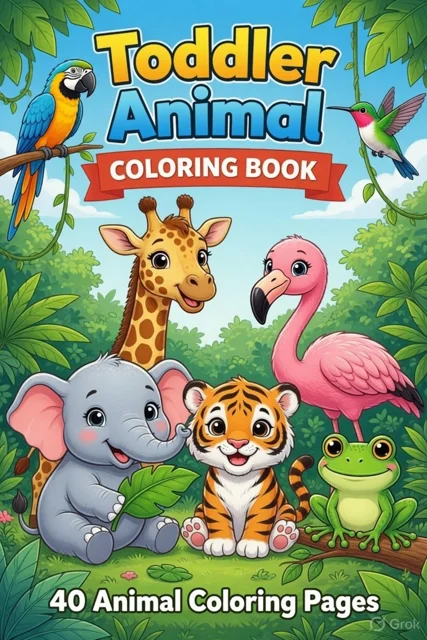
Toddler Animal Coloring Pages (printable PDF)
Big, friendly animals with thick outlines for the youngest colorers, instant PDF to print at home.
$1.99 printable PDF on Payhip · Instant PDF download; print at home
These are our own books and printables, and we earn money if you buy them. Prices as listed on Amazon.com and Payhip when we checked on 26 October 2026; prices can change, so please confirm on the product page.
Frequently asked questions
What age can a toddler go trick-or-treating?
There is no official age. Many families start around 2 to 3, when a child can walk a short distance and follow the simple routine of knocking, saying “trick or treat,” taking one treat and saying “thank you.” Babies and young toddlers can join a short stroll in a stroller or wagon.
What time should you go trick-or-treating with a toddler?
Go early, around dusk, after an early dinner, and plan to be home 30 to 60 minutes later so you can keep your usual bedtime. The AAP suggests checking for earlier-in-the-day community events if trick-or-treating starts after dark where you live.
How many houses should a toddler trick-or-treat?
For under-2s, 3 to 10 houses is plenty. Many 2- to 4-year-olds are happy with a 30- to 60-minute loop. Set a time limit instead of a number of houses, and stop while everyone is still having fun.
What Halloween candy is unsafe for toddlers?
The AAP says babies and toddlers should not have hard candies, caramel apples, popcorn, gum, small candies such as jellybeans, gummy candy, pumpkin seeds or anything with whole nuts. Wrappers, stickers and small toys can also be choking hazards. Check all treats at home before anything is eaten.
What if my toddler is scared of Halloween costumes and decorations?
Skip scary houses, practice at home with pretend trick-or-treating, read a picture story about the night, and explain that masks are “neighbors dressed up.” Friendly, cute coloring pages are an easy way to talk about Halloween before the night.
What is a teal pumpkin on Halloween?
A teal pumpkin or sign is part of FARE’s Teal Pumpkin Project. It means the home offers non-food treats like glow sticks, stickers or small toys, so children with food allergies and other conditions can trick-or-treat too.
Happy Halloween from all of us at ColorJoy 🎃
ColorJoy makes bold, easy coloring books and free printables for little hands, plus practical, warm guides for parents. New guides and printables go up every week through the holidays, so come back soon.
For a friendly, not-scary Halloween countdown, our pick is the Halloween Coloring Book for Kids Ages 4–8.
Get the Halloween Coloring Book →
Next up: candy-free Boo basket ideas or the best Halloween coloring books for kids.
Photos: Unsplash (Unsplash License). Book images, coloring pages and printable art: ColorJoy / Mr A G. This guide is general information, not medical advice.