Free printable chart • Ages 1–4 • Gentle sleep
Toddler Bedtime Routine: A Simple 7-Step Plan That Actually Works (+ Free Printable Chart)
It is 8:15 pm. You have read three books, refilled the water cup twice, found the “right” blanket, and your toddler is now asking for a banana. If bedtime feels like the longest part of your day, you are in very good company. The good news: a short, predictable toddler bedtime routine is one of the simplest, best-supported things you can do for calmer evenings. This guide gives you a clear 7-step plan, sample routines for 20 or 30 minutes, fixes for the most common problems, and a free printable picture chart your toddler can follow.

🌟 By the end of this page you’ll have…
- a simple 7-step toddler bedtime routine, based on the AAP’s “Brush, Book, Bed” approach
- how much sleep toddlers need, with sample bedtimes you can adapt
- ready-made 20-minute and 30-minute routines
- what to do when the bedtime routine is not working or takes too long
- a free 5-page printable: a bedtime routine chart, picture cards, a make-your-own chart, a one-week tracker and a calm wind-down plan
🎨 New here? Hi, we’re ColorJoy
ColorJoy makes bold, easy coloring books and printables for little hands, plus practical guides for real family life. This guide sticks to advice from the American Academy of Pediatrics (AAP) and the CDC, written for tired parents. If evenings feel wild in general, our guide to the overstimulated toddler may help too.
Real-life moments
Sound familiar?
Every family’s bedtime looks a little different, but these moments come up again and again.
The stall-a-thon
Water. Potty. Another hug. A question about dinosaurs. The light is too bright, then too dark. Forty minutes later, you are still at the door.
Try this: handle every “need” before lights out (water, potty, comfort object, night light) so you can calmly say, “We already did that. Now it’s sleep time.”
The 90-minute bedtime
Bath turned into a splash party, books turned into five books, and somehow it is 9 pm and everyone is in tears.
Try this: decide the numbers before you start (one bath, two books, one song) and show them on a picture chart.
The after-daycare crash
Your toddler held it together all day and falls apart at 6 pm. Dinner, bath and bed feel like a battle.
Try this: move bedtime earlier, not later. A tired toddler often fights sleep harder. Even 15 minutes can help.
Why it works
Why a bedtime routine works so well for toddlers
Toddlers love to know what comes next. A routine done in the same order every night acts like a gentle countdown to sleep: bath means pajamas, pajamas mean teeth, teeth mean books, books mean sleep.
- It makes bedtime predictable. The AAP explains that a predictable nighttime routine helps children learn to expect what comes next and may ease the stress many families feel at bedtime (HealthyChildren: Brush, Book, Bed).
- It means fewer power struggles. According to the AAP, toddlers with routines for bath time, bedtime and meals seem to have fewer power struggles with their parents (HealthyChildren). When the chart says “teeth,” it is the chart deciding, not you.
- It helps their body wind down. Dim lights, quiet voices and calm activities signal that the day is ending. The AAP notes that active play right before bed may make a child too excited to sleep (HealthyChildren: bedtime battles).
- It travels. The same steps can work at Grandma’s house, in a hotel or during the holidays. The AAP suggests choosing sleep routines you can use anywhere (HealthyChildren).
The CDC’s tips for 2-year-olds describe a calm bedtime in one line: put on pajamas, brush teeth and read one or two books, with consistent sleep times (CDC: milestones by 2 years). That is really the whole idea. Simple beats fancy.

Sleep needs
How much sleep does a toddler need?
The American Academy of Sleep Medicine (AASM) guidelines, which the AAP supports, give total sleep in 24 hours, including naps (HealthyChildren: how many hours does your child need?):
| Age | Total sleep per 24 hours | What that can look like |
|---|---|---|
| 1–2 years | 11–14 hours | For example, about 11 hours at night plus a 1.5–2 hour nap |
| 3–5 years | 10–13 hours | For example, about 10–11 hours at night, with or without a short nap |
To find your toddler’s bedtime, count back from the time they usually wake up. If your 2-year-old wakes at 6:45 am and naps for about 2 hours, a bedtime around 7:30 pm gives roughly 11 hours at night and about 13 in total. These are examples, not rules: your child’s needs and your family’s schedule matter.
💡 Earlier can be easier
The AAP advises not waiting for eye-rubbing or yawning, since that is probably too late, and notes that putting a child to bed even 15 to 20 minutes earlier can make a big difference (HealthyChildren).
Clocks just changed? Our guide to daylight saving time and toddler sleep shows how to shift bedtime gently.
Step by step
The 7-step toddler bedtime routine
This plan follows the AAP’s simple “Brush, Book, Bed” idea, with a few extra steps most families need. Keep the order the same every night; the order matters more than the exact clock time of each step.
- Start the wind-down (30–60 minutes before) Turn off screens, dim the lights and lower your voice. The AAP recommends turning off all screens at least an hour before bedtime and keeping TVs, tablets and phones out of children’s bedrooms (HealthyChildren). Swap in quiet play: puzzles, blocks, coloring or a calm bath.
- Bath or wash up A warm, calm bath works well for many toddlers. If bath winds your child up, move it earlier in the evening or just wash face and hands. Bath does not have to happen every night.
- Pajamas, with a choice Offer two options: “Stars or dinosaurs?” Small choices give toddlers a feeling of control so they push back less on the big things (like going to bed).
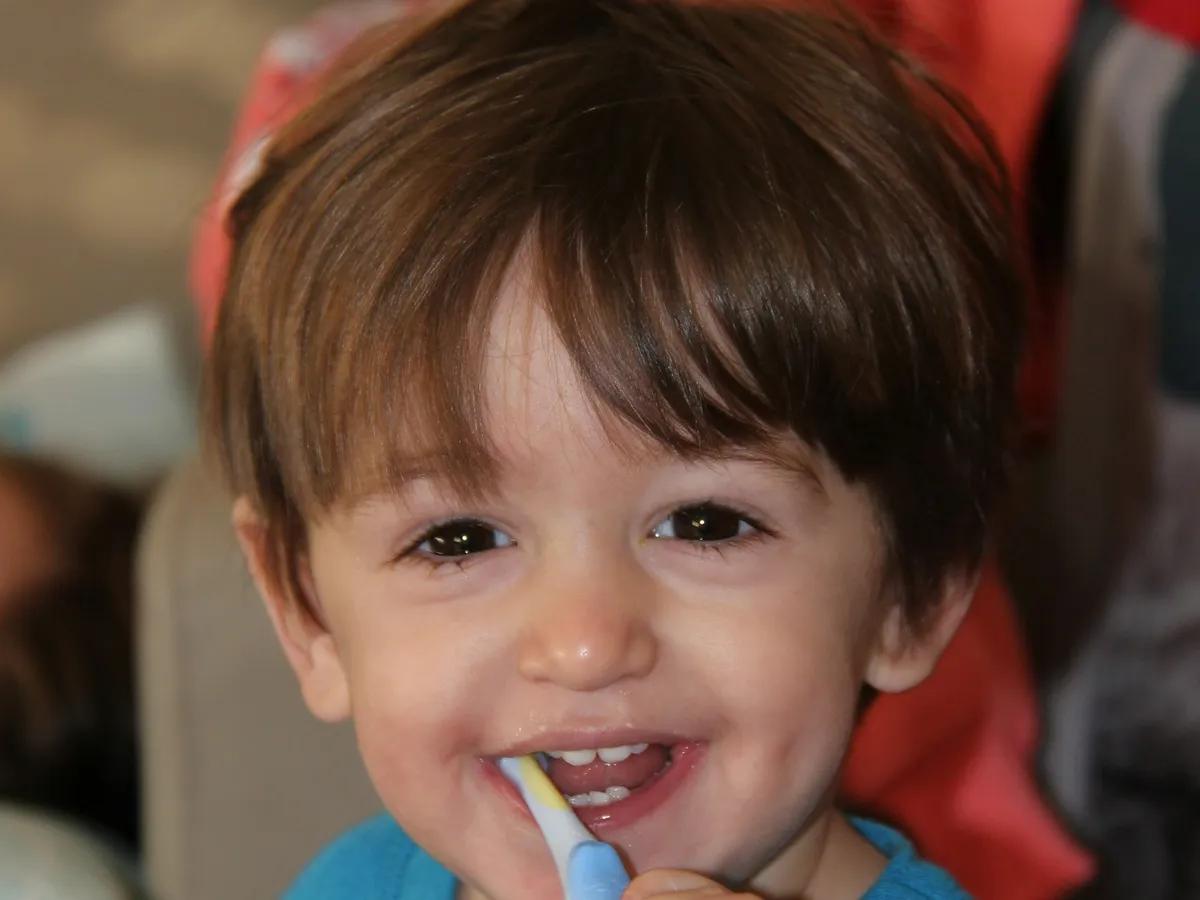
- Brush teeth Help your child brush with fluoride toothpaste: a smear the size of a grain of rice for children under 3, a pea-sized amount for ages 3 to 6. Spit, don’t rinse. The toothbrush should be the last thing to touch the teeth before bed (AAP: Brush, Book, Bed).
- Potty or fresh diaper, plus a sip of water Take care of these now, so they do not become reasons to get up later. The AAP suggests handling needs like water, a light left on or the door open a little before bedtime (HealthyChildren).
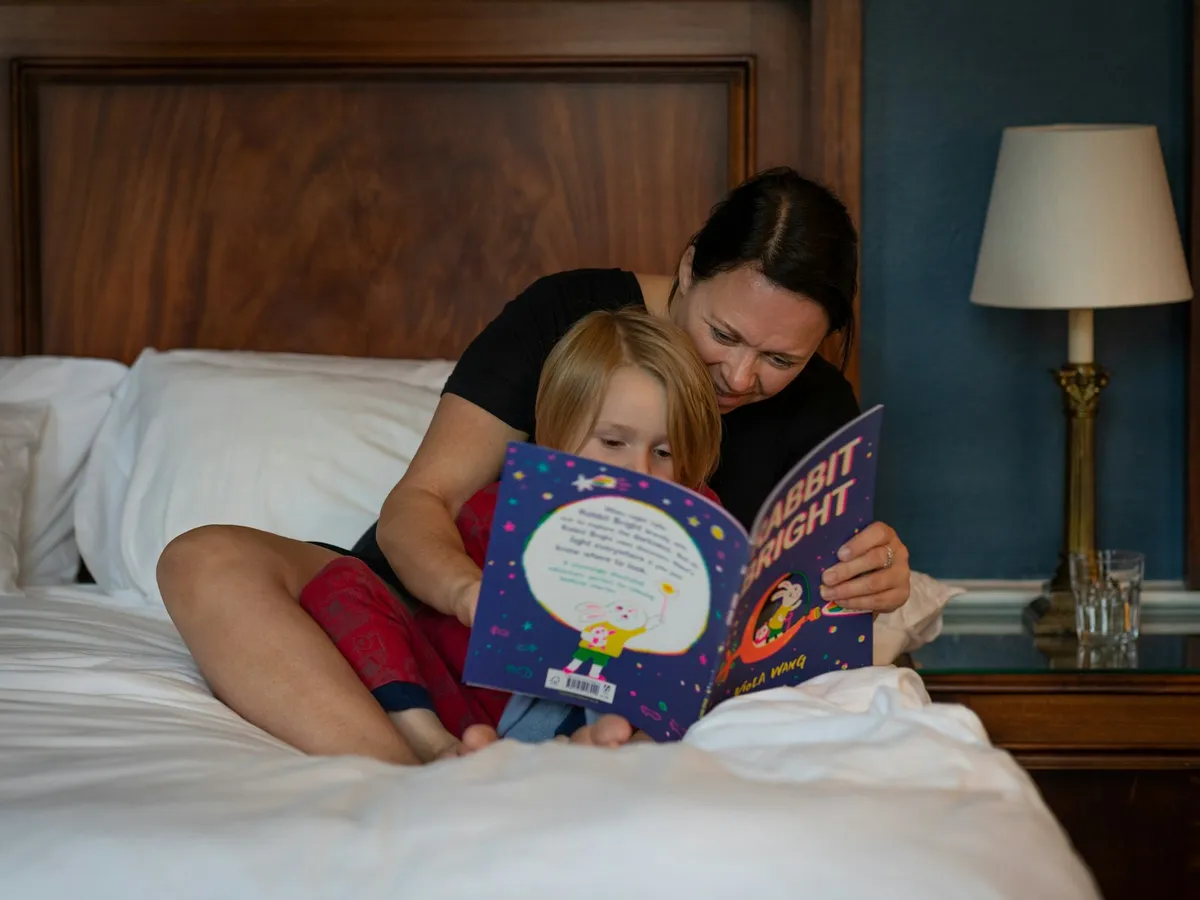
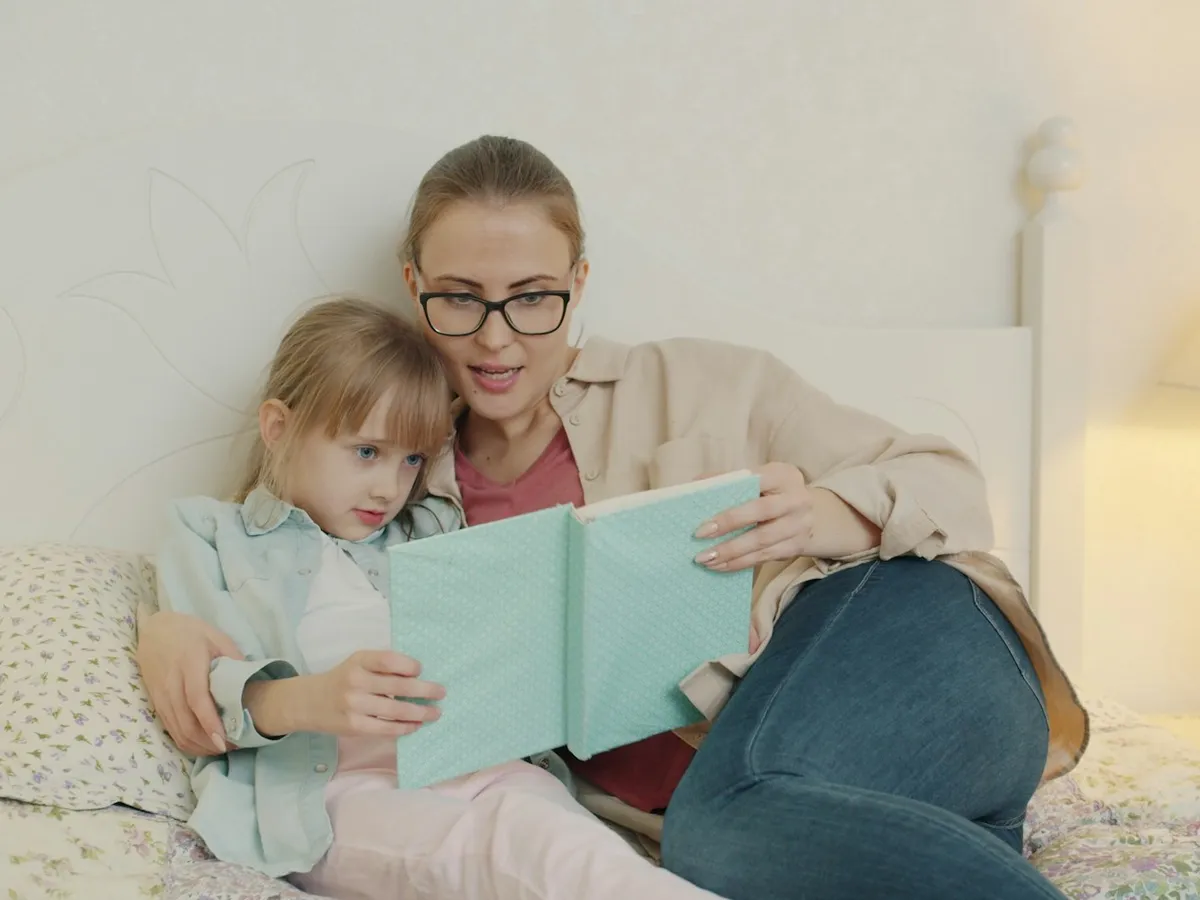
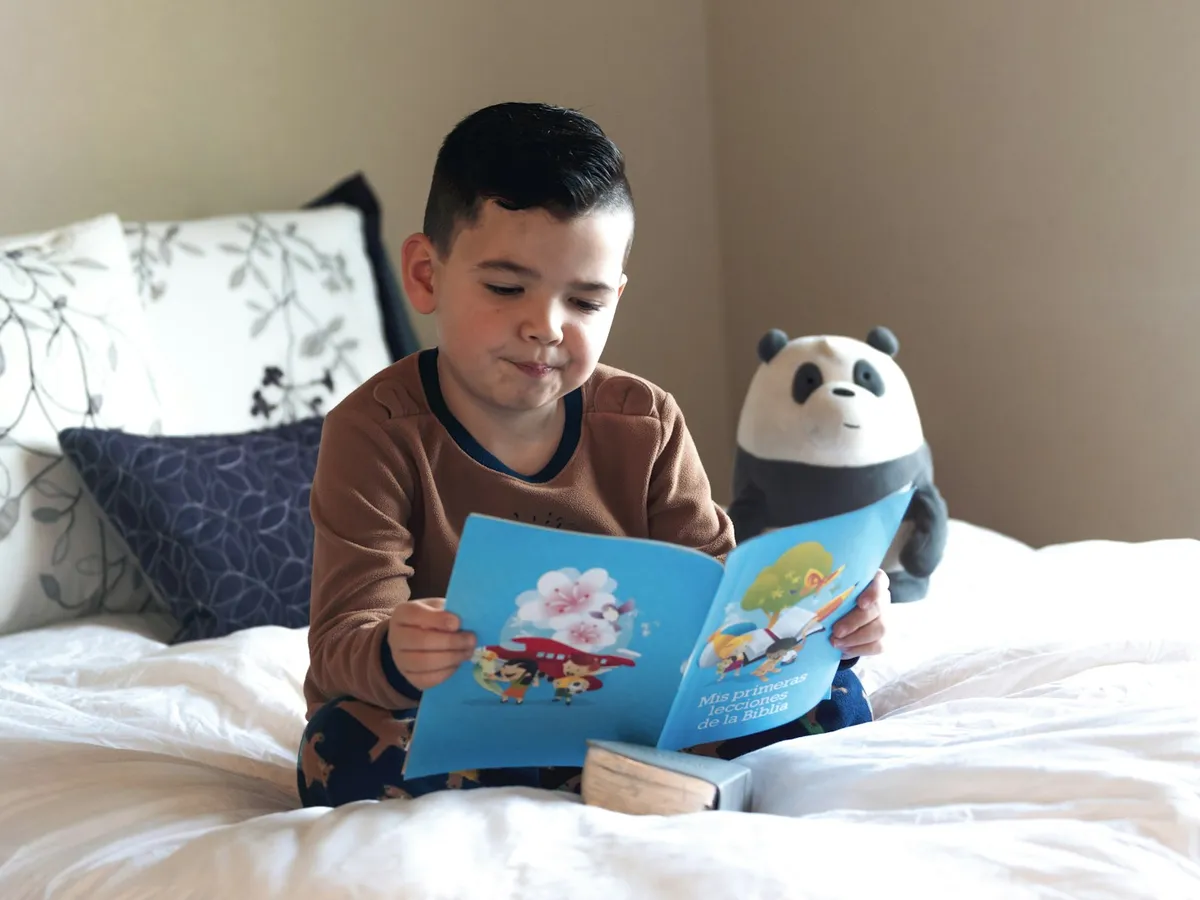
- Books in bed Read the same number of books each night, maybe one or two. The AAP suggests 10 to 20 minutes of book sharing with the TV off as part of the bedtime routine (HealthyChildren). Reading the same favorite again and again is normal and good for toddlers.
- Song, cuddle and the same goodnight words Finish with a short song or quiet talk and the same goodnight phrase each night: “I love you. See you in the morning.” Then lights out. Many experts suggest leaving while your toddler is drowsy but awake, so they learn to fall asleep on their own.


💡 A comfort object can help
The AAP says it is OK for a toddler to sleep with a teddy bear, special blanket or favorite toy. It often helps them fall asleep and settle after night wakings. Choose one without buttons, loose ribbons or other choking hazards (HealthyChildren).
Age guide
Toddler bedtime routines by age
The steps stay mostly the same as your child grows; what changes is how much they can do themselves and how long each step takes.
| Age | Routine length | What changes | Tips that help |
|---|---|---|---|
| 12–18 months | 15–20 minutes | You do most steps; your toddler “helps” (holds the toothbrush, picks a book) | Same song every night; very short books with pictures to point to |
| 18 months–2 | 20–30 minutes | Big feelings, more “no!”, testing limits at bedtime | Two choices at each step; a picture chart to point to |
| 2–3 years | 20–30 minutes | Stalling and extra requests; may move to a big-kid bed | Decide the number of books first; use a “one more hug” rule |
| 3–4 years | 25–35 minutes | Can do steps alone (pajamas, washing hands); fears may appear | Let them tick off the chart; talk about worries earlier in the evening |
Fears of the dark or “monsters” often show up around ages 3 and 4. The CDC suggests talking about the fear and helping your child learn things to do when afraid, such as hugging a stuffed animal (CDC: milestones by 4 years). A dim night light can help too.

Copy and adapt
Sample toddler bedtime routines (20 and 30 minutes)
Copy one of these, then adjust. Times are approximate and based on a 7:30 pm lights out; shift everything to match your child’s bedtime.
| Time | The 20-minute routine |
|---|---|
| 7:00 | Screens off, quiet play |
| 7:10 | Pajamas + diaper/potty |
| 7:15 | Brush teeth |
| 7:18 | One or two books in bed |
| 7:28 | Song, cuddle, goodnight words |
| 7:30 | Lights out |
| Time | The 30-minute routine |
|---|---|
| 6:45 | Screens off, tidy toys together |
| 7:00 | Warm bath |
| 7:10 | Pajamas (two choices) + potty |
| 7:15 | Brush teeth + sip of water |
| 7:18 | Two books in bed |
| 7:28 | Song and goodnight |
| 7:30 | Lights out |
On busy nights, drop the bath and keep everything else. The steps that matter most are the ones that happen in the same order every night. Need help with the rest of the day? Our daily routine chart for kids covers mornings and afternoons too.
Free printable
Free printable: toddler bedtime routine chart
🎁 Free printable
The ColorJoy Toddler Bedtime Routine Chart (5 pages, US Letter)
Page 1: a ready-made “My Bedtime Routine” chart with 8 picture steps. Page 2: 12 picture cards to cut out (bath, pajamas, teeth, potty, books, song, goodnight, lights out, water, tidy toys, night light, family hug). Page 3: a make-your-own chart for 6 steps. Page 4: a one-week bedtime tracker for grown-ups. Page 5: a calm 30-minute wind-down plan with AAP-supported sleep hours.
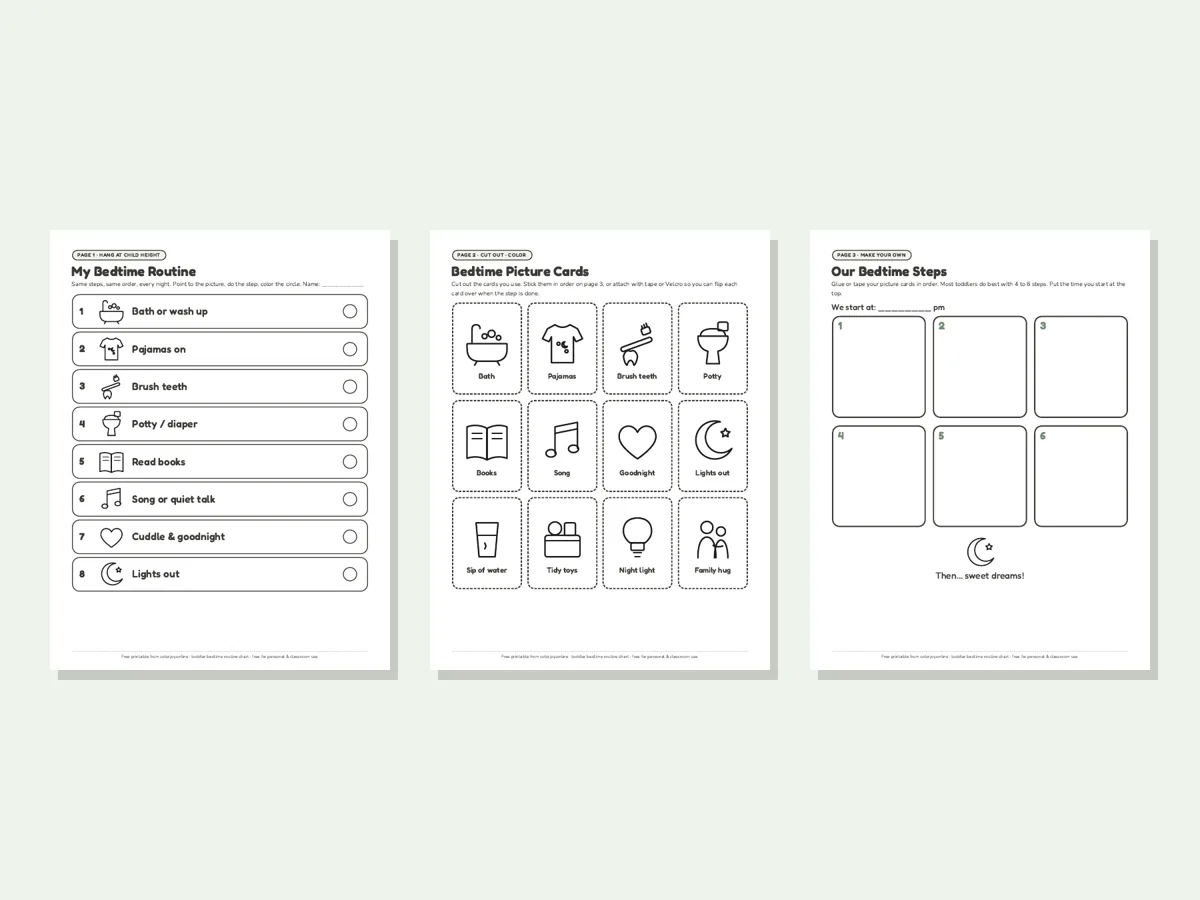
Download the free bedtime routine chart (PDF) →
Free for personal and classroom use. No email or sign-up needed.
How to use the chart
- Make it together. Let your toddler color the picture cards and help choose the order. Kids follow a chart they helped make.
- Hang it low. Tape it at your child’s eye level near where the routine happens, such as the bedroom door.
- Point, do, tick. Before each step, point to the picture: “What’s next?” After it, your child colors the circle or flips the card.
- Let the chart be the boss. “The chart says teeth next!” takes the argument out of it.
- Keep it for a few weeks. Most toddlers need the same routine for a while before it feels automatic. Changes take time.
More printable routines live in our activity ideas hub.
Troubleshooting
Toddler bedtime routine not working? Common problems and fixes
Even the best routine has rough nights, especially during holidays, illness, travel or big changes like a new sibling. Here are gentle fixes for the problems parents ask about most:
| Problem | What may be going on | What to try |
|---|---|---|
| Endless stalling (“one more…”) | Wanting more time with you; testing limits | Handle needs first; offer “one more hug” as a built-in last step; same calm phrase each time |
| The routine takes too long | No clear limits on books, bath or songs | Decide numbers before you start; use the chart; a simple timer for bath |
| Crying when you leave | Separation feelings; habit of falling asleep with you | Stay calm and brief; a comfort object; check-ins that are boring and short |
| Getting out of bed | Big-kid bed freedom; curiosity | Walk them back calmly with few words, every time; praise in the morning |
| Fighting sleep after daycare | Overtired by evening | Try a bedtime 15–20 minutes earlier for a week |
| Wild energy at bedtime | Active play or screens too close to bed | Move rough play earlier; screens off an hour before bed; dim lights |
The AAP adds a few honest tips for bedtime battles: be consistent with the same bedtime every night, avoid returning to the room each time your child calls out once you know they are safe and well, and give it time. They also note that a negative response from a parent can sometimes make a sleep problem worse, so try to stay understanding even on hard nights (HealthyChildren: 7 tips to end bedtime battles).

When evenings feel like a battle
Toddler Parenting Guide: Tantrums, Hitting & Picky Eating (PDF)
A short, practical guide for real toddler challenges, including calm ways to handle anger and tantrums without yelling. $3.99.
See it on Payhip →Our own book; we earn money if you buy it.
💡 Big tantrum at bedtime?
Keep your voice low, keep your child safe, and keep the routine going once they are calm. If evenings are often full of meltdowns, a calm-down corner and some simple mindfulness activities earlier in the day can help.
Environment
A sleep-friendly room for toddlers
- Dark and dim. Dim lights before bedtime. A small, warm night light is fine if your child is afraid of the dark.
- Cool and comfortable. The AAP mentions room temperatures between 68°F and 72°F for infants and children (HealthyChildren).
- No screens. Keep TVs, tablets and phones out of the bedroom, as the AAP and CDC both recommend.
- Quiet. Steady background noise (like a fan) can cover household sounds for some kids.
- Simple bed. One safe comfort object for toddlers, without buttons or loose ribbons. The AAP advises keeping other toys out of the bed.


For parents
Don’t forget your evening too
Bedtime is hard work, and it often comes at the end of a long day for you too. A few things that help parents (not just toddlers):
- Take turns if you have a partner: one night on, one night off, or split the steps.
- Keep your own wind-down. After lights out, try 15 minutes of something calm and screen-free for you: a book, a cup of tea, coloring or a short walk.
- Lower the bar on hard nights. Skip the bath. Read one short book. A shorter routine done calmly is better than a long one done in tears.
- Be kind to yourself. Sleep challenges are very common in toddlerhood. Struggling with bedtime does not mean you are doing it wrong.


Understand the feelings behind the battles
Understanding Your Child’s Emotions: Parenting Guide (PDF)
A clear, compassionate guide to children’s emotional development, for parents of kids ages 0 to 12. $5.99.
See it on Payhip →Our own book; we earn money if you buy it.
Looking for calm activities for the hour before bed? Our quiet time activities for 3-year-olds has lots of easy ideas.
Health
When to talk to your child’s doctor about sleep
Most bedtime struggles are a normal part of toddlerhood. The AAP lists the most common sleep problems in children as difficulty falling asleep, night wakings, snoring, stalling and resisting bedtime, sleep apnea and loud or heavy breathing during sleep, and notes that most sleep problems are easily treated (HealthyChildren). Talk with your pediatrician if:
- your child snores most nights, breathes loudly or seems to pause breathing during sleep
- sleep problems are making your child very tired or irritable during the day
- night wakings or fears are not improving after a few weeks of a steady routine
- you are exhausted and need support (that counts too)
Your pediatrician may ask you to keep a sleep log, so page 4 of the free printable (the one-week tracker) is a good thing to bring along.
Your plan
Start tonight (in about 10 minutes of prep)
You don’t need a perfect plan. Start with these four steps this evening.
3 minutes
Print the chart
Print page 1 of the free routine chart and tape it by the bedroom door.
2 minutes
Decide the numbers
Choose how many books (one or two) and songs (one) before bedtime begins.
1 minute
Set a screens-off time
About an hour before lights out. Put a reminder on your phone.
Every night
Same order, same words
Point to each picture, do the step, and end with the same goodnight phrase.
💛 Be kind to yourself
Expect a few bumpy nights while your toddler tests the new routine. Stay calm, stay consistent, and give it a couple of weeks.
From the ColorJoy shelf
Our book pick for calm evenings: Calming Mindful Coloring Book

Our pick for screen-free wind-downs
Calming Mindful Coloring Book for All Ages
Relaxing patterns, mandalas and nature scenes with thick lines on single-sided pages, for kids, teens and adults. A peaceful, screen-free activity for the quiet hour before bath and books, or for you after lights out. Paperback.
$9.99paperback · ships from Amazon
Our own book; we earn money if you buy it. Price as listed on Amazon.com when we checked on 26 October 2026; please confirm on the product page.
Why it’s our pick: the AAP recommends turning off screens at least an hour before bedtime, and many parents wonder what to do instead. Coloring together is calm, quiet and easy to stop when it is time for bath. To be honest about fit: this is a coloring book for all ages, not a bedtime story book, and some of the patterns are detailed. Preschoolers will enjoy the bigger, simpler nature pages with you, toddlers may prefer our big toddler pages (see below), and many parents keep this one for their own wind-down after lights out.
Browse all our books in the Mr A G author store on Amazon, or get the Kids Printable Mega Bundle on Payhip ($14.99; coloring, tracing and flashcard PDFs). Our full Payhip store is at payhip.com/BookBonbon.
📚 Related books from ColorJoy
If this topic is on your mind, these titles from our own shelf fit well alongside it.

Toddler Animal Coloring Pages (printable PDF)
Big, friendly animals with thick outlines for little hands: a calm coloring choice for the hour before bed.
$1.99 printable PDF on Payhip · Instant PDF download; print at home

Soft & Cozy Mom Life Coloring Book
Cozy motherhood scenes for moms to color after lights out: a small, screen-free moment for you.
$9.99 paperback on Amazon.com · Paperback, shipped by Amazon

Magical Butterfly Coloring Book for All Ages
Beautiful butterflies, flowers and nature scenes for kids, teens and adults, with thick lines.
$8.99 paperback on Amazon.com · Paperback, shipped by Amazon
These are our own books and printables, and we earn money if you buy them. Prices as listed on Amazon.com and Payhip when we checked on 5 November 2026; prices can change, so please confirm on the product page.
Frequently asked questions
What is a good bedtime routine for a toddler?
A good toddler bedtime routine is short, calm and done in the same order every night. A simple version: screens off and quiet play, bath or wash up, pajamas, brush teeth, potty or diaper, one or two books, then a song, cuddle and the same goodnight words before lights out.
How long should a toddler bedtime routine take?
For most toddlers, about 20 to 30 minutes is enough. Longer routines often invite more stalling. Decide the number of books and songs before you start.
What time should a toddler go to bed?
Count back from wake-up time. Children ages 1 to 2 need 11 to 14 hours of total sleep in 24 hours and children 3 to 5 need 10 to 13 hours, including naps, according to AASM guidelines supported by the AAP. Many toddlers end up with a bedtime between about 7 and 8 pm.
Why is my toddler’s bedtime routine not working?
Common reasons are an overtired child (bedtime too late), screens or active play too close to bed, no clear limits on books or requests, or recent changes like travel, illness or a new sibling. Keep the routine consistent for a couple of weeks, try a slightly earlier bedtime and handle needs before lights out.
Should toddlers have screens before bed?
The AAP recommends turning off all screens at least an hour before bedtime and keeping TVs, tablets and phones out of children’s bedrooms. The CDC suggests avoiding screens for 1 to 2 hours before bed for preschoolers.
Can my toddler sleep with a stuffed animal?
The AAP says it is OK for toddlers to sleep with a teddy bear, special blanket or favorite toy, which often helps them settle. Choose one without buttons, loose ribbons or other choking hazards.
Sweet dreams 🌙
ColorJoy makes bold, easy coloring books and printables for little hands, plus practical guides for real family life. We add new guides and free printables every week, so come back whenever you need a little help.
For a calm, screen-free wind-down, our pick is the Calming Mindful Coloring Book.
See the Calming Mindful Coloring Book on Amazon →
More calm-evening help: the overstimulated toddler, quiet time activities for 3-year-olds and a daily routine chart for kids.
Photos: Unsplash (Unsplash License). Illustrations: AI-generated for ColorJoy. Book images and printable art: ColorJoy / Mr A G. This guide is general information for families and does not replace advice from your child’s doctor.