Holiday travel • Ages 1–4 • Free printable
Toddler Sleep While Traveling: How to Help Your Little One Sleep in Hotels, at Grandma’s and Across Time Zones (+ Free Printable Kit)
You finally get everyone to the hotel or Grandma’s house, and your toddler is wide awake at 10 p.m., bouncing in the travel crib. Sound familiar? Sleep away from home is hard for little ones, but it gets much easier with a plan. Here is how to prepare, set up the room, keep the routine, handle time zones and get back on track when you come home.

🌟 By the end of this page you’ll have…
- why toddlers sleep badly away from home, and how much sleep they really need
- a before-you-go checklist (including the one thing to pack that smells like home)
- how to set up a hotel room or a grandparent’s spare room for sleep, safely
- what to do about time zones, naps on the go and the “wide awake at 10 p.m.” problem
- a free 3-page printable: a travel sleep packing list, a bedtime-steps travel card and a calming coloring page
🎨 New here? Hi, we’re ColorJoy
ColorJoy makes bold, easy coloring books and free printables for little hands, plus gentle, practical guides for real family life. Our promise for this guide: realistic steps that work in a small hotel room, no perfection required. If the clocks just changed too, our daylight saving time toddler sleep plan is a good companion.
Real-life moments
Sound familiar?
If you are traveling with a toddler this holiday season, you might recognize one of these nights.
The hotel party
Your 2-year-old thinks the hotel room is the most exciting place on earth. It is 9:45 p.m. and he is jumping on the bed shouting “AGAIN!”
Try this: dim the lights an hour early, do the exact home routine in the same order, and put the travel crib in the darkest corner.
The grandparent bedtime
Grandma is thrilled to see her. Bedtime gets pushed later and later, with cookies and one more story, until your toddler falls apart.
Try this: agree on bedtime before you arrive, and let grandparents own one special step, like the bedtime story.
The 5 a.m. wake-up
You flew from Chicago to New York. Your 3-year-old is up and ready to play at 5:30 a.m., which is 4:30 a.m. in her body.
Try this: get outside into bright morning light, keep meals and naps on local time, and give it a few days.
Why it happens
Why toddlers sleep badly when traveling (it’s not just you)
Toddlers rely on routine and familiar cues to fall asleep: the same room, the same sounds, the same smells, the same order of steps. Travel removes almost all of them at once. Add a long car ride or flight, missed or short naps, excited relatives, sugar and a later bedtime, and it is no wonder sleep wobbles.
It also helps to remember how much sleep little ones need. The CDC’s recommendations are:
| Age | Recommended sleep per 24 hours | What that looks like on a trip |
|---|---|---|
| 1–2 years | 11–14 hours (including naps) | Usually one or two naps plus a full night; protect at least one good nap |
| 3–5 years | 10–13 hours (including naps) | Some still nap; a quiet rest time in the room still helps |
| 6–12 years (older siblings) | 9–12 hours | Harder for them to “catch up” on late nights too |
Source: CDC, About Sleep. Missing an hour or two for one night is normal on a trip. The trouble comes when several short nights stack up, which is when you see tears, tantrums and the “overtired but can’t sleep” spiral.
🧠 Routine is your secret travel tool
The American Academy of Pediatrics notes that it isn’t always possible to stick to your child’s usual sleep and mealtime schedules during the holidays, but maintaining household routines helps ward off tantrums and keep the holiday cheerful (HealthyChildren.org). On a trip, the routine is the one piece of “home” you can bring with you.
Prepare
Before you go: a 5-step prep plan
- Ask about sleep space early. Will the hotel provide a crib or play yard? Does Grandma have one? If you are bringing your own travel crib, set it up at home a few times first and let your toddler nap in it.
- Pack a “sleep bag.” Lovey, usual pajamas or sleep sack, a crib sheet or pillowcase from home (it smells like home), a dim night light, white noise, two or three bedtime books. Our free printable has the full checklist.
- Talk about it. “We are going to sleep at Grandma’s house. You will sleep in your travel bed next to Mommy’s bed.” Toddlers cope better when they know what is coming.
- Think about travel times. Many families find a drive at nap time or a flight near bedtime easier, but every child is different. Plan around what you know about yours.
- Shift the schedule (for big time changes). For trips across several time zones, the AAP suggests adjusting your child’s sleep schedule 2 to 3 days before departure (HealthyChildren.org).
💡 The pillowcase trick
Bring a crib sheet or pillowcase your child has slept on for a night or two (don’t wash it right before). The familiar smell is a simple, powerful “this is my bed” signal in a strange room.


Sleep space
Where do toddlers sleep when traveling? Your options
There is no single right answer; it depends on your child’s age, where you are staying and what they are used to. Here are the common options.
| Option | Best for | Good to know |
|---|---|---|
| Your own travel crib or play yard | Babies and toddlers who sleep in a crib at home | Familiar, and you know it is safe. Practice at home first. |
| Hotel or rental crib | Lighter packing | The AAP warns that cribs or play yards provided by hotels may not meet current safety standards; if in doubt, ask for a replacement or use another option (AAP). |
| Inflatable or portable toddler bed | Toddlers already in a big-kid bed | Check the age label and use it on the floor, away from walls and gaps. |
| A regular bed with a bed rail or pillow barrier | Older toddlers (3+) used to a bed | Push the bed against a wall or put the mattress on the floor if you can. |
| Mattress on the floor | Grandparents’ house with no crib | Low, simple and hard to fall out of; clear the area around it. |
⚠️ Babies under 1: safe sleep still applies
If you are also traveling with a baby, the AAP’s safe sleep guidance does not take a vacation: on the back, on a firm, flat surface, with nothing soft in the sleep space (HealthyChildren.org). Never let a baby sleep on a hotel bed, couch or armchair.


Set up
How to set up a hotel room or Grandma’s spare room for sleep
Do this as soon as you arrive, before your toddler is tired. It takes about 15 minutes.
- Pick the darkest, quietest corner for the crib or bed, away from the door, windows, blinds and cords.
- Make it dark. Pull the curtains, block gaps with a towel or use painter’s tape to stick a dark towel over a bright window.
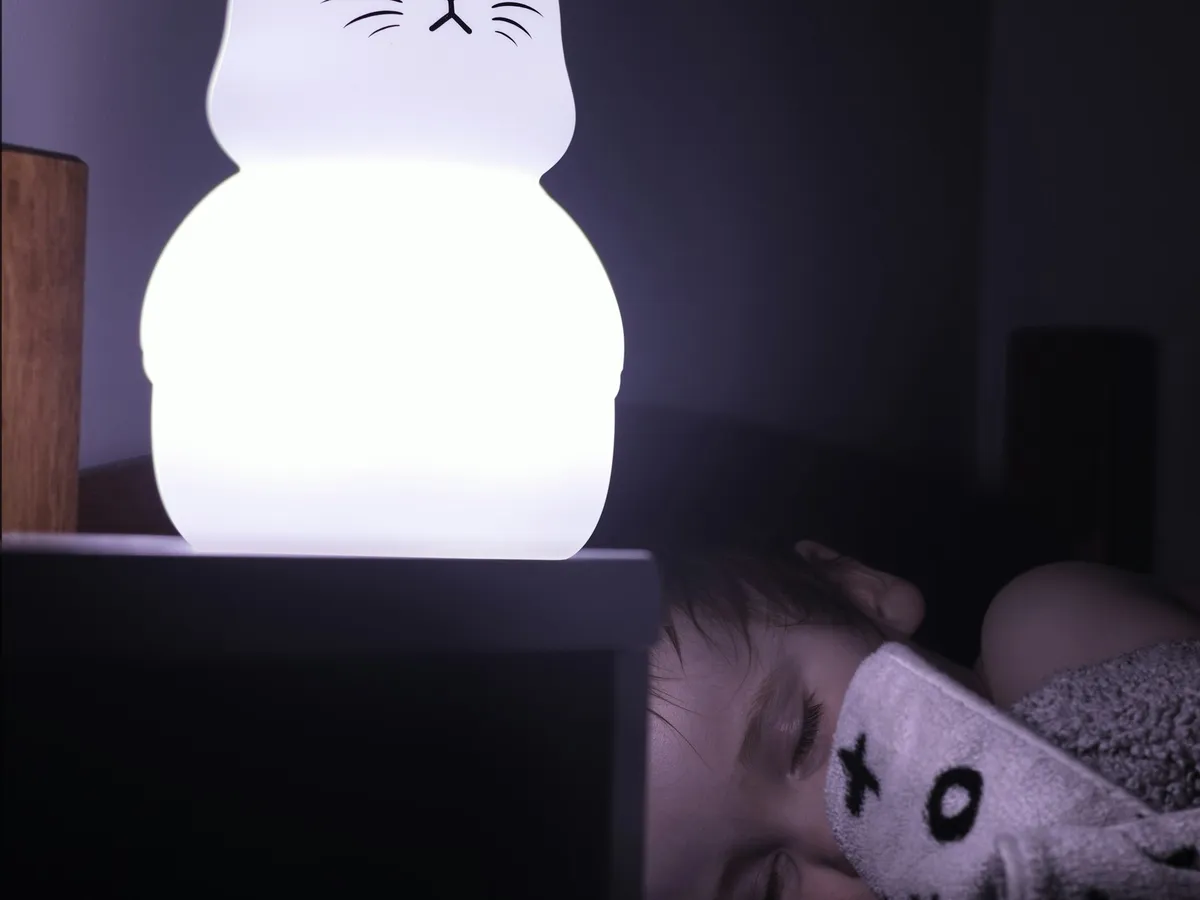
- Use a dim, warm night light. Blue light from screens and even some night lights can trick the brain into thinking it is daytime (HealthyChildren.org), so choose a soft, warm glow.
- Add white noise. A small machine or a phone app covers hallway doors, elevators and family chatter.
- Do a quick safety sweep. The AAP advises checking lodging for exposed wiring, pest poisons, paint chips and unsafe stairs or balcony railings (AAP).
- Make a “parent zone.” In a single hotel room, a dim corner or the bathroom (with the fan off) becomes your space after bedtime. Some families pick a suite or a room with a separate area.
At the grandparents’ house
Grandparents’ homes are full of love and often full of hazards for curious toddlers. The AAP reminds families that the homes you visit may not be childproofed: look out for unlocked cabinets, purses, cleaning products, stairs, hot radiators and medications stored within reach (HealthyChildren.org). A two-minute walk-through when you arrive protects bedtime and naps too.
Bedtime
Keep the bedtime routine (it’s the most portable thing you own)
Your routine travels better than any gadget. Do the same steps, in the same order, at roughly the same time as at home. Here is a simple version that fits in any room.
| Step | At home | On the road |
|---|---|---|
| 1. Wash | Bath | Quick bath or a warm washcloth “bath” |
| 2. Pajamas | Usual pajamas | The same pajamas or sleep sack |
| 3. Teeth | Brush teeth | Brush teeth (pack the same toothbrush) |
| 4. Books | Two books in bed | The same two books from home |
| 5. Song | One lullaby | The same song, even if you feel silly in a hotel |
| 6. Lights low | Night light on | Travel night light + white noise on |
| 7. Goodnight | Hug, lovey, leave | Hug, lovey, and stay nearby a little longer if needed |
Print the bedtime-steps travel card from our free kit and tape it beside the travel crib. Toddlers love pointing to “what’s next,” and it keeps every grown-up (including Grandpa) doing the same thing. Want more help with routines at home? Try our daily routine chart for kids.

For a calm wind-down in a new place
Calming Mindful Coloring Book for All Ages
Relaxing patterns and nature scenes with thick lines in a handy 6 x 9 inch size, for you and your little one to color side by side before bed. $9.99 on Amazon.
See it on Amazon →Our own book; we earn money if you buy it.
💡 Screens off an hour before bed
Long travel days often mean extra screen time, and that is okay. Just try to put screens away about an hour before bedtime; the AAP notes screens can make kids more alert and affect sleep quality (HealthyChildren.org). A quiet coloring page or a picture book is a gentler bridge to sleep.
Jet lag
Time zones and toddlers: what actually helps
Crossing time zones adds jet lag to everything else. The CDC explains that jet lag is caused by a mismatch between your body’s normal daily rhythms and the new time zone, and usually hits when you cross more than three time zones (CDC). For smaller changes (1 to 2 hours), many families simply keep home time for a short trip.
- Shift ahead of time. The CDC suggests going to bed an hour or two later than usual before traveling west, and an hour or two earlier before traveling east (CDC). With toddlers, small steps of 15 to 30 minutes a day are easier.
- Get into daylight. After arrival, the AAP recommends encouraging children to be active outside or in brightly lit areas during daylight hours (AAP).
- Follow local time for meals and bedtime. KidsHealth suggests trying to follow local time at your destination, such as keeping kids awake until their usual bedtime (KidsHealth).
- Keep daytime naps short-ish. A normal nap is fine, but a huge late-afternoon nap can push bedtime very late.
- Drink water. Dehydration makes jet lag worse, so offer plenty of water on travel days (KidsHealth).
- Give it a few days. Most families find toddlers adjust over a few days. Be gentle with yourself in the meantime.
⚠️ About melatonin
It is tempting to reach for melatonin on a trip. The AAP says melatonin is not a sleeping pill and should only be used after a discussion with your pediatrician, and notes that reports of melatonin poisonings in children have risen sharply, so store it (especially gummies) out of reach (HealthyChildren.org). Talk to your child’s doctor before trying it.

Travel day
Naps on the go: car seats, strollers and planes
Travel days rarely go to plan, and that is fine. A few things help naps happen anyway:
- Time the driveIf your toddler naps well in the car, start a long drive around nap time. Plan a break about every two hours, as the AAP suggests (AAP).
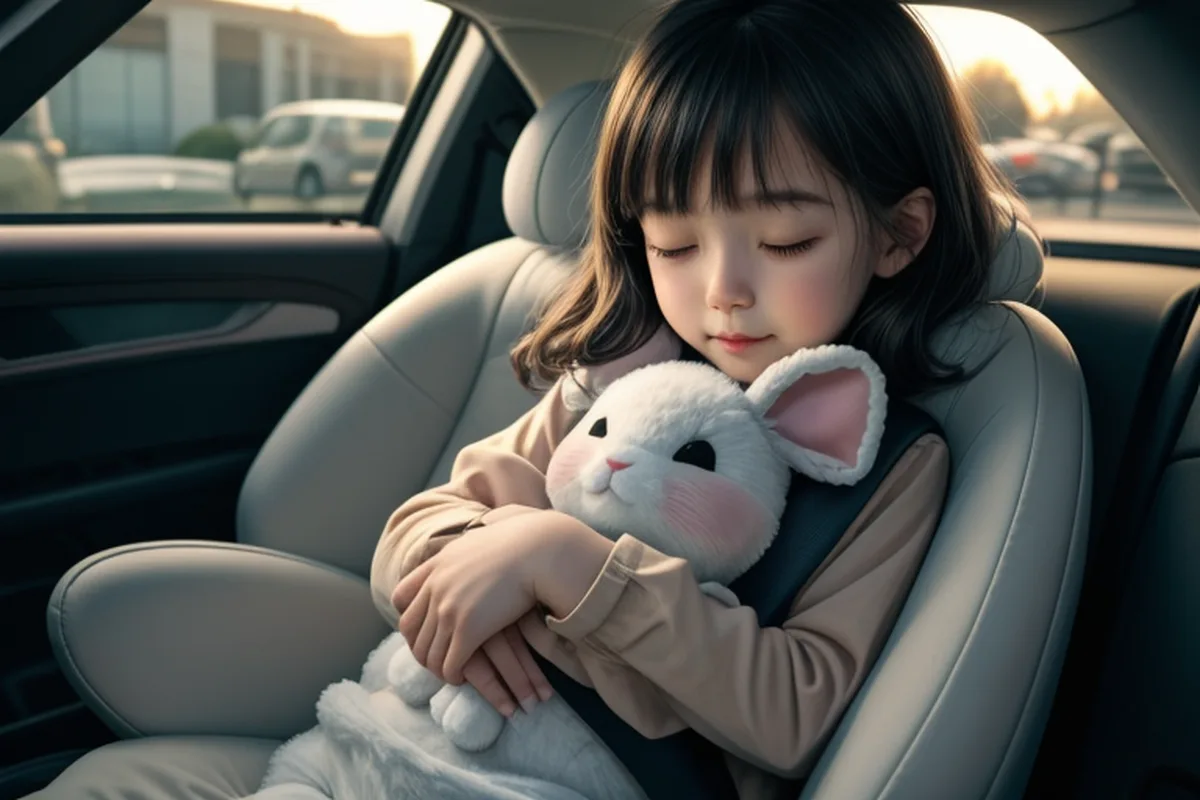
- Car seat naps: keep them in the carCar seats are for travel. Once you arrive, move a sleeping child to a safe, flat sleep space.
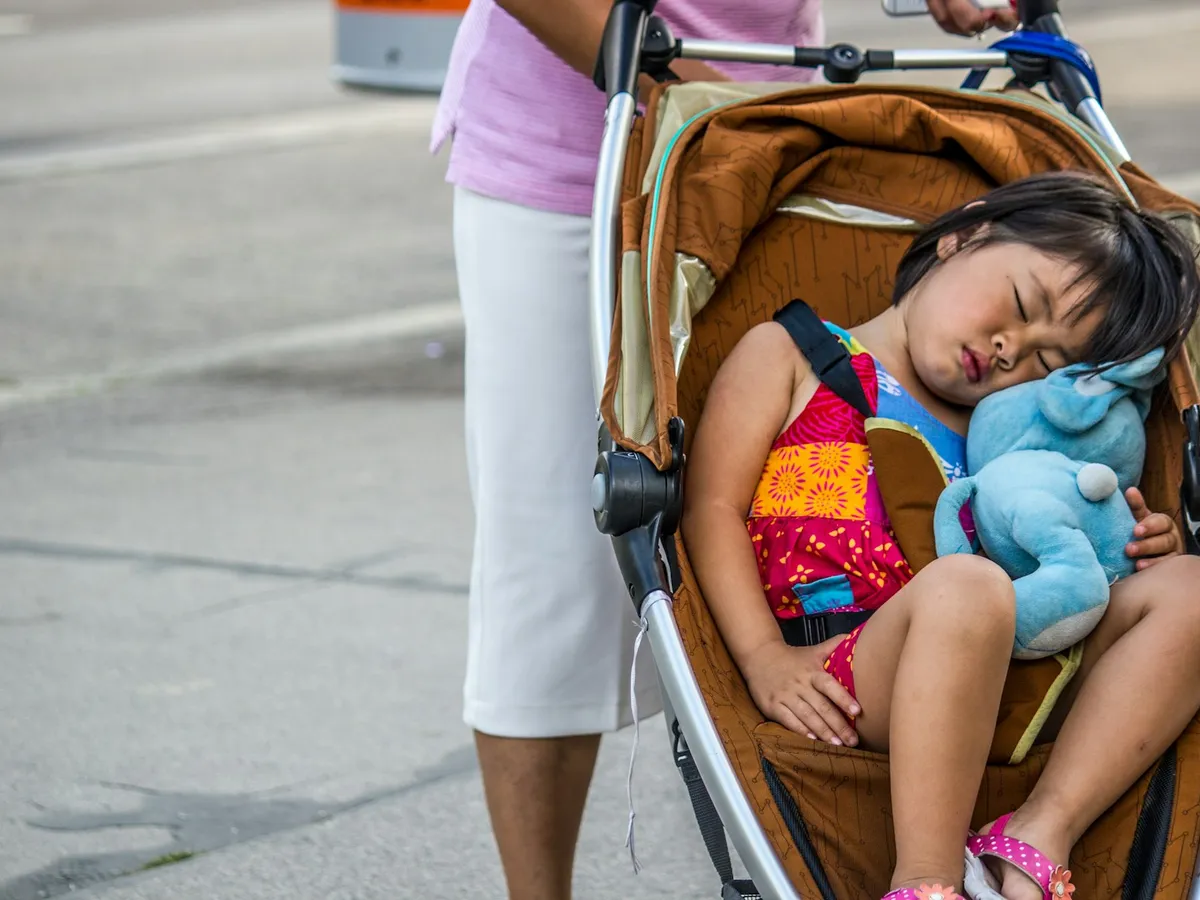
- Stroller napsA stroller with a sun shade and a familiar lovey can buy you a nap while you explore.
- Bring the cuesThe same lovey, the same song, the same “nap time” words you use at home.
- A quiet rest insteadIf the nap just won’t happen, 20 minutes of quiet time with books or a coloring page still helps. Ideas in our quiet time activities.
- Early bedtime after a bad nap dayA short-nap day often goes better with an earlier bedtime, not a later one.
Long car trip ahead? Our road trip activities for toddlers and airplane activities for toddlers will help with the awake hours.
Real life
When your toddler won’t sleep: troubleshooting
- Wide awake and bouncing at bedtimeLights fully down, white noise on, everyone in pajamas. Lie down nearby and be “boring.” Excitement fades faster in a dark, dull room.
- Crying the moment you leaveNew place, new worries. Stay close for a few nights: sit by the crib, pat, hum. Gently go back to your usual way of settling once you are home.
- Waking at nightKeep it calm and quiet, with the night light only. Avoid turning on big lights or starting play.
- Up at 5 a.m.Keep the room dark until a reasonable time, then get outside into morning light.
- Sharing a room with youToddlers can hear you breathe. Try a visual barrier (a sheet over a chair, the bathroom as your quiet zone) and keep white noise on.
- Grandparents pushing bedtime lateAgree on a rough bedtime in advance and give them a special job instead: the bedtime story, the goodnight song.
💛 Remember
A few rough nights on a trip do not undo your child’s sleep habits. Aim for “good enough,” protect one good sleep a day, and get back to normal when you are home. For calm-down ideas when everyone is frazzled, see our overstimulated toddler guide.
Afterward
Getting back on track when you come home
- Go straight back to the home routine on the first night. Same time, same steps.
- Get morning light for a few days if you crossed time zones.
- Expect a few bumpy nights. Many toddlers need a few days to settle back in. Stay consistent and patient.
- Keep the travel card. Pin it to the fridge for next time, along with notes on what worked.

Free printable
Free printable toddler travel sleep kit
🎁 Free printable
The ColorJoy Travel Sleep Kit (3 pages, US Letter)
Page 1: a toddler travel sleep packing list with a room-check box and your home bedtime times. Page 2: “My Bedtime Steps” travel card with eight picture steps and a good-night star chart. Page 3: a big, friendly dog coloring page from our travel-size Funky Face Dog Coloring Book, for calm wind-down time.

Download the free travel sleep kit (PDF) →
Free for personal and classroom use. No email or sign-up needed.
Tip: print the travel card twice: one for your bag and one for Grandma’s fridge. We share new free printables every week, so check our activity ideas hub before your next trip.
Your plan
What to do tonight (about 20 minutes)
Traveling soon? A few small steps tonight make the first night away much easier.
5 minutes
Print the kit
Print the packing list and bedtime travel card.
5 minutes
Write down your routine
Fill in your home bath, books and lights-out times on the card.
5 minutes
Start the sleep bag
Put the lovey’s “travel buddy,” the night light and two favorite books in a bag by the door.
5 minutes
Practice
If you are taking a travel crib, set it up tonight and let your toddler play (or nap) in it this week.
💛 Be kind to yourself
Travel sleep is rarely perfect. If your toddler sleeps a bit less for a few nights and you all come home with happy memories, that’s a great trip.
From the ColorJoy shelf
Our book pick for travel: Funky Face Dog Coloring Book

Our travel-size pick
Funky Face Dog Coloring Book for Kids: Funny Lovable Dog Faces & Expressions | Portable 6×9 Travel Size
Twenty funny, lovable dog faces and expressions with bold, thick lines, in a portable 6 x 9 inch travel size. The Amazon listing gives a reading age of 3 to 8.
$9.99paperback · 6 x 9 in
Our own book; we earn money if you buy it. Price as listed on Amazon.com when we checked on 30 October 2026; please confirm on the product page.
Why it’s our pick for trips: the small 6 x 9 inch size fits in a diaper bag or carry-on next to a few crayons, so you have a quiet activity for the airport gate, the restaurant table or the last half hour before bed in a hotel room. Big, simple dog faces are easy for preschoolers to color, and naming the dogs’ expressions (happy, sleepy, surprised) is a gentle way to talk about feelings after a big, exciting day. Our free printable includes one of the pages so you can try it first.

Browse all our titles in the Mr A G author store on Amazon. Prefer printables? Our Kids Printable Mega Bundle on Payhip ($14.99) has 11 coloring, tracing and flashcard PDFs (a separate product, not this book), and our full Payhip store is at payhip.com/BookBonbon.
📚 Related books from ColorJoy
If this topic is on your mind, these titles from our own shelf fit well alongside it.
Calming Mindful Coloring Book for All Ages
Relaxing patterns, mandalas and nature scenes with thick lines in a 6 x 9 inch size: lovely for a calm, side-by-side wind-down in a new place.
$9.99 paperback on Amazon.com · Paperback, shipped by Amazon
Toddler Parenting Guide: Tantrums, Hitting & Picky Eating (PDF)
Practical help for the toddler years (tantrums, hitting and picky eating) in one short printable PDF guide, for the trickier moments of a trip.
$3.99 printable PDF on Payhip · Instant PDF download; print at home

Magical Butterfly Coloring Book for All Ages
Bold butterflies, flowers and nature scenes for all ages, also in a portable 6 x 9 inch size.
$8.99 paperback on Amazon.com · Paperback, shipped by Amazon
These are our own books and printables, and we earn money if you buy them. Prices as listed on Amazon.com and Payhip when we checked on 30 October 2026; prices can change, so please confirm on the product page.
Frequently asked questions
How can I help my toddler sleep while traveling?
Bring home with you: the same lovey, pajamas, bedtime books and a crib sheet or pillowcase that smells like home. Keep the same bedtime routine in the same order, make the room dark with a dim warm night light and white noise, and protect at least one good sleep (nap or night) each day.
Where should a toddler sleep in a hotel room?
Many families bring their own travel crib or play yard, which the child has practiced in at home. Hotel cribs can be fine, but the AAP notes they may not meet current safety standards, so check them and ask for a replacement if in doubt. Older toddlers used to a bed can sleep on a mattress on the floor or a bed with a rail.
Why won’t my toddler sleep in a hotel room?
A new room removes the cues that tell a toddler it is bedtime: familiar smells, sounds, darkness and routine. Excitement, short naps and late bedtimes add to it. Darken the room, use white noise, do the home routine in the same order and stay close for the first few nights.
How do I help my toddler adjust to a new time zone?
For big time changes, shift bedtime gradually 2 to 3 days before you go, then follow local time for meals, naps and bedtime when you arrive. Get outside in daylight, offer water, and avoid very long late naps. Most toddlers adjust over a few days.
Should I give my toddler melatonin for travel?
Talk to your pediatrician first. The AAP says melatonin is not a sleeping pill, should only be used after a discussion with your child’s doctor, and should be stored out of reach because child poisonings have increased. Routine, light and patience are the first tools.
How long does it take a toddler to get back on schedule after a trip?
Many toddlers need a few days. Go straight back to your usual routine on the first night home, get morning light if you crossed time zones, and stay consistent.
Safe travels, and sweet dreams to your little traveler 🌙
ColorJoy makes bold, easy coloring books and free printables for little hands, plus gentle, practical guides for real family life. We post new guides and printables every week, so come back before your next trip.
For a quiet, travel-size activity before bed, our pick is the Funky Face Dog Coloring Book.
Get the Funky Face Dog Coloring Book →
Next up: Christmas traditions for toddlers or our calm down corner guide.
Photos: Unsplash (Unsplash License). Illustrations: AI-generated for ColorJoy. Book images and printable art: ColorJoy / Mr A G. This guide is general information for parents, not medical advice; talk with your pediatrician about your child’s sleep or before using any sleep aid.