Big feelings • Ages 2–6 • Free printable
Calm Down Corner for Toddlers: How to Set One Up at Home, Step by Step (+ Free Printable Calm Corner Kit)
When your toddler melts down, you can’t make them calm. What you can do is give them a safe, cozy place to get there, with you close by. Here is how to build a calm down corner at home in an afternoon, what to put in it, what to say, and how to make it a place your child actually wants to use.

🌟 By the end of this page you’ll have…
- what a calm down corner is (and how it differs from time-out)
- a 7-step setup you can finish this weekend, in any size home
- a calm basket checklist with 12 low-cost tools
- how to teach the corner when everyone is calm, and what to say in the middle of a meltdown
- an age-by-age table for 2- to 6-year-olds and a free printable kit: a calm corner sign with feelings faces, a 4-step poster and a calming butterfly coloring page
🎨 New here? Hi, we’re ColorJoy
ColorJoy makes bold, easy coloring books and free printables for little hands, plus warm, practical guides for real family life. Our promise for this guide: no perfect Pinterest corner required. A pillow, a basket and a calm grown-up do most of the work. If your child gets overwhelmed in busy places, our guide to the overstimulated toddler is a good companion read.
Real-life moments
Sound familiar?
Every family with a toddler has these moments. None of them means you are doing it wrong.
The blue-cup meltdown
You poured the milk into the red cup. Your 2-year-old is now on the kitchen floor, sobbing as if the world has ended.
Try this: stay close, keep your voice low, and name it: “You really wanted the blue cup.” A cozy spot nearby gives you both somewhere to go.
The after-daycare crash
Pickup goes fine, then the moment you walk in the door your 3-year-old falls apart over shoes.
Try this: make the calm corner the first stop after a long day: a snack, a soft pillow and five quiet minutes together.
The sibling explosion
Your 4-year-old grabbed the tower his little sister knocked down, and now both are screaming.
Try this: keep everyone safe first, then invite the bigger child to the corner with you: “Let’s go help your body feel calm.”
The basics
What is a calm down corner?
A calm down corner is a small, cozy spot in your home where a child can go to feel big feelings safely and practice getting calm again. It usually has something soft to sit on, a few comforting objects and some simple picture cards that remind a child what helps. It is not a punishment, and it is not a place a child is sent away to. It is a tool, like a bandage for feelings.
Early childhood experts at ZERO TO THREE suggest creating a safe “cozy corner” where children can relax and go to calm down, and modeling how to take a break yourself (ZERO TO THREE). The CDC’s tips for 3-year-olds say something very similar: help your child manage stressful feelings by teaching them to take deep breaths, hug a favorite toy, or go to a quiet, safe place when upset (CDC, milestones by 3 years). A calm down corner simply gives that quiet, safe place a permanent home.
Calm corner vs. time-out: what’s the difference?
| Calm down corner | Time-out | |
|---|---|---|
| Purpose | Help a child calm their body and feelings | A consequence for a behavior |
| Who chooses | Child can choose it, or a grown-up invites them | Grown-up decides |
| Grown-up | Usually nearby or sitting with the child | Child is usually apart from the activity |
| Feel of the space | Cozy, soft, inviting | Neutral, boring on purpose |
| Best for | Big feelings: sad, mad, scared, overwhelmed | Families who use it, for specific rule-breaking |
| Ends when | The child’s body feels calm | A set time is up |
Many families use both. The important thing is that the calm corner stays a positive place. If it becomes the place you get sent when you are “bad,” children will avoid it just when they need it most.

Why it works
Why a calm corner helps toddlers (and why they can’t just “calm down”)
It helps to remember what is going on inside a toddler’s brain. ZERO TO THREE explains that a toddler’s brain lacks the ability to “put on the brakes,” and that even when young children can repeat a rule to you, until they are about 3½ to 4 they don’t have the impulse control to act on it (ZERO TO THREE). Toddlers also have strong feelings and not many words yet, which is a recipe for frustration.
The American Academy of Pediatrics notes that tantrums are a normal part of development, happen most between ages 1 and 3, and tend to get better after age 3, although they don’t go away entirely (HealthyChildren.org). In other words, your child is not broken, and neither is your parenting. They are learning a skill.
🧠 The skill behind it: self-regulation
Harvard’s Center on the Developing Child describes executive function and self-regulation skills as an “air traffic control system” in the brain. No one is born with them, but we are all born with the ability to develop them (Center on the Developing Child). Children build these skills with lots of practice and support from the grown-ups around them, which ZERO TO THREE calls co-regulation: your calm helps them find theirs.
That is the real job of a calm corner. It is a predictable place to practice, again and again, the steps that will one day happen on the inside: notice the feeling, slow the body down, choose something that helps, and come back.


Step by step
How to set up a calm down corner at home in 7 steps
You can do this in an afternoon, with things you probably already own. Here is the order we recommend.
- Pick the spot. Choose somewhere close to where family life happens, like a corner of the living room or the end of a hallway, not a far-off bedroom. Toddlers need to feel you nearby.
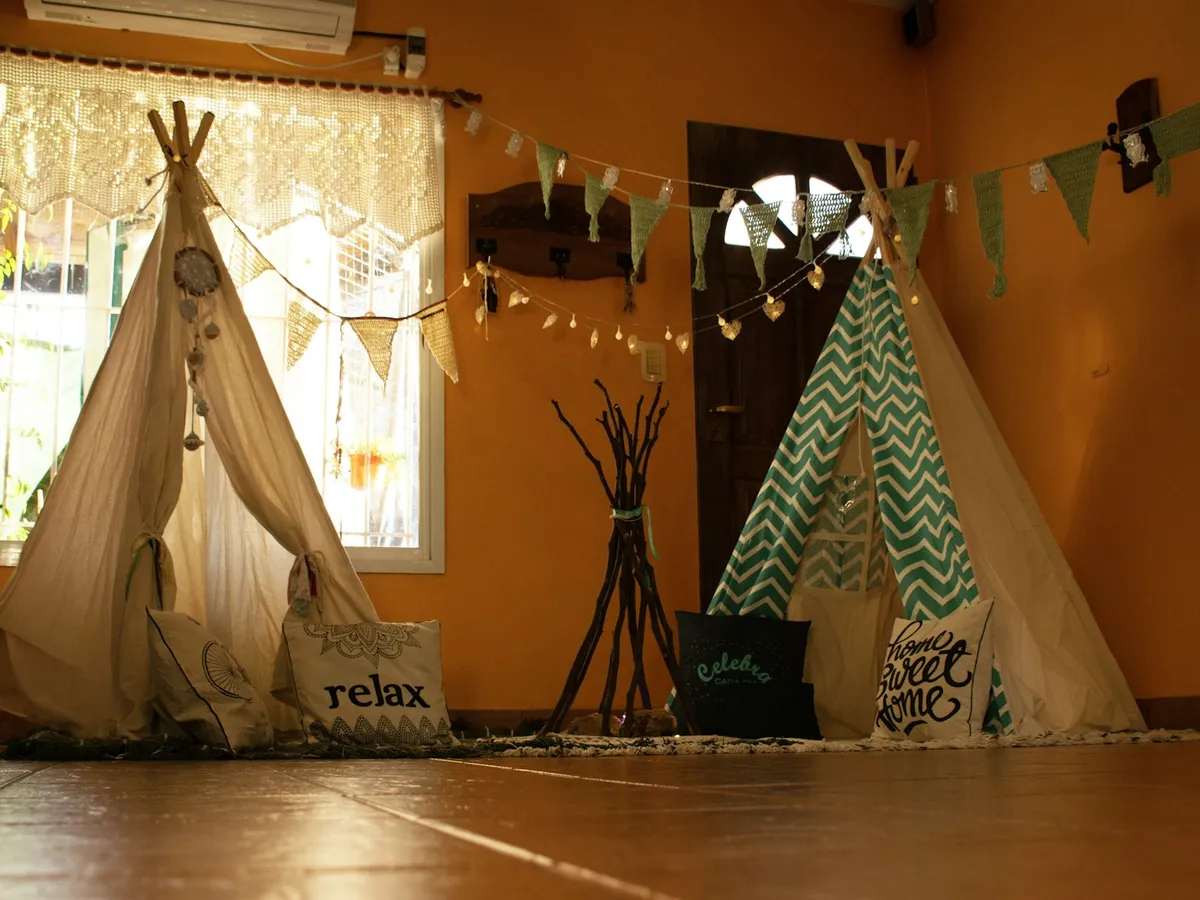
- Make it soft and small. A floor cushion, a beanbag or a folded quilt. A small play tent or a blanket draped over two chairs makes it feel like a hideout.
- Lower the lights and noise. Away from the TV if you can. A battery tap light or a string of LED lights (out of reach) adds a gentle glow.
- Add a calm basket. Four to six comforting things (see the checklist below). Fewer is better than more.
- Hang simple visuals at their eye level. A feelings chart and a short “calm steps” poster. Our free printable kit has both.
- Name it together. “The Cozy Corner,” “The Calm Spot,” “The Nest.” Let your child help choose. Ownership matters.
- Practice before you need it. Visit the corner on good days, read a book there, practice breathing there. More on this below.


🪄 Tiny apartment version
No spare corner? Use a “calm basket” instead: a lidded basket with a small cushion, a soft toy and a few calm cards. Pull it out anywhere, even in a bedroom doorway, and put it away again when you are done.

⚠️ Safety check
Keep cords from lights and blinds out of reach, use battery lights rather than candles, and skip anything with small parts for children under 3. The AAP lists toys with small parts, coins, marbles, button batteries and pen or marker caps among household choking hazards (HealthyChildren.org). Sensory bottles should be sealed tightly with strong glue.
The calm basket
What to put in a calm down corner: 12 low-cost ideas
Choose four to six of these to start. A calm corner should feel calm, so resist the urge to fill it with every sensory toy on the internet. You can rotate items as you learn what helps your child.
- Something soft to hugA favorite plush, a small pillow or a weighted-feeling stuffed animal (not a weighted blanket for toddlers).
- A calm-down jarA sealed bottle of water, clear glue and glitter. Shake it and watch the glitter settle as you breathe.
- A squeeze toyA stress ball or a ball of playdough for “getting the mad out” with hands.
- Picture books about feelingsTwo or three, rotated every few weeks so they stay interesting.
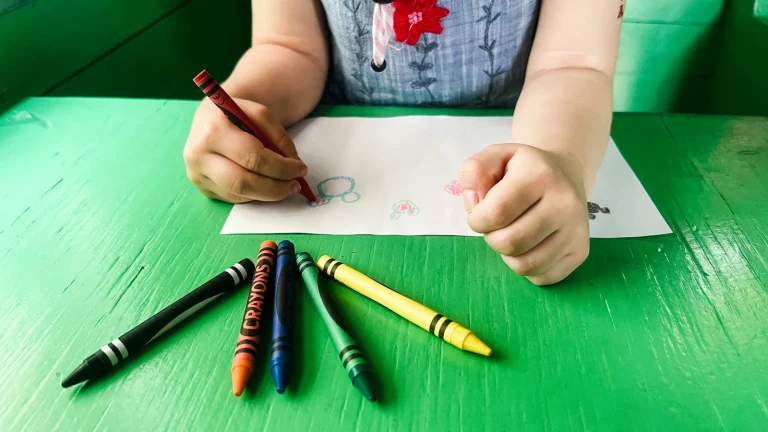
- A coloring page and a few crayonsSlow coloring is a gentle, focusing activity. Mandala and nature pages work well.
- Feelings cardsSimple faces your child can point to when words are hard. Included in our free kit.
- Breathing pictures“Smell the flower, blow out the candle” cards, or a pinwheel to blow.
- A small mirrorToddlers love making “mad face” and “calm face” in a mirror. It builds feelings words.
- Noise-reducing headphonesHelpful for children who get overwhelmed by sound.
- A family photoA reminder that the people who love them are close.
- A sand timerFor older preschoolers who like to “see” time pass. Never used as a countdown to “be calm.”
- A water bottleA sip of water is a surprisingly good reset.

A calm coloring book for the basket
Calming Mindful Coloring Book for All Ages
Relaxing patterns, mandalas and nature scenes with thick lines and single-sided pages, so a preschooler and a grown-up can color side by side. Paperback, $9.99.
See it on Amazon ($9.99) →Our own book; we earn money if you buy it.

For more breathing games and calm activities to keep in the basket, see our mindfulness activities for kids. Many of them work for children as young as 2 with a grown-up joining in.
By age
Calm down corner ideas by age
A calm corner looks a little different at 2 than at 5. Here is a quick guide. Every child is different, so adjust to yours.
| Age | What they can do | Best tools | Your role |
|---|---|---|---|
| 2 years | Feel big emotions, few words, need you close | Soft toy, calm jar, one board book | Sit with them; hold, rock, hum. Keep it very short. |
| 3 years | Name a few feelings, copy breathing | Feelings faces, breathing cards, coloring page | Invite them in, breathe together, name the feeling. |
| 4 years | Choose a tool from a few options, use more feelings words | Choice board, squeeze ball, “how big is my feeling” scale | Offer two choices, then wait nearby. |
| 5–6 years | Go to the corner on their own sometimes, talk it through after | Drawing journal, sand timer, headphones | Check in after: “What helped?” |
Notice that the youngest children need the most of you. A 2-year-old won’t go to a corner alone and calm down, and that is completely normal. At that age, the corner is really a cozy place for the two of you.

Practice
Teach the calm corner when everyone is calm
This is the step most families skip, and it makes the biggest difference. A child in the middle of a meltdown can’t learn something new. So teach the corner on good days, when it is just a fun, cozy place.
- Explore it together. “This is our Cozy Corner. It’s a place to go when your body feels too big or too sad.” Let them touch everything.
- Play feelings games. Make mad faces, sad faces and silly faces in the mirror. Point to the feelings faces on the sign.
- Practice the breathing. “Smell the flower” (breathe in through the nose), “blow out the candle” (breathe out through the mouth). Three times.
- Act it out with a toy. “Teddy is SO mad his tower fell! What could Teddy do?” Let your child take Teddy to the corner.
- Visit it daily for a week. Read a bedtime book there or color there after lunch. Familiar places feel safe.
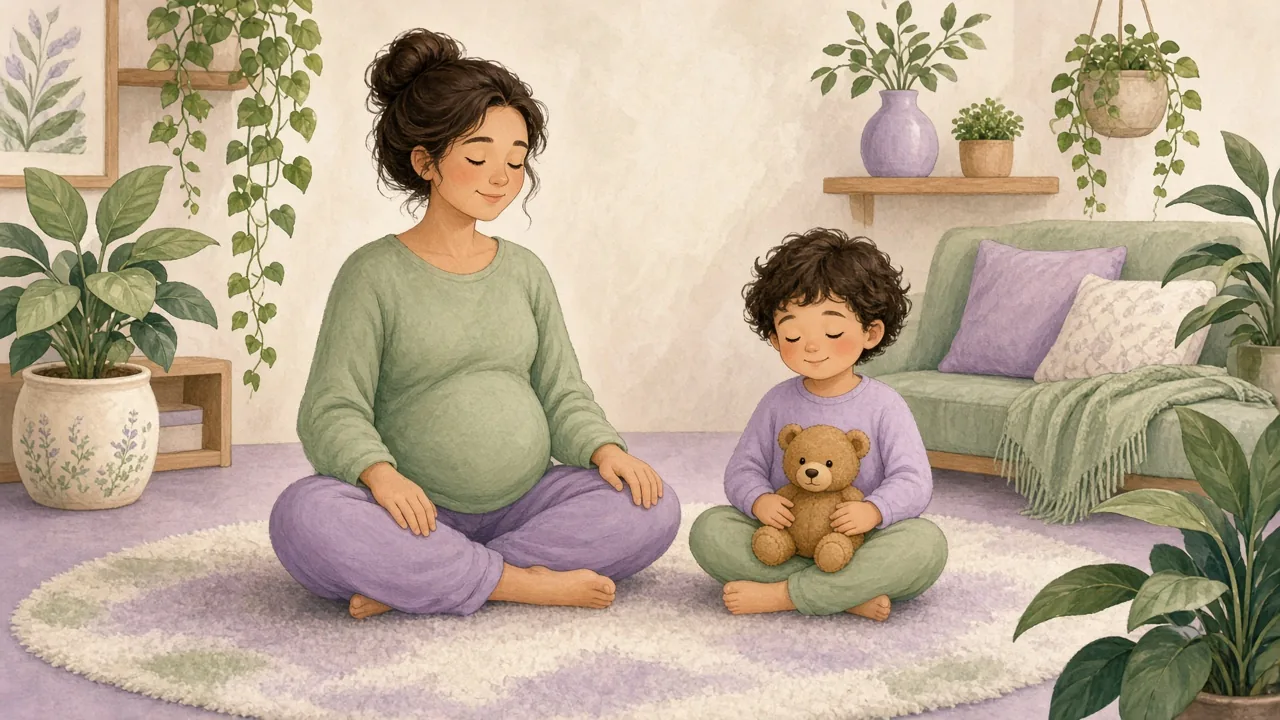
- Use it yourself. “I’m feeling frustrated. I’m going to sit in the calm corner and take three big breaths.” Kids learn by watching.
💡 Grown-ups need a calm corner too
The AAP’s tantrum tips include giving yourself a break when you need it and taking turns with another adult when frustration rises (HealthyChildren.org). Modeling your own “calm down” is one of the most powerful things you can do.
In the moment
What to say and do in the middle of a meltdown
When the big feeling arrives, keep it simple. Here is a short script, built on the advice from ZERO TO THREE and the AAP.
- Safety first. If your child is hitting, kicking or in danger, stop it calmly and move them somewhere safe. The AAP says not to ignore hitting, kicking, biting or throwing.
- Get low and stay calm. A low, steady voice and few words. ZERO TO THREE notes that a big reaction from us tends to make it harder for a child to calm down.
- Name the feeling. “You are so mad. You really wanted the blue cup.” Validation first, solutions later.
- Invite, don’t send. “Let’s go to the Cozy Corner together and help your body feel calm.”
- Offer two choices. “Do you want your bunny or the calm jar?” Small choices give back a sense of control.
- Wait. Sit nearby. You don’t need to talk. “I’m right here. I’ll wait with you.”
- Reconnect. When the storm passes, offer a hug. Later, when everyone is calm, talk briefly about what happened.
Phrases to keep in your pocket
- “You’re safe. I’m here.”
- “It’s okay to feel mad. It’s not okay to hit. I’ll help you stop.”
- “Let’s smell the flower and blow out the candle together.”
- “Do you want a hug, or do you want space? I’ll be right here.”
- “Your body is calming down. I can see it.”
If big feelings come with hitting, especially around a new sibling, our guide on toddler hitting a new baby has step-by-step help.
Troubleshooting
Common calm corner mistakes (and easy fixes)
- Using it as punishmentFix: never send a child there “because you were bad.” Invite them, and go with them.
- Making it too busyFix: start with four to six items. Too many bright toys can overstimulate instead of calm.
- Putting it too far awayFix: keep it close to the family. Toddlers need to see and hear you.
- Expecting it to work right awayFix: practice for a week or two on calm days before relying on it.
- Talking too muchFix: in the moment, use fewer words. Save the lesson for later.
- Forgetting yourselfFix: take your own deep breaths first. Your calm is the most important tool in the corner.
Calm corners work best inside a predictable day. A simple daily routine chart and a bit of daily quiet time help prevent some meltdowns before they start. And if the clocks just changed, our daylight saving time toddler sleep plan can help with tired, cranky evenings.

Free printable
Free printable calm corner kit
🎁 Free printable
The ColorJoy Calm Corner Kit (3 pages, US Letter)
Page 1: a “My Calm Corner” sign with eight feelings faces and a “how big is my feeling?” scale. Page 2: a “My 4 Calm-Down Steps” poster (Stop, Breathe, Choose, Come back) with eight cut-out calm tool cards for the basket. Page 3: a slow butterfly coloring page from our Magical Butterfly Coloring Book.

Download the free calm corner kit (PDF) →
Free for personal and classroom use. No email or sign-up needed.
Tip: slip the sign and poster into sheet protectors and tape them at your child’s eye level. We post new free printables every week, so check our activity ideas hub for the next one.
Your plan
What to do tonight (about 20 minutes)
You don’t need a whole weekend. Start small tonight.
5 minutes
Pick the spot
Choose a corner near the family area. Put down a cushion or a folded blanket.
5 minutes
Fill a small basket
A soft toy, one feelings book, a coloring page and a few crayons.
5 minutes
Print the kit
Print the calm corner sign and steps poster. Tape them at your child’s eye level.
5 minutes
Introduce it at bedtime
Read one book in the new corner and practice “smell the flower, blow out the candle” three times.
💛 Be kind to yourself
There will still be meltdowns. That is not failure, it is being 2, 3 or 4. Every time you stay close and calm, your child is learning how calm feels.
From the ColorJoy shelf
Our book pick: Calming Mindful Coloring Book for All Ages
Our pick for the calm basket
Calming Mindful Coloring Book for All Ages: Relaxing Patterns, Mandalas & Nature Scenes
Relaxing patterns, mandalas and nature scenes with thick lines and single-sided pages, made for kids, teens and adults to color.
$9.99paperback · all ages
Our own book; we earn money if you buy it. Price as listed on Amazon.com when we checked on 29 October 2026; please confirm on the product page.
Here is why it belongs in a calm corner. Slow, repetitive coloring gives busy hands a job while breathing slows down, and patterns with thick lines are easy enough for a preschooler to enjoy without frustration. Because it is made for all ages, you can sit beside your child and color your own page, which is co-regulation in action: your calm body next to theirs. Single-sided pages mean markers won’t bleed through, and favorite pages can be torn out and hung in the corner.
Browse all our titles in the Mr A G author store on Amazon. Prefer printables? Our Kids Printable Mega Bundle on Payhip ($14.99) has 11 coloring, tracing and flashcard PDFs (a separate product, not this book), and our full Payhip store is at payhip.com/BookBonbon.
📚 Related books from ColorJoy
If this topic is on your mind, these titles from our own shelf fit well alongside it.

Understanding Your Child’s Emotions (PDF guide)
A plain-language parenting guide to children’s emotional and psychological development, from early signs of struggles to behavior cues, for ages 0 to 12.
$5.99 printable PDF on Payhip · Instant PDF download; print at home
Toddler Parenting Guide: Tantrums, Hitting & Picky Eating (PDF)
Practical help for the toddler years: tantrums, hitting and biting, and picky eating, in one short printable guide.
$3.99 printable PDF on Payhip · Instant PDF download; print at home

Funky Face Dog Coloring Book (Ages 4–8)
Twenty funny dog faces and expressions to color: a playful way to name feelings like happy, grumpy and surprised.
$9.99 paperback on Amazon.com · Paperback, shipped by Amazon
These are our own books and printables, and we earn money if you buy them. Prices as listed on Amazon.com and Payhip when we checked on 29 October 2026; prices can change, so please confirm on the product page.
Frequently asked questions
What is a calm down corner for toddlers?
A calm down corner is a small, cozy spot at home with something soft to sit on, a few comforting objects and simple picture cards, where a toddler can go, usually with a grown-up nearby, to feel big feelings safely and practice calming their body. It is a tool, not a punishment.
At what age can you start a calm down corner?
You can create a cozy calm spot from around age 2, but at that age the corner is a place for you and your toddler together. Most children start choosing the corner on their own later in the preschool years, after lots of practice on calm days.
Is a calm down corner the same as time-out?
No. Time-out is usually a consequence chosen by a grown-up. A calm down corner is a positive, inviting space a child can choose or be invited to, often with a grown-up close by, and it ends when the child feels calm rather than when a timer goes off.
What do you put in a calm down corner?
Start with four to six things: a soft cushion, a favorite plush toy, a sealed calm-down jar, a feelings picture chart, breathing cards, a book about feelings and a coloring page with a few crayons. Avoid small parts for children under 3.
Where should a calm down corner be at home?
Put it close to where the family spends time, such as a corner of the living room, so your toddler can see and hear you. A small play tent, a beanbag or a blanket over two chairs can make it feel cozy.
What if my toddler won’t use the calm down corner?
That is common. Practice on good days by reading, coloring and breathing there, use it yourself, invite rather than send, and stay with your child. For toddlers, being close to a calm grown-up matters more than the corner itself.
You’ve got this, one calm breath at a time 💛
ColorJoy makes bold, easy coloring books and free printables for little hands, plus warm, practical guides for real family life. We post new guides and printables every week, so come back soon.
For a coloring book you and your child can share in the calm corner, our pick is the Calming Mindful Coloring Book for All Ages.
Get the Calming Mindful Coloring Book →
Next up: indoor gross motor activities for getting the wiggles out, or gratitude activities for kids.
Photos: Unsplash (Unsplash License). Illustrations: AI-generated for ColorJoy. Book images and printable art: ColorJoy / Mr A G. This guide is general information for parents, not medical or psychological advice; if you are worried about your child’s behavior or development, talk with your pediatrician.