Toddler Feeding • Ages 1–4
How to Get a Toddler to Eat Vegetables: 7 Low-Pressure Ideas
The broccoli is on the floor again. Take a breath: vegetable refusal is one of the most common toddler habits, and it rarely means you are doing something wrong. Here are seven calm, practical ideas that put vegetables in front of your child again and again, without bribes, battles or tricks.

In this guide
How this guide is different
This guide is about vegetables in particular: which ones to start with, how to prepare them for small mouths, and seven low-pressure ideas that make them familiar. If you are looking for the bigger picture of picky eating, including the two-job rule at the table, the tasting ladder and a week of meal ideas, start with our picky eater toddler plan and come back here when you want a vegetable-focused toolkit.
The 7 ideas at a glance
- Offer a tiny portion first, again and again (section 2)
- Pair the vegetable with a food your child already likes (section 3)
- Change the form: sweet, soft and crunchy often win (section 3)
- Let your child choose between two vegetables (section 4)
- Give them a small, safe job in the kitchen (section 4)
- Color it, name it and meet it away from the table (section 5)
- Play with it: pretend shop, books and a windowsill garden (section 5)
Everything here follows the same principle that feeding experts repeat: you decide what is offered, and your child decides whether and how much to eat. We lean on guidance from the CDC, Nemours KidsHealth and Penn State Extension, and we share the source next to each claim. This is general information for parents, not medical advice, and we will remind you when it is a good moment to talk to your pediatrician.
Real-life moments
Does this sound familiar?
If any of these happen at your table, you are in very good company.
The broccoli push
Your toddler looks at one floret, pushes the plate away and says “no”.
Try this: offer one tiny floret next to something familiar, say nothing, and clear the plate calmly.
Yesterday’s favorite is today’s “yuck”
Carrots were great last week. Now they are suddenly terrible.
Try this: keep serving them in a small portion. Food preferences change quickly at this age.
Only the beige foods
Pasta, toast and crackers are acceptable. Anything green is not.
Try this: add a small side of vegetables to every meal without comment, so green becomes ordinary.
Why toddlers refuse vegetables (and why it’s normal)
Toddlers are in the middle of a big developmental season. They are discovering that they are separate people who can say no, and food is one of the few things they can actually control. Nemours KidsHealth notes that there are two things you cannot force a child to do, eat and sleep, and that many toddlers express their independence through eating, or not eating, the foods on their plate.
It is often a taste and texture thing
Children are naturally slow to accept new tastes and textures. Penn State Extension points out that many children prefer bright colors and interesting textures, and many prefer plain foods they can easily recognize. Some vegetables, especially bitter greens or soft, mushy textures, are simply more challenging at first. A Nemours blog post describes “taste-ability”: crunchy, sweet and good-looking foods tend to be preferred over soggy or bitter ones, so asparagus may not be the best first try while carrots might be.
Pickiness often peaks, then eases
The CDC says that favoring just a couple of foods, or not wanting foods to touch on the plate, are normal behaviors that often go away by the time a child is about 5. The same page reminds parents that early eating experiences matter, which is why it is worth gently introducing a variety of fruits and vegetables.
A simple starter guide to vegetables
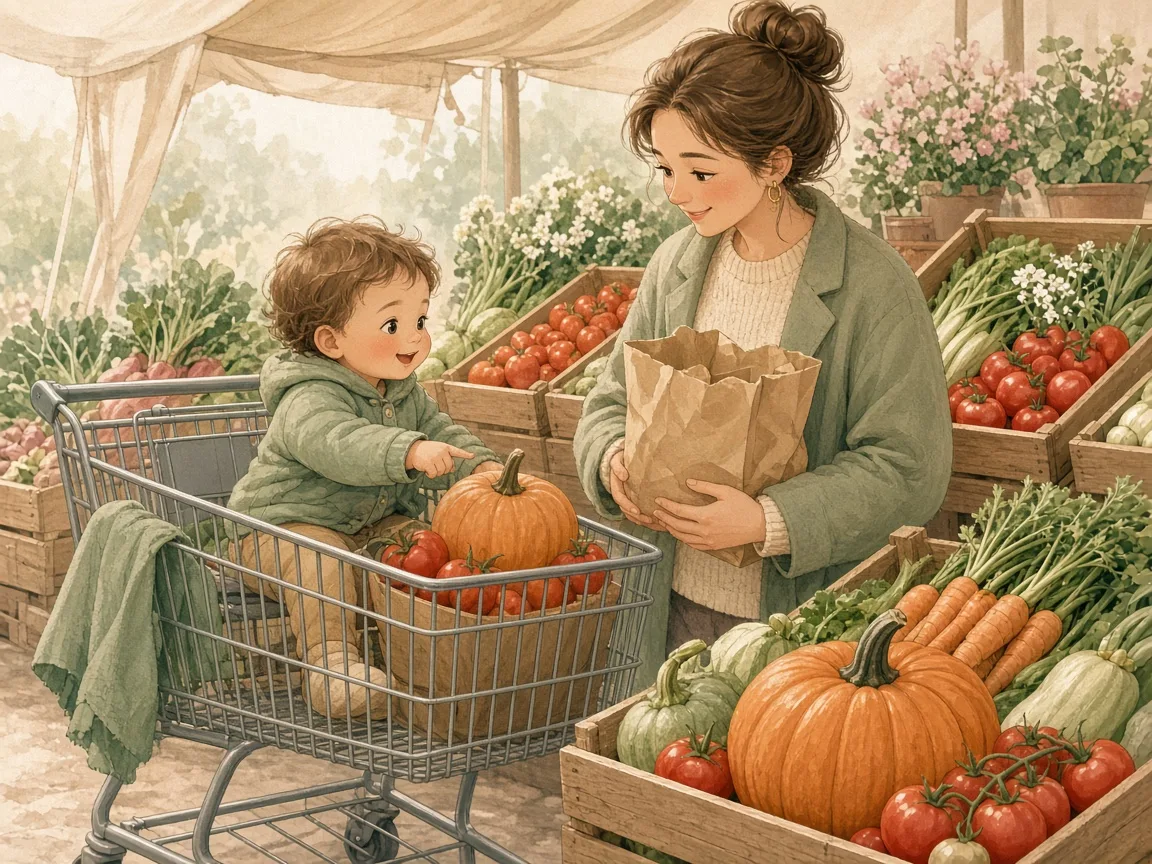
You do not have to begin with the most challenging vegetables. This table gives some gentle first forms. Always cut and cook food to suit your child’s age and stage, and check the CDC’s choking hazards page for foods to avoid or prepare differently.
| Vegetable | An easier first form | Watch for |
|---|---|---|
| Carrot | Cooked until soft, then cut into thin sticks or mashed; sweet and bright | Hard raw carrot pieces are listed as a choking hazard for young children |
| Sweet potato | Roasted until soft, in soft wedges or mashed | Cool it well so it is not too hot |
| Peas | Lightly squashed or stirred into a favorite dish | Check the size and texture for your child’s age and stage |
| Broccoli | Steamed soft “little trees” with a dip they like | Strong flavor; a familiar dip can help |
| Cucumber | Peeled, cut thin or into small pieces; mild and crunchy | Cut to a size and shape that suits your child |
| Tomato | Cooked into a sauce or cut into small pieces | Uncut cherry or grape tomatoes are listed as a choking hazard |
| Spinach and leafy greens | Stirred into pasta, soup or eggs in a small amount | Stronger, more bitter flavor; try later rather than first |
⚠️ Safety note
The CDC’s list of foods that can be choking hazards for young children includes pieces of hard raw vegetables or fruit such as raw carrots, uncut cherry or grape tomatoes, and whole corn kernels. Cooking, cutting into small pieces or mashing can lower the risk. Keep your child seated and supervised while they eat, and ask your pediatrician what to do if your child chokes.
Keep offering: how many tries does it really take?
The short answer is: more than you would think. The CDC says it may take 8 to 10 exposures before a young child is willing to try a new food. Nemours KidsHealth says studies suggest it may take 10 or more tries, and Penn State Extension says some children may need to try a new vegetable up to 12 to 17 times, or more, before they begin to like it. Different sources give different numbers, but they agree on the message: a refusal today does not mean a refusal forever.
Idea 1: Offer a tiny portion first, again and again
A “try” can be very small. Nemours suggests a couple of tablespoons is plenty for foods that are not yet favorites, and Penn State describes a taste as small as half a teaspoon. Place one or two bites on the plate next to something familiar, and let it sit there. Seeing the vegetable counts as an exposure, even when it is not eaten.
Penn State also suggests serving vegetables first at a meal, when children tend to be hungriest. A tiny plate of soft vegetables before the main dish can work well. Wait for your child to be calm and seated, and keep the mood light.
The CDC suggests waiting about a week before offering the same new food again, and freezing small bites so you do not waste food. Many families find a loose rhythm works well: the same vegetable on the table a few times a week, prepared in different ways.
💡 Quick tip
Keep a simple tally on the fridge, one check per time a vegetable appeared on the plate. The goal is not eating; it is exposure. Penn State notes that pairing repeated exposure with small non-food rewards like stickers can help, as long as the vegetable itself is not made into a prize or a punishment.
What counts as a successful try?
- Your child looks at the vegetable
- They touch it, smell it or push it around the plate
- They lick it, nibble it or take a tiny bite
- They put it in their mouth and spit it out (Penn State notes children may be more willing to try if they can spit it out)
- They eat it, which is a bonus rather than the goal
All of these are steps toward familiarity. Many parents end up with a quiet moment of surprise weeks later when a vegetable that was refused ten times is suddenly eaten.
Pair new veggies with foods they already like
A new food feels less risky next to an old friend. Nemours suggests serving a small portion and considering pairing vegetables with something your child already likes. Penn State recommends dips, such as yogurt, hummus or ketchup, especially for children who are sensitive to bitter tastes, which can help with vegetables like broccoli and Brussels sprouts.
Idea 2: Put the vegetable next to a favorite
Serve one new vegetable and at least one food your child usually eats on the same plate. The CDC puts this plainly: “join in” and let your child see you eat the food first. Include something you know they like at every meal, so they never feel cornered.
Idea 3: Change the form
A vegetable that is refused steamed may be accepted roasted, grated into a favorite sauce, or served with a dip. Penn State suggests varying vegetables in different forms, raw or cooked, and stirring them into soups and sauces, as long as you are open about it rather than using blended vegetables to trick your child. Here are some easy ways to do it:
- Roast carrots or sweet potatoes until soft and slightly sweet
- Stir finely chopped spinach into pasta sauce or scrambled eggs
- Offer cooked broccoli with a yogurt-based dip
- Add cooked peas to a favorite rice or pasta dish
- Serve thin cucumber slices with a little cheese on the side
- Blend vegetables into a soup and pour it into a cup or bowl
🪄 Mom/Dad hack
Use a “plate with a space for everything” approach. A divided plate or a muffin tin keeps foods from touching, which the CDC says is a common and normal preference, and makes a small vegetable portion look intentional, not like an ambush.
⚠️ Safety note
If you offer dips, check for allergens such as dairy or sesame (in hummus and some dressings) and talk to your pediatrician if your child has a known or suspected allergy. Avoid honey for children under 12 months, and never serve sticky spoonfuls of nut butter to toddlers, which the CDC lists as a choking hazard.
Let your child choose and help
Toddlers want control, so give them some. The CDC suggests giving your child a choice of different foods to try and letting them decide which one to try today. Penn State says the same: serve several vegetable options and let your child pick, so they feel a sense of control.
Idea 4: Offer two vegetables and let them choose
Ask “Would you like peas or carrots?” rather than “Do you want vegetables?” Both options are fine with you, and the choice is theirs. Nemours gives a similar example: let your child decide whether to have green beans or broccoli tonight.
Idea 5: Give them a small kitchen job
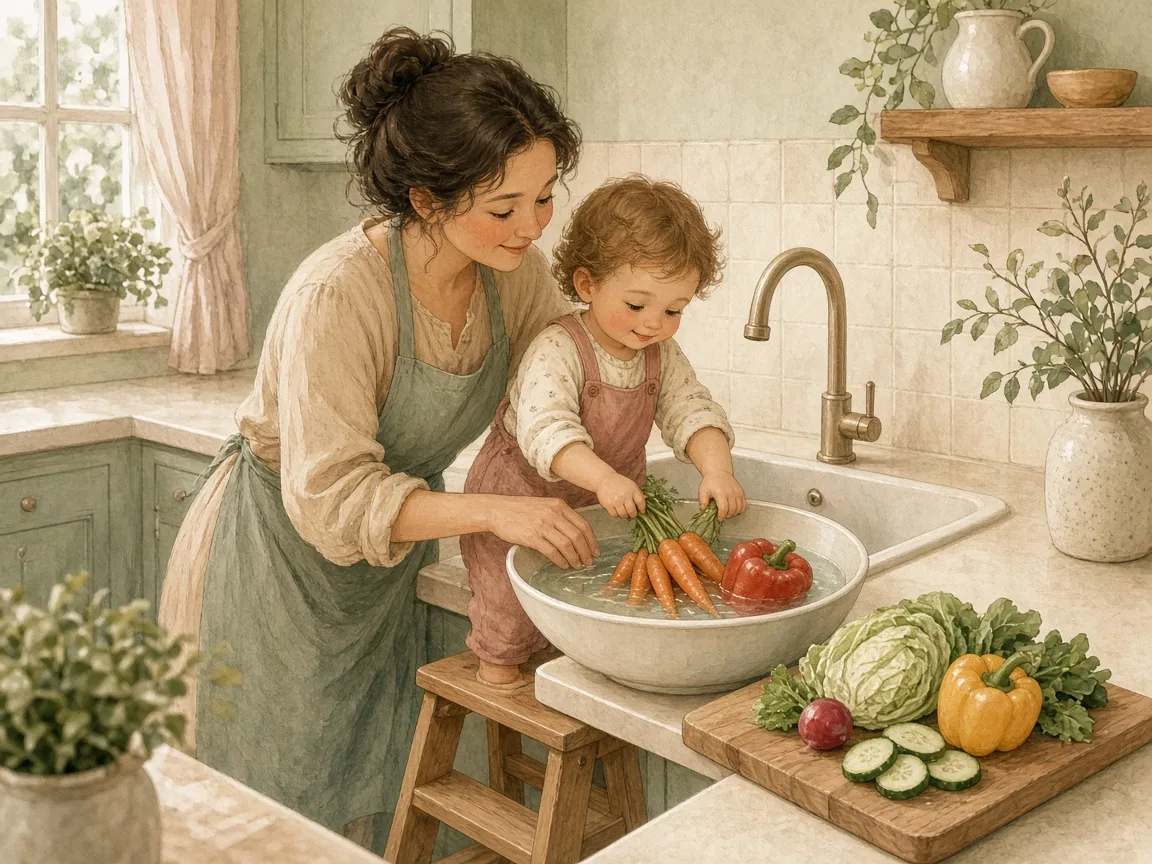
Penn State says even the most finicky eater is more likely to try a food they helped prepare, and Penn State and Nemours both suggest involving children in choosing vegetables at the store, growing them at home and helping to prepare them. With a stable step stool and close supervision, toddlers can do jobs like these:
- Wash vegetables in a bowl of water
- Tear lettuce or spinach leaves
- Stir cold ingredients in a big bowl
- Put vegetables on the plate with a spoon
- Carry soft vegetables to the table
- Pick a vegetable at the store or market

Keep knives, hot pans and anything sharp or hot out of reach. The job should feel easy and safe, and it should end with the food on the table, not a pressure to eat it.
🧠 Why it works
When children touch and smell a food in a no-pressure setting, it becomes more familiar. Familiar food feels less risky, and that is the foundation of acceptance.
Eat together and eat the vegetables yourself
Modeling matters. Penn State notes that children are more likely to eat vegetables when they see parents, siblings and peers enjoying them, and Nemours suggests family meals together so your child sees you eating a variety of nutritious foods. You do not need to comment or cheer. Simply eating your carrots with obvious enjoyment sends the message.
Make vegetables familiar with coloring and play
Familiarity does not only happen at the table. A vegetable that has been colored, counted, sung about or planted in a pot is no longer a stranger. Being honest with you: coloring has not been shown to make children eat vegetables. It is a low-pressure way to meet them away from the plate, which fits the repeated-exposure advice above.
Idea 6: Color it, name it, meet it
Our free vegetable coloring pages PDF has four bold, simple drawings: eggplant and carrots, a pumpkin, a veggie crate, and a radish with mushrooms, plus two full-color pictures you can use as color guides. The page lists ages 4 to 8, and suggests that younger children start with the pumpkin, which it describes as the easiest page in the set. With a 3-year-old, you do the coloring together and chat about the vegetables as you go.

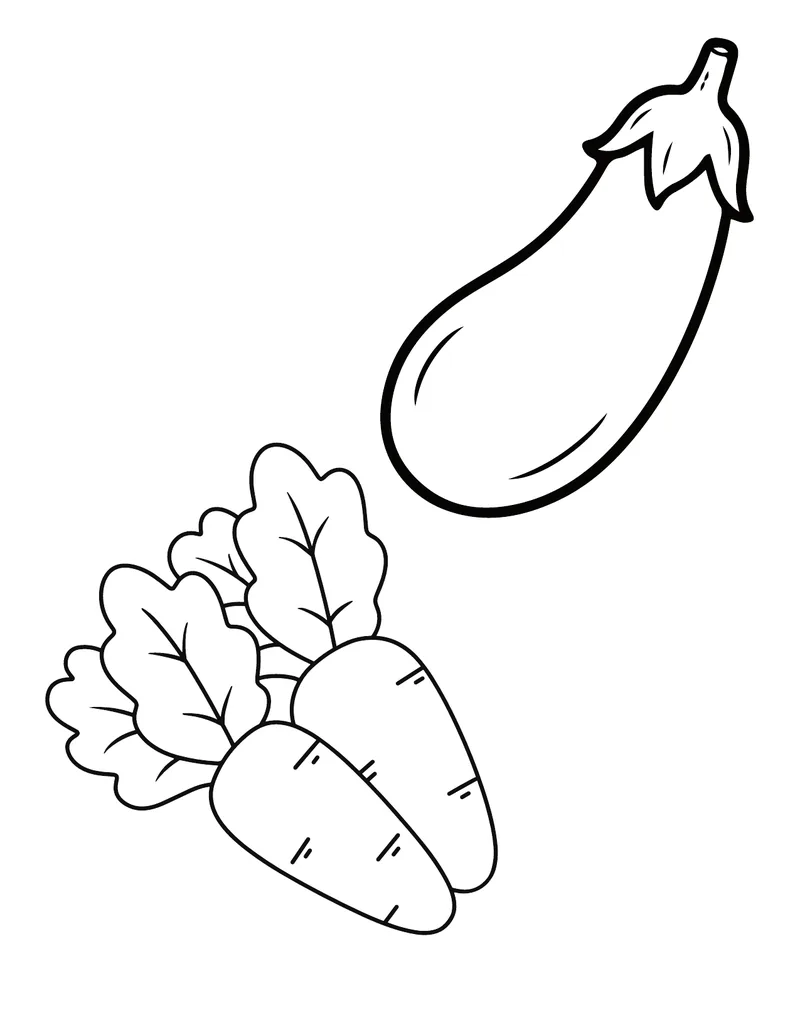


Put a real carrot or pepper on the table next to the page and match the crayon to the vegetable. Ask which vegetables grow underground, which are crunchy and which they might like to try. For older preschoolers who love coloring, the Crunchy & Cute Vegetable Coloring Book for Kids Ages 4–8 turns vegetables into friendly characters, and the free pages above are a sample of that book.
Free printable
Free vegetable coloring pages
A free PDF with four vegetable pages and two color guides. No sign-up needed, as the page says.

Our vegetable coloring book
Crunchy & Cute Vegetable Coloring Book for Kids Ages 4–8
The book page describes 40+ big, lovable vegetable illustrations with thick, simple lines on large 8.5 × 11 inch single-sided pages, made for ages 4 to 8. Try the free sample pages first.
paperback · ages 4–8 · see the book page for details
Our own book. ColorJoy may earn from purchases made through links on this site.
Idea 7: Play with vegetables
Make vegetables part of play, not only part of the menu. Here are some simple ideas:
- Play pretend grocery shop with real, washed vegetables and a basket
- Cut out finished coloring pages and play “market stall”
- Read picture books about gardens and food together
- Grow cress, beans or herbs in a pot on a sunny windowsill
- Make a vegetable face on a plate with soft cooked pieces, as Nemours and Penn State suggest
- Sing and name vegetables while you cook
⚠️ Safety note
Supervise crayons and play food at all times with toddlers. Wash vegetables before play, and keep anything small or hard away from children who might put it in their mouth.
What to do tonight
2 minutes
Pick one vegetable
Choose a soft, mild one your child has seen before. Offer a choice of two if you can.
5 minutes
Prep together
Let your child wash it or carry it to the table. Cook it until soft and cut it to a safe size.
At dinner
Serve one tiny portion
Place a small portion beside a favorite food. Eat your own, say nothing about it, and clear the plate calmly.
After dinner
Color it
Print the pumpkin or carrot page and color it together. Name what you colored.
Mealtime mistakes to skip
Even loving, patient parents slip into these habits, because they come from worry. Here are common ones to skip, and what to try instead.
| Common mistake | Why it backfires | Try instead |
|---|---|---|
| Bribing or bargaining for bites | Nemours says bargaining, such as “three more bites for a cookie”, tends to fail in the long run and can make sweets seem more valuable | Offer vegetables calmly and let your child decide how much to eat |
| Forcing or nagging | Both Nemours and the CDC advise against nagging and forcing, which create power struggles | Keep the mood upbeat and say little about the plate |
| Making a separate meal | Nemours suggests not cooking special meals for a picky eater | Serve the family meal with at least one food your child likes |
| Giving up after one or two tries | The CDC says it can take 8 to 10 exposures | Offer a tiny portion again a few days later |
| Using food as a reward | Nemours says using food as a reward can reinforce the appeal of the treat | Use non-food rewards like stickers or a story |
| Letting snacks or milk fill them up before dinner | A very full child has little appetite for a new food | Keep a predictable schedule of meals and snacks |
| Hiding vegetables and not telling | Penn State suggests blending vegetables is fine, but not to trick your child | Be open: “This sauce has carrots in it” |
| Screens or rushing at meals | The CDC suggests calm meals with no distractions or rushing, which also lowers choking risk | Sit down together and keep it relaxed |
If you want a bigger plan, our picky eater toddler guide goes deeper on the two-job rule, the tasting ladder and a week of easy meal ideas.
🩺 When to talk to your pediatrician
Most vegetable refusal is a normal phase. Talk to your pediatrician if your child eats a very limited number of foods, is losing weight or not growing as expected, gags or chokes often, seems to have pain, or has signs of an allergic reaction after eating. You do not have to wait until a scheduled check-up if you are worried. Your pediatrician can also refer you to a feeding specialist if needed.
Sources and further reading
FAQ: Getting a toddler to eat vegetables
How do I get my toddler to eat vegetables when they refuse everything green?
Keep offering a tiny portion without pressure, pair it with a food they like, let them choose between two vegetables and involve them in washing or serving. The CDC says it may take 8 to 10 exposures before a young child tries a new food, so repeated, calm offers matter more than any single meal.
How many times should I offer a vegetable before giving up?
Sources vary: the CDC mentions 8 to 10 exposures, Nemours says 10 or more, and Penn State Extension says some children need 12 to 17 tries or more. Rather than counting to a number, keep offering a small portion regularly, prepared in different ways.
Is it okay to hide vegetables in food?
Blending vegetables into sauces and soups can add variety, but Penn State suggests not using it to trick your child. Be open about what is in the food, and keep serving whole vegetables as well so your child also learns what they look like.
Should I make my toddler take “just one bite”?
Nemours says it is fine to encourage a try but not to negotiate or force. Offer the bite, accept “no”, and try again another day. Pressure tends to build dislike rather than acceptance.
What vegetables should toddlers start with?
Many children prefer sweet, soft or crunchy options such as cooked carrots, sweet potato, peas and mild cucumber. Prepare food to suit your child’s age and stage, and check the CDC’s choking hazards page, which lists hard raw vegetables like raw carrots and uncut cherry tomatoes.
Do coloring pages really help a toddler eat vegetables?
There is no promise that they will. Coloring and play are a gentle way to meet vegetables away from the table, which fits the idea of repeated exposure. Our free vegetable pages list ages 4 to 8, so with a toddler, color together and chat about the vegetables.
When should I worry about my toddler’s eating?
Talk to your pediatrician if your child eats a very limited range of foods, is not growing as expected, gags or chokes often or shows signs of an allergy. Do not wait if you are worried.
Small, calm and repeated wins the day.
One tiny portion, a pinch of patience and a few crayons can take the pressure off for everyone at the table.