The Ultimate Guide to a Stress-Free, Magical Halloween with Kids
New England porchesMidwest school paradesTexas warm nightsOregon rain days
Halloween with young kids is a glorious, noisy, slightly unhinged magic trick. One minute your four-year-old is grinning in a floppy dinosaur suit; the next, they are having a full-blown meltdown because a rubber spider looked at them wrong, or because they’ve consumed three miniature candy bars before lunch and their central nervous system is vibrating at a different frequency.
For parents, caregivers, and hosts, Halloween isn’t just a holiday—it’s an endurance event. Between managing the inevitable sugar rushes, navigating spooky sensory overload, keeping small hands busy without resorting to iPads, and hosting parties where nobody leaves in tears, the entire experience can quickly become overwhelming.
This guide is designed as your practical, step-by-step playbook for the Halloween season. We will break down how to manage the chaos, turn scary moments into silly memories, keep kids creatively engaged, and host gatherings that feel joyful rather than chaotic. It covers everything you need for a calm, happy Halloween with kids ages 4–8, from the first costume to the last candy wrapper.
Part 1: Managing Pre-Halloween Energy and Sugar Overload
Location: American kitchens from Ohio to Arizona
The week leading up to October 31st often feels like living inside a bouncy house that someone filled with espresso. Children pick up on the seasonal anticipation, the change in weather, the extra treats in the pantry, and the constant visual noise of costumes and decorations everywhere they go.
Understanding why your child is acting out—and having a plan to channel that extra adrenaline—is the key to surviving the week with your sanity intact.
Understanding the “Spooky Season” Adrenaline Spike
Kids aren’t just reacting to sugar; they are reacting to novelty and anticipation. Halloween breaks all standard daily rules:
Food rules shift (candy as a primary focal point).
When kids feel a mix of excitement and uncertainty, their nervous system enters a state of hyper-arousal. This looks like extreme giggles, sudden restlessness, boundary-pushing, or tears over tiny disruptions.
Step-by-Step Sugar Management Strategy
You don’t need to ban treats entirely to maintain a peaceful home. Instead, focus on balance, timing, and protein anchors.
Timeline Phase
Strategy
Actionable Step
Before Event
Protein Anchor
Serve a dense protein and healthy fat meal (eggs, cheese, peanut butter) to slow down sugar digestion.
During Treats
Structured Grazing
Pair treats directly with meals or fixed snack times rather than allowing endless grazing.
After Event
Nervous System Reset
Offer warm, grounding activities (baths, stories, or coloring) to lower cortisol levels.
1. Build a Solid Foundation: Never let kids go trick-or-treating or head into a Halloween party on an empty stomach. A meal rich in protein, complex carbohydrates, and healthy fats (like turkey chili, cheese quesadillas, or peanut butter toast) acts as a sponge, slowing down the absorption of sugar into the bloodstream and preventing massive glucose spikes.
2. Establish Clear, Gentle Rules Ahead of Time: Talk to your kids before the candy starts flowing. Set predictable expectations: “We will pick out three favorite treats to eat when we get home tonight, and we’ll save the rest for after lunch over the next few days!” When expectations are set early, kids are less likely to fight over boundaries in the heat of the moment.
3. Offer Unlimited Water: Sugar dehydrates the body, which exacerbates mood swings and fatigue. Keep water bottles easily accessible and gamify hydration—use silly Halloween straws or add orange slices to make drinking water fun.
Part 2: 10 Screen-Free Halloween Activities to Keep Kids Entertained and Creative
Rainy Portland afternoonsHot Houston eveningsMidwest living rooms
When outdoor weather turns crisp or rainy, it’s easy to hand kids a tablet. But screen time often leaves young kids more overstimulated and irritable during high-energy holidays. These ten hands-on, low-mess activities channel seasonal excitement into genuine focus and creative play.
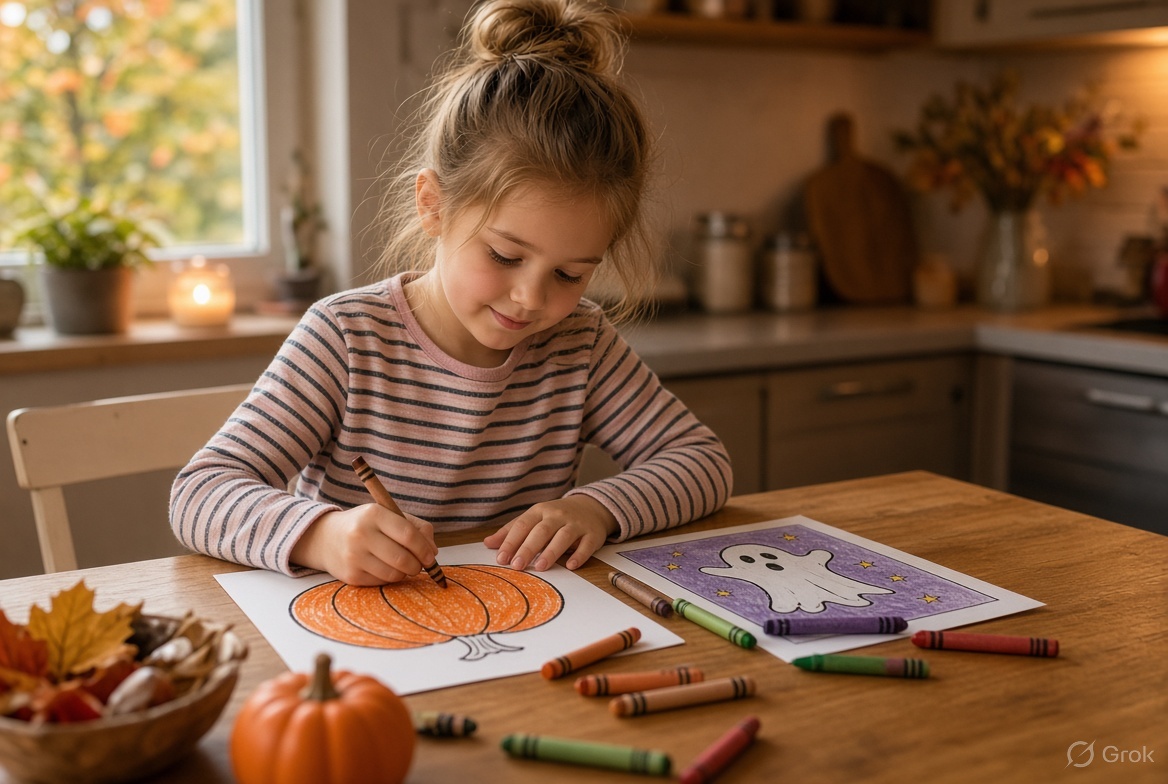
How it works: Set up a quiet nook with soft ambient lighting and autumn music. Provide children with engaging, child-friendly coloring designs (like smiling pumpkins, friendly ghosts, and playful Halloween scenes) to give them a low-stakes creative outlet.
Why it works: Focused coloring lowers heart rates, promotes mindfulness, and gives overstimulated kids a restful retreat during busy festivities.
Best for: Ages 3–8 What you need: Mini flashlights, a real or faux pumpkin, blankets/pillows.
How it works: Dim the living room lights and build a cozy blanket fort. Sit in a circle with your mini flashlights. The person holding the pumpkin is the “Story Master” and starts a silly, non-scary Halloween story (“Once upon a time, a tiny purple ghost forgot where he put his socks…”). After two sentences, pass the pumpkin to the next person to continue the tale.
Why it works: The dim lighting calms the room, while the physical object (the pumpkin) keeps little hands still and gives kids a turn-taking visual cue.
Best for: Ages 2–6 What you need: Mandarins or clementines, non-toxic food-safe black markers.
How it works: Give your kids a bowl of unpeeled clementines and let them draw silly, spooky, or happy jack-o’-lantern faces directly on the orange peels. Once finished, they can peel and eat their creations.
Why it works: It offers the visual satisfaction of pumpkin carving without sharp tools, sticky guts, or long setup times.
4. Spider Broomsticks with Cheese Strings
Best for: Ages 4–8 What you need: Mozzarella string cheese, pretzel sticks, fresh chives.
How it works: Cut a string cheese stick into three equal sections. Slice the bottom third of each section into thin strips to resemble broom bristles. Push a pretzel stick into the top non-sliced end to form the broom handle, and tie a chive around the middle for detail.
Why it works: Fine motor skill work engages the prefrontal cortex, helping overly excited kids settle into a focused, calm state. Plus, it’s a healthy, protein-rich snack!
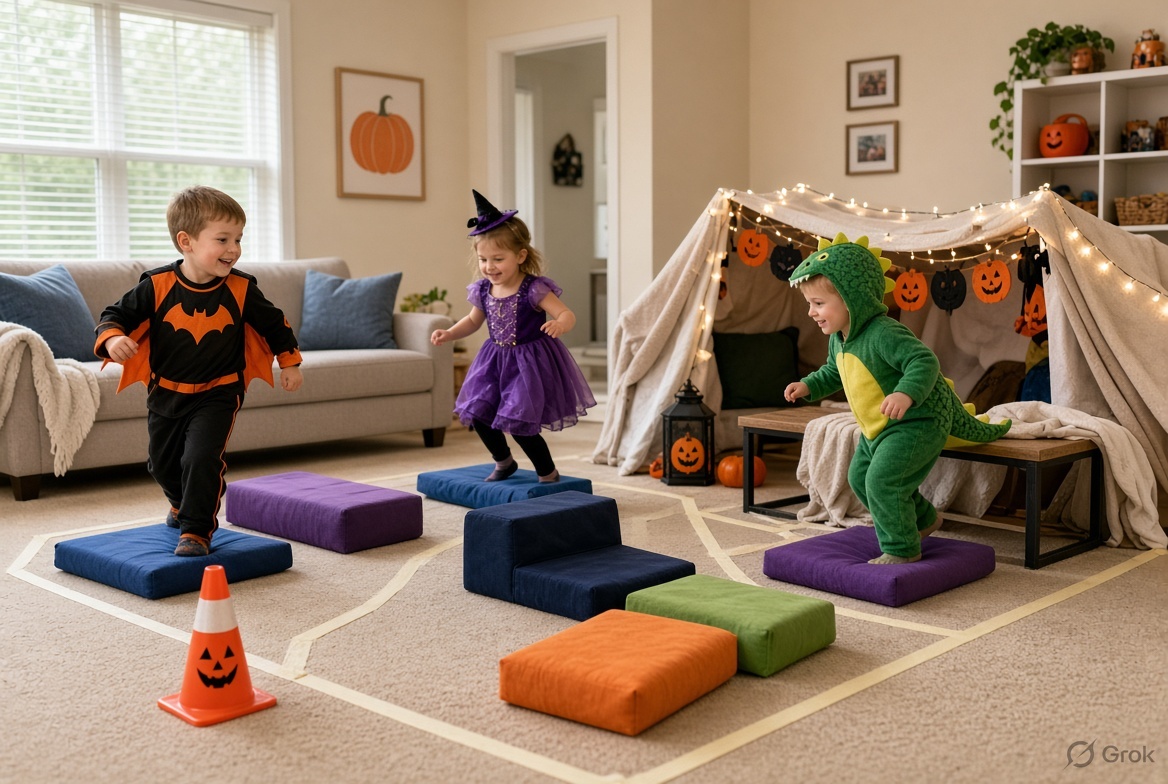
5. High-Energy Indoor Halloween Obstacle Course
Burns energy before dinner
Best for: Ages 3–7 What you need: Painter’s tape, couch cushions, stuffed animals.
How it works: Lay down tape on the floor as “pumpkin vines” kids must balance on. Place cushions as “swamp stones” to hop over, and set up a dining table with a blanket draped over it as a “bat cave” to crawl through. Time them as they navigate the course!
Why it works: It burns off genuine physical adrenaline in a structured, safe environment before you ask them to sit down for dinner or bedtime.
6. Pumpkin Washing Station
Best for: Ages 2–5 What you need: Plastic tub, warm water, mild soap, scrubbing brushes, small pie pumpkins.
How it works: Fill a shallow plastic tub with warm soapy water and give toddlers small brushes, sponges, and towels. Let them scrub pie pumpkins clean, rinse them off, and dry them.
Why it works: Sensory water play is universally soothing for young children. It anchors frantic energy and keeps toddlers deeply engaged for extended periods.
7. Shadow Puppet Theater
Best for: Ages 4–8 What you need: Cardboard box, tissue paper, flashlight, black cardstock cutouts on popsicle sticks (bats, cats, witch hats).
How it works: Cut out the bottom of a cardboard box and tape white tissue paper over the opening. Shine a flashlight from behind the box inside a dim room. Kids can put on shadow plays using simple black cutouts on sticks.
Why it works: Encourages open-ended narrative play while maintaining a calm, sensory-friendly atmosphere.
8. Ghostly Yarn-Wrapped Crafts
Best for: Ages 5–8 What you need: White yarn, cardboard cutouts of ghost shapes, googly eyes, glue.
How it works: Cut ghost silhouettes out of sturdy cardboard. Give children yarn and let them wrap the cardboard ghost repeatedly until covered. Glue two googly eyes on top to finish.
Why it works: Repetitive wrapping motions are deeply soothing and build bilateral coordination skills.
9. “Find the Monster” Tape Maze
Best for: Ages 2–6 What you need: Painter’s tape, plastic Halloween figurines or printed paper pictures.
How it works: Create a large web or maze pattern using painter’s tape on a hardwood floor or rug. Place friendly Halloween figures at different points along the tape paths. Ask your child to walk along the lines to “rescue” each item.
Why it works: Challenges spatial orientation and balance while keeping the theme lighthearted and active.
10. Halloween Scented Playdough
Best for: Ages 2–8 What you need: Homemade or store-bought orange playdough, pumpkin pie spice, cinnamon sticks, plastic spiders.
How it works: Knead pumpkin pie spice or cinnamon into playdough. Give kids tools like rolling pins, cookie cutters, and plastic spiders to build custom “pumpkin pies” or monster creations.
Why it works: Olfactory sensory stimulation (cinnamon and pumpkin spice) promotes relaxation while fine motor play relieves stress.
Part 3: Turning Halloween Fears into Fun (Ages 4–8)
U.S. preschool and kindergarten years
For adults, monsters and ghosts are fun seasonal tropes. For a four- or five-year-old child whose brain is still developing the ability to separate fantasy from reality, a realistic mannequin with fake blood or an ominous mask can trigger a genuine fight-or-flight response. Understanding how children experience fear empowers you to help them process and overcome it.
The Child Development of Halloween Fears
Between ages 4 and 8, children possess rich, active imaginations, but their logic centers are still catching up. When they see a person wearing a scary mask, their brain struggles with magical thinking—the internal worry that the mask isn’t just a costume, but a real transformation.
Step-by-Step Strategy: Using Art to Demystify Monsters
Coloring and creative expression give children a safe distance from which they can analyze, manipulate, and ultimately dominate the things that frighten them.
Step 1: Validate, Don’t Dismiss
When a child says, “That mummy is scary,” avoid saying, “Nonsense, it’s just fake!” To them, the fear is real. Instead, say: “That mummy does look big and strange. It’s okay to feel surprised by it. Let’s look at it together from here.”
Step 2: Externalize the Threat on Paper
Sit down at a table with paper and coloring tools. Ask your child to draw the thing that scared them, or hand them a coloring page featuring a mummy, ghost, or monster. By putting the monster on paper, the threat becomes small, bounded, and manageable.
Put the scare on paper
Step 3: Add the “Silly Elements” (Taking Back Control)
Invite your child to modify the scary image using humor:
“What if we drew polka-dot roller skates on this mummy?”
“Does this ghost need a giant pair of pink sunglasses and a funny hat?”
“Let’s color this monster’s teeth bright purple so he looks like he just ate a bunch of grape popsicles!”
Scary Element
Creative Shift
New Perspective
Sharp spooky teeth
Color them purple / add a big silly smile
“He just ate grape popsicles!”
Dark shadowy ghost
Draw giant pink sunglasses and a bow
“She’s ready for a beach party!”
Wrapped mummy
Draw bright polka-dot roller skates
“He’s slipping on the ice!”
Step 4: Laugh Together
Laughter is the physiological antidote to anxiety. When a child laughs at a monster they’ve drawn wearing pink sunglasses, their brain rewires the emotional association. The scary figure drops its power, leaving the child feeling triumphant and in control.
Part 4: Hosting a Low-Stress Halloween Party for Little Kids
Suburban rec roomsApartment living roomsSchool-night Fridays
Hosting a party for little kids can easily turn chaotic if not planned properly. Kids don’t need elaborate entertainment or high-concept catering; they need safety, simplicity, and clear structure. Follow this blueprint to host an unforgettable gathering that doesn’t leave you exhausted.
Safety First: Costume Checkup
Before the party begins, do a quick safety check on costumes to prevent unnecessary injuries or frustration:
Trip Hazards: Hem long capes, dresses, or robes so they sit at least two inches above the ankles.
Visibility: Replace full-face plastic masks (which limit peripheral vision and breathing) with gentle face paint or makeup.
Comfort: Ensure costumes fit easily over warm undergarments and don’t feature itchy fabrics or tight necklines.
Party Snacks: Keep It Simple, Safe, and Balanced
Avoid complex dishes that sit out or take hours to assemble. Instead, offer simple, bite-sized finger foods that balance fun visuals with actual nutrition:
Franken-Guac Dip: Spread guacamole on a rectangular tray, use blue corn tortilla chips at the top for hair, and sour cream with black olives to make bolts and eyes.
Monster Apple Sliders: Slice apples into wedges, spread peanut butter (or sunflower seed butter) between two slices, and insert mini marshmallows or sunflower seeds as “teeth.”
Jack-o’-Lantern Mini Pizzas: Let kids make their own pizzas using English muffins, tomato sauce, shredded mozzarella, and sliced pepperoni or bell peppers cut into triangle eyes and mouth shapes.
Designing the “Quiet Coloring Corner” (Your Party Secret Weapon)
The reset station every party needs
In every party with young children, there comes a point where sensory inputs hit a critical mass. Loud music, bright lights, and excited screaming will cause at least a few children to feel overwhelmed. Create a dedicated Downtime Station away from the main activity room:
Location: Set it up in a quiet corner of the dining room, a side den, or a carpeted hallway.
Environment: Turn down bright overhead lights and use soft lamps. Place floor pillows, soft blankets, or a small rug on the floor.
Supplies: Stock a low coffee table with printed Halloween coloring sheets, washable markers, crayons, and seasonal picture books (Room on the Broom, The Little Old Lady Who Was Not Afraid of Anything).
How to Use It: Point out the station at the start of the party: “If anyone ever feels like taking a little break, this special corner is always open!”
When a child begins to show signs of overstimulation (covering ears, clinging to parents, or crying), gently guide them to the quiet corner. Ten minutes of low-stakes coloring will often reset their nervous system, allowing them to jump back into the party safely.
Part 5: Master Planning Timeline for Halloween with Kids
U.S. calendar 2026Thursday, October 1 through Saturday, October 31
Organizing a seamless, memorable Halloween event requires a clear execution plan. By breaking down your preparations into distinct phases, you ensure every detail—from decorations and costumes to catering and safety—is addressed without last-minute stress.
Phase 1: Early Preparation (4 Weeks Out)
Target Date Range: Thursday, October 1, 2026 – Wednesday, October 7, 2026
1. Establish Event Concept and Scope
Theme Selection: Finalize your overarching concept (e.g., Classic Haunted House, Gothic Masquerade, Witching Hour Brunch, or Family-Friendly Spooky Carnival).
Budgeting: Set a clear maximum budget covering decor, food, beverages, entertainment, and safety supplies.
Guest List: Draft your invitee list and choose your primary communication channel (digital invitations, social media event page, or printed cards).
2. Space Assessment and Procurement
Layout Planning: Designate specific areas for guest congregation, food/drink stations, photo backdrops, and active activity zones.
Inventory Audit: Check stored decorations, lighting rigs, and serving gear from previous years to identify damaged or missing items.
Early Ordering: Order specialized items, custom favors, and hard-to-find costume elements online to account for shipping delays.
Phase 2: Logistics and Media Setup (3 Weeks Out)
Target Date Range: Thursday, October 8, 2026 – Wednesday, October 14, 2026
1. Invitation Dispatch and RSVPs
Send Invitations: Formally issue invitations with a clear RSVP deadline set for 7–10 days before the event.
Information Sharing: Include essential details such as dress code guidelines, parking instructions, entry requirements, and age appropriateness.
2. Menu and Entertainment Curation
Menu Architecture: Finalize recipes for thematic dishes, signature cocktails, non-alcoholic drinks, and allergy-friendly alternatives.
Soundtrack and Media: Build audio playlists matching the theme’s progression (e.g., ambient spooky sounds early on, transitioning to energetic party tracks later).
Activities and Games: Outline games, costume contests (with defined judging categories), or movie watch schedules.
Phase 3: Sourcing and Crafting (2 Weeks Out)
Target Date Range: Thursday, October 15, 2026 – Wednesday, October 21, 2026
1. Supplies and Crafting
Dry Goods and Non-Perishables: Purchase paper goods, napkins, themed serveware, candles, batteries, trash bags, and extended-shelf-life snacks.
Costume Finalization: Conduct full costume fittings to ensure comfort, mobility, and proper fit. Make any necessary alterations early.
2. Entertainment and Safety Prep
Prize Preparation: Assemble trophies, ribbons, or gift bags for costume contest winners and game participants.
First-Aid and Safety: Assemble basic medical supplies, verify functioning flashlights for outdoor lighting, and ensure fire extinguishers are easily accessible.
Phase 4: Final Preparations (1 Week Out)
Target Date Range: Thursday, October 22, 2026 – Wednesday, October 28, 2026
1. Host Logistics
RSVP Headcount: Finalize guest totals and send reminder messages to non-responders with key arrival details.
Indoor Decor Setup: Hang ambient decorations, set up entry displays, and arrange seating arrangements.
Lighting and Audio Testing: Set up fog machines, strobe lights, blacklights, and sound equipment. Perform test runs to verify outlets and prevent circuit overloads.
Phase 5: The Countdown (Eve and Event Day)
Target Date Range: Thursday, October 29, 2026 – Saturday, October 31, 2026
Thursday, October 29, 2026 (2 Days Before)
Advance Food Prep: Chop produce, marinate meats, bake sturdy desserts, and prepare syrup bases for drinks.
Outdoor Staging: Position weather-resistant props, exterior lighting, and entry pathways.
Friday, October 30, 2026 (Halloween Eve)
Chilling and Batching: Batch signature cocktails/punches (excluding carbonated mixers) and chill beverages.
Traffic Flow Setup: Clear floor space, double-check waste bin placement near food zones, and verify clean restroom facilities.
Saturday, October 31, 2026 (Halloween Day Execution)
Morning (08:00 – 12:00): Complete remaining culinary prep, set out non-perishable serving displays, and double-check ice supply.
Afternoon (12:00 – 16:00): Set up food warming stations, turn on atmospheric devices (fog machines, ambient soundtracks), and test exterior pathways.
Pre-Event Prep (16:00 – Event Start): Get dressed in full costume, light candles/jack-o’-lanterns, start heating warm dishes, and open the venue for guest arrival.
Keep a Coloring Stack Ready
When the candy hits and the costumes itch, a quiet page still works—in a Chicago apartment or a Carolina backyard.
Halloween with Kids: Trick-or-Treat Safety Checklist
A few minutes of planning keeps the fun part fun. Run through this quick list before you head out for Halloween with kids of any age.
Be seen. Add reflective tape to costumes and bags, and give each child a small flashlight.
Check the fit. Shoes should fit well and costumes should be short enough not to trip on. Masks can block vision, so face paint is often easier.
Stay together. Young children should always trick-or-treat with an adult. Stick to well-lit streets and use sidewalks and crosswalks.
Only lit porches. Visit homes with a porch light on and never go inside a home or car for a treat.
Inspect treats at home. Sort candy before eating and remove choking hazards such as hard candy for toddlers.
Think about allergies. If you hand out treats, non-food options like stickers, pencils or glow sticks help every child join in.
For the full list, see the American Academy of Pediatrics guide to Halloween fun and safety tips on HealthyChildren.org.
Halloween with Kids by Age
What feels magical at eight can feel scary at three. Match your plan for Halloween with kids to your child.
🎃
Toddlers (1–3)
Keep it short and bright. A daytime costume walk, a few friendly houses and a pumpkin to paint instead of carve are plenty. Home before tiredness hits.
👻
Ages 4–5
Choose cute rather than creepy. Talk through what they might see, practice saying “trick or treat,” and keep a quiet coloring corner ready for after.
🦇
Ages 6–8
Let them help plan the Halloween party games, their costume and the trick-or-treat route. Agree on candy rules before you leave so there are no arguments at the door.
A Calm Halloween Night Routine
The hours after trick-or-treating are where most meltdowns happen. A simple routine helps Halloween with kids end on a happy note.
After school: a proper snack with protein before any candy, then a short rest.
Early evening: costumes on early so nobody is rushed, photos done before you leave.
Trick-or-treat window: agree on a time or number of houses in advance.
Candy sort: spread everything out, check it together, pick a few treats for tonight and put the rest away.
Wind down: bath, pajamas and ten quiet minutes with a Halloween coloring page.
Bedtime: keep it as close to normal as you can. Our 7-night sleep routine helps if bedtimes slip.
Halloween Coloring Pages and Printables
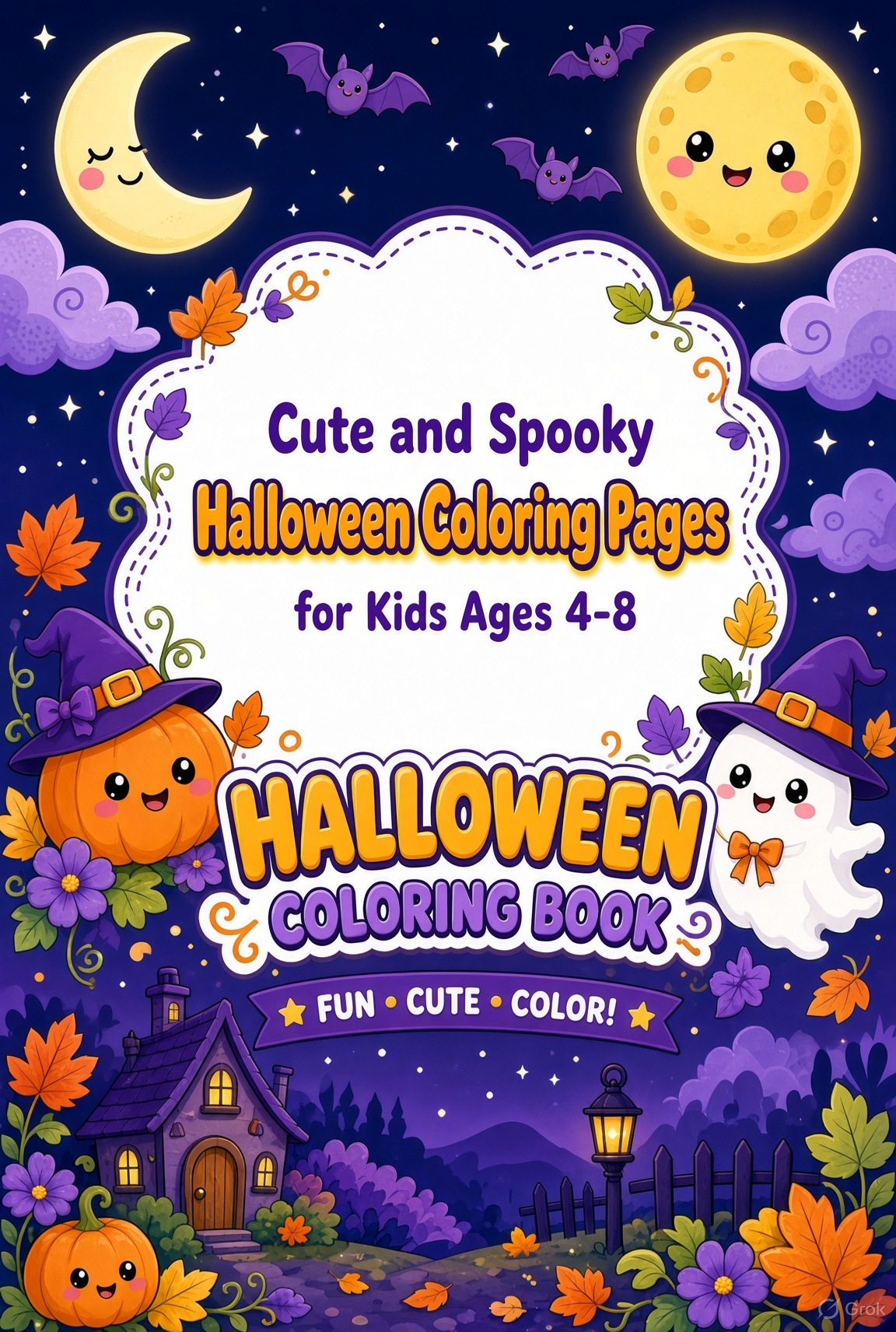
Coloring is the easiest calm-down activity for Halloween with kids. Start with our collection of cute and spooky Halloween coloring pages, then add a book for the quiet corner.
🎃
Halloween Coloring Pages
Our main Halloween page: cute and spooky designs for ages 4–8 and ideas for using them.
Plan the day before it starts: a real meal before candy, a set trick-or-treat window, a calm corner at home and a normal bedtime. Small routines prevent most meltdowns.
What if my child is scared of Halloween?
Take the fear seriously, keep decorations cute rather than gory, and draw the scary thing together, then add silly details. Part 3 of this guide walks through it step by step.
How do I plan a Halloween party for little kids?
Keep a Halloween party for young children short and simple: a clear start and end time, two or three easy games, safe snacks and a quiet coloring corner for anyone who needs a break. Part 4 has the full plan.
What are good screen-free Halloween activities?
Coloring, flashlight story circles, clementine jack-o’-lanterns, an indoor obstacle course and shadow puppets. All ten screen-free Halloween activities are in Part 2 above.
Where can I find Halloween coloring pages for kids?
Browse our Halloween coloring pages for cute and spooky designs for ages 4–8, or pick up the Halloween Coloring Book for Kids for a ready-made stack.