Christmas tree safety • Babies to age 4 • Free printable
How to Toddler-Proof a Christmas Tree: A Calm, Safe Setup That Still Feels Magical
Little hands pulling ornaments, a tree that wobbles every time someone walks by, and you saying “no, no, gentle!” fifty times a day? Here’s a calm, step-by-step way to set up a Christmas tree with a toddler in the house: where to put it, how to keep it steady, which ornaments go where, the hidden hazards most parents miss, and a free printable tree-rules kit.
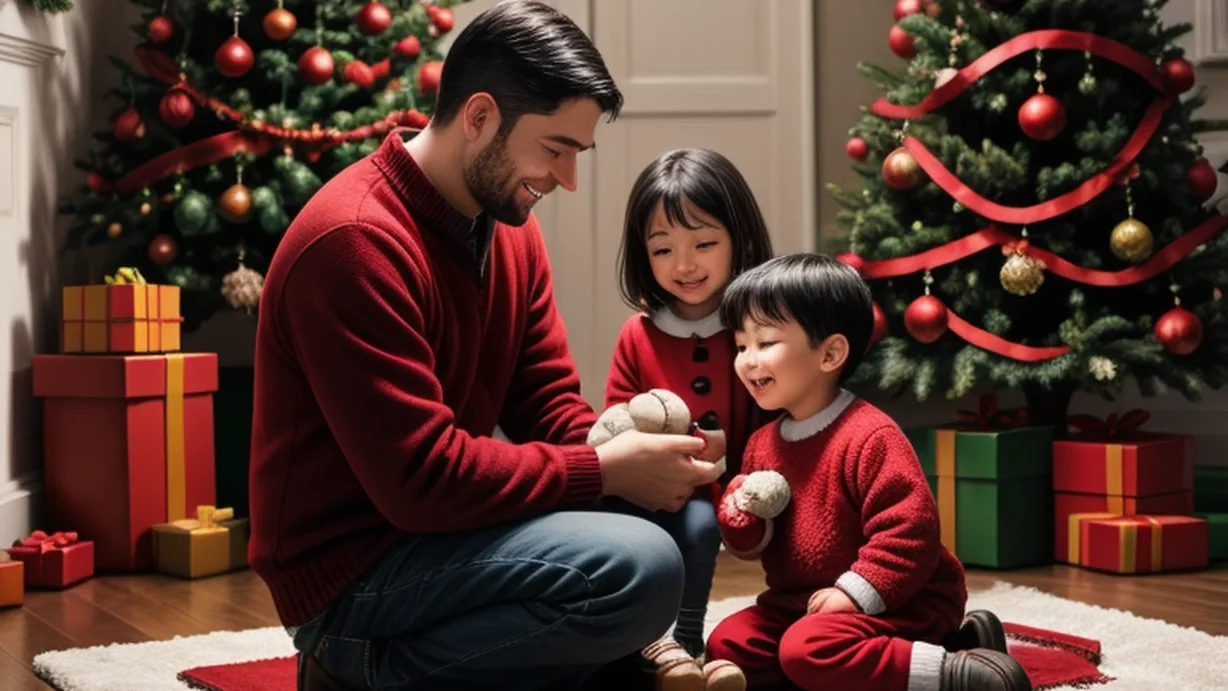
For a lot of American families, the weekend after Thanksgiving is tree weekend. The boxes come down from the attic, or you strap a fresh fir to the roof of the car, and the living room suddenly smells like pine. And then your toddler sees it: a giant, glittering, light-up thing covered in shiny balls, right at their level. To a one- or two-year-old, a Christmas tree isn’t decoration. It’s the most exciting toy that has ever entered the house.
If you’re dreading a month of “don’t touch that!”, you’re not alone, and you don’t have to choose between a safe toddler and a beautiful tree. This guide from ColorJoy (we make bold, easy coloring books, activity books and free printables for little hands) walks you through a calm, realistic setup: the few safety steps that matter most, a simple “tree zones” system for ornaments, gentle ways to teach tree rules, and a free 3-page printable with a grown-up checklist, a kid-friendly rules poster and a decorate-your-own-tree coloring page.
🌟 By the end of this page you’ll have…
- why toddlers are drawn to the tree (and why “just say no” rarely works)
- where to put the tree, and whether real or artificial matters
- how to keep the tree steady so it can’t be pulled over
- safer lights and cords, and an easy “three-zone” ornament plan
- the hidden hazards most parents miss: button batteries, berries, tinsel and ribbons
- gentle tree rules that work, a “what to do tonight” plan, a troubleshooting table and a free printable kit
🎨 New here? Hi, we’re ColorJoy
ColorJoy makes bold, easy coloring books, early-learning workbooks and free printables, plus practical guides for real family life. This guide is part of our holiday series, alongside Christmas traditions for toddlers and baking Christmas cookies with kids.
Real-life moments
Sound familiar?
Every family with a toddler and a tree has a version of these moments. Here’s a gentle way through each one.
The ornament harvest
You finish decorating, step into the kitchen, and come back to find every ornament on the bottom third of the tree lined up on the rug, or in your toddler’s mouth.
Try this: don’t fight the bottom of the tree. Give it to them. The ornament zones in Step 4 turn “the forbidden zone” into “my zone.”
The wobble
Your little one grabs a branch to pull up to standing, and the whole tree sways. Your heart stops for a second.
Try this: a wide stand and a simple tie to the wall turn a scary wobble into a non-event. Step 2 shows how.
The cord chewer
One morning you find your baby happily gumming the plug end of a light strand, or tugging the cord to see what happens.
Try this: move the lowest lights up and get cords off the floor. It takes ten minutes and you only do it once.
“No” on repeat
By December 3 you feel like all you ever say is “no touching,” and your toddler has decided that touching the tree is the best game in the house.
Try this: a few clear rules, a “yes” alternative and lots of praise work better than constant no’s. Step 6 has scripts that help.
The why
Why toddlers can’t leave the tree alone (it’s not naughtiness)
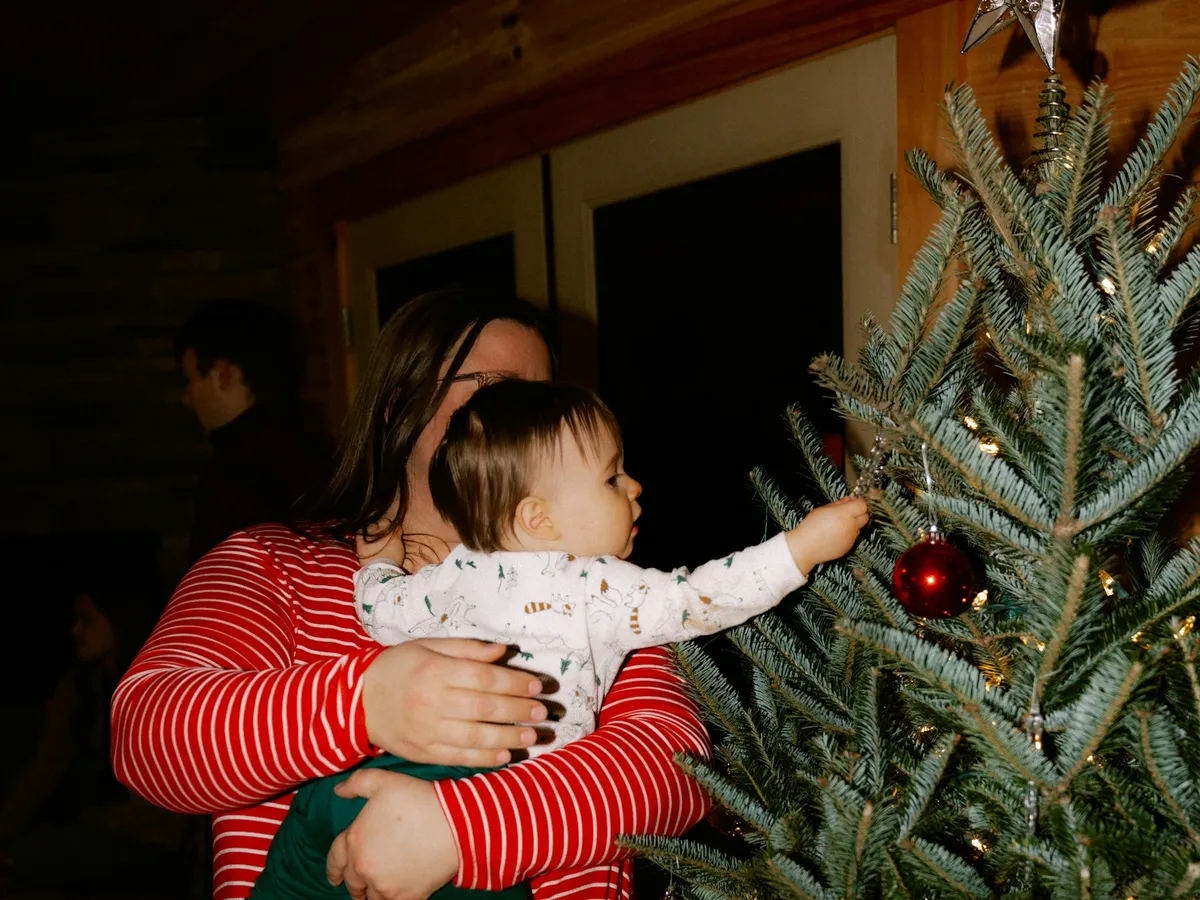
It helps to start here, because how you see the problem changes how you solve it. Babies and toddlers learn about the world with their hands and mouths. They grab, pull, shake, drop and taste, again and again, to find out what things are and what they do. A Christmas tree is a perfect storm for that kind of learning: bright lights, shiny round objects that look a lot like balls, soft branches to grab, and a new smell. It appeared overnight in the middle of their space, and it’s exactly their height.
Toddlers also don’t yet have the impulse control to stop themselves just because you said so a minute ago. Many parents notice that their child knows the rule (“no touch!”) and even says it out loud, while reaching for an ornament. That isn’t defiance. The part of the brain that puts the brakes on a strong urge is still very much under construction in the toddler years. So the most effective plan is a mix of changing the environment so the risky things are out of reach, and teaching simple rules with lots of repetition and a “yes” alternative.
🎄 What this means for you
You don’t need a toddler who never touches the tree. You need a tree that’s safe to touch at toddler height, and a toddler who is slowly learning “gentle hands.” Both can happen in the same December.

Know the risks
The real risks, honestly (no scare tactics)
Most Christmases with toddlers involve nothing scarier than a few broken baubles. But it’s worth knowing which risks are real, so you can spend your energy on the things that matter and relax about the rest.
| Risk | What the experts say | What it means at home |
|---|---|---|
| Falls & injuries while decorating | The CPSC reports about 14,900 people were treated in US emergency rooms for holiday decorating injuries in the 2023 holiday season, with nearly half involving falls (CPSC). | Many of these are grown-ups on ladders and chairs. Use a proper step stool, and decorate while the kids nap or play with another adult. |
| Choking & small parts | The AAP advises keeping trimmings with small removable parts out of reach and avoiding decorations that look like candy or food (HealthyChildren.org). | This is the big one for under-4s. Ornament hooks, beads, tinsel bits and small or breakable ornaments belong up high. |
| Button & coin batteries | Poison Control warns that a battery stuck in the esophagus can burn through in about 2 hours (Poison Control). | Check light-up ornaments, flameless candles, remotes and musical cards. Tape or screw battery doors shut. |
| Tree fires | NFPA estimates an average of 160 US home fires a year began with Christmas trees (2016–2020); electrical failures and heat sources too close to the tree caused more than half (NFPA). | Rare, but serious. Keep the tree away from heat, water live trees daily, check your lights and turn them off at bedtime. |
| Tip-overs | Pediatric experts quoted by Lehigh Valley Health Network advise attaching trees firmly to the wall, because kids can pull them down (LVHN). | A wobbly tree and a toddler pulling up on branches is a bad mix. Step 2 fixes this. |
Notice what’s not on the list: toddlers touching branches, sniffing needles or patting soft ornaments. Those are fine. The goal is to remove the few things that can really hurt, so you can say “yes” more often.
Placement
Step 1: Choose the spot (and the tree) with your toddler in mind
Where the tree goes matters more than almost anything you hang on it. Before the tree comes in, walk the room at toddler height (yes, get on your knees) and look for these things:
- Away from heat. The NFPA advises keeping the tree at least three feet from any heat source, like fireplaces, radiators, candles, heat vents or lights, and making sure it isn’t blocking an exit.
- Out of the main walkway. The AAP suggests placing the tree out of the way of traffic and not blocking doorways. A corner is ideal: two sides are protected by walls.
- Near an outlet. So light cords don’t snake across the floor where little feet trip and little hands pull.
- Away from climbing launchpads. A sofa arm or toy box next to the tree is an invitation to climb up and reach the “grown-up” ornaments.
Real or artificial?
Both can work with toddlers. If you choose a live tree, the AAP recommends checking it’s fresh (needles hard to pull off and don’t break when bent), cutting a few inches off the trunk, and keeping the stand filled with water. The NFPA adds: add water every day. A covered tree-stand reservoir is handy with little ones, since an open bowl of water at toddler height is tempting for splashing. If you choose an artificial tree, both the CPSC and the AAP say to look for one labeled “fire resistant.” Artificial trees can also be lighter and easier to secure, and pre-lit trees cut down on loose cords.
📐 Our favorite trick: the “corner + furniture” setup
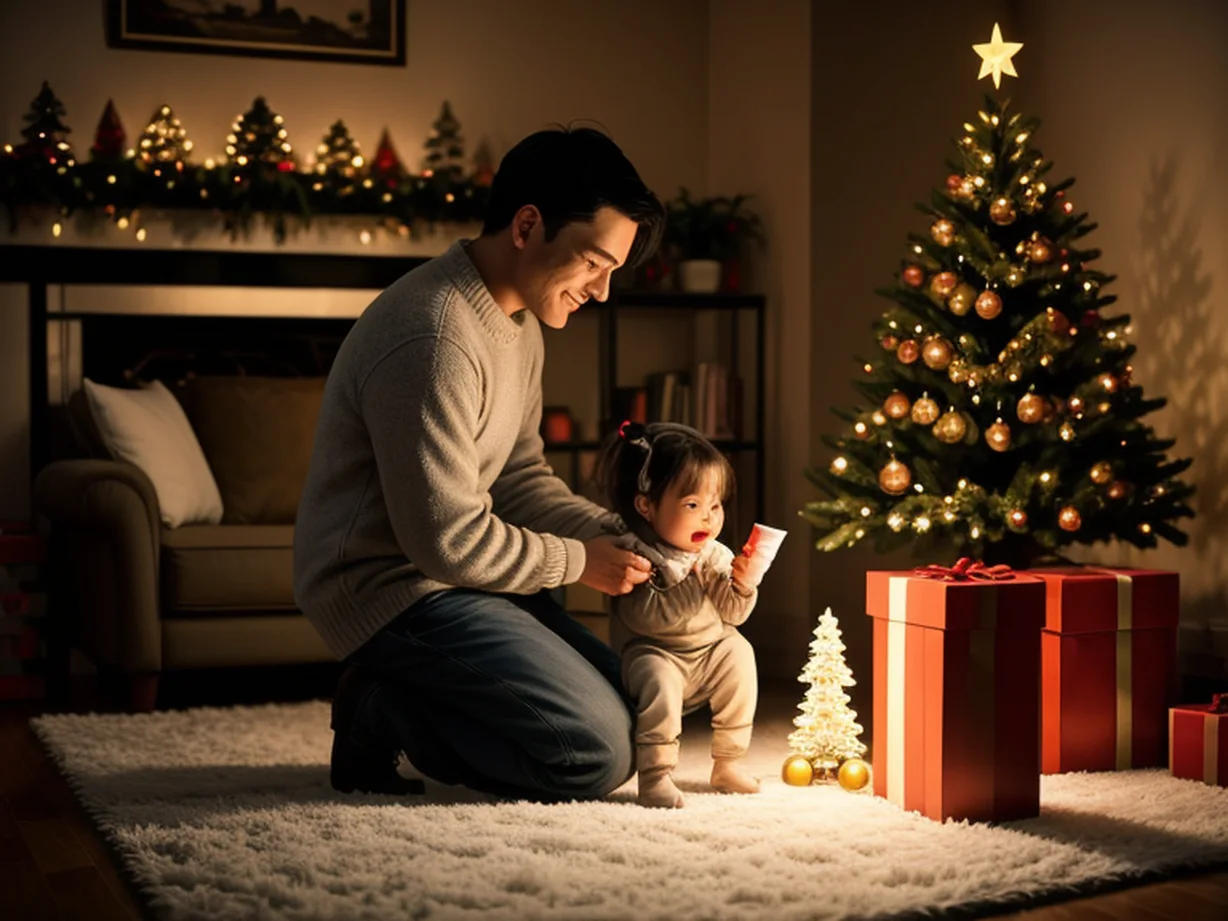
Put the tree in a corner and place a heavy, low piece of furniture (a sofa back, a toy shelf) along the open side. Now your toddler can see the tree from the front but can’t easily reach behind it, where the cords and the stand live. No gate needed for many families.
Steady
Step 2: Make it steady (the step most people skip)
Toddlers who are learning to stand and cruise will grab anything nearby to pull themselves up, and a branch looks like a perfect handle. A tree that tips is the one risk that can hurt a child badly in a second, so this is worth ten minutes of your evening.
The stand
Choose a stand that’s wide and heavy for the size of your tree, and make sure the trunk is straight and tight. Plastic stands that came free with a tree years ago are often the weak link. If your tree leans even slightly, fix it now, before the ornaments go on.
The wiggle test
Once the tree is up, grab it about halfway up and give it a firm wiggle from each side, the way a determined toddler might. If it rocks, shifts in the stand or the stand slides, it’s not ready for little hands.
Tie it back
For extra peace of mind, many parents anchor the tree to the wall: a small screw-in hook or a sturdy curtain-rod bracket behind the tree, with clear fishing line or thin wire looped around the trunk near the top. It’s nearly invisible, it takes minutes, and it means a pull on one branch can’t bring the whole tree down. Renting? Removable adhesive hooks rated for heavy weight, or tying back to a heavy piece of furniture, can work too.
🛑 Do the wiggle test again every few days
Live trees dry and shift, kids tug, and stands loosen. Make it part of your morning walk-past, along with checking the water. Our free printable checklist has a daily box for exactly this.
Lights
Step 3: Safer lights and cords
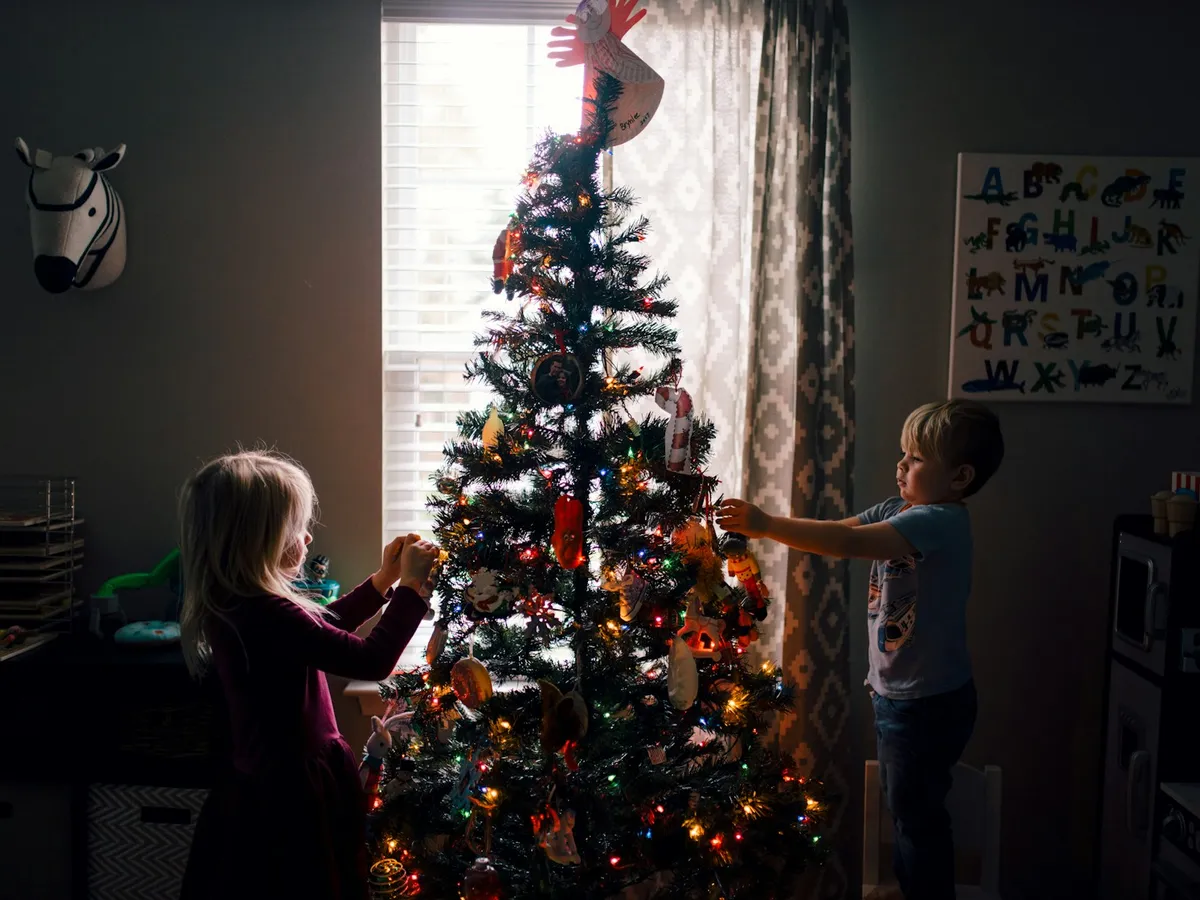
Twinkle lights are half the magic, and also one of the main things toddlers want to grab, pull and chew. A few simple habits make a big difference:
- Check every strand first. The AAP advises checking all lights before hanging them, even new ones, for broken sockets, frayed wires and loose connections. Toss damaged strands.
- Don’t over-connect. CPSC advises never stringing together more than three sets of incandescent lights and never overloading outlets. For LED sets, follow the manufacturer’s instructions.
- Start the lights higher. Keep the lowest strand above your child’s reach. The AAP notes that some light strands may contain lead in the bulb sockets and wire coating, so keep lights out of reach of kids who mouth things, and wash hands after handling them.
- Hide the cords. Run cords behind furniture or along the wall, and tape them down or use a cord cover. Use outlet covers on unused sockets near the tree.
- Turn them off at night. The NFPA advises always turning off tree lights before leaving home or going to bed. A plug-in timer does it for you.
Lights are also a lovely teaching moment. Many toddlers love being the one who “helps” turn the lights on each evening (with you pressing the switch or timer button). It gives them a job and a ritual, and it reinforces that the lights belong to the grown-ups.
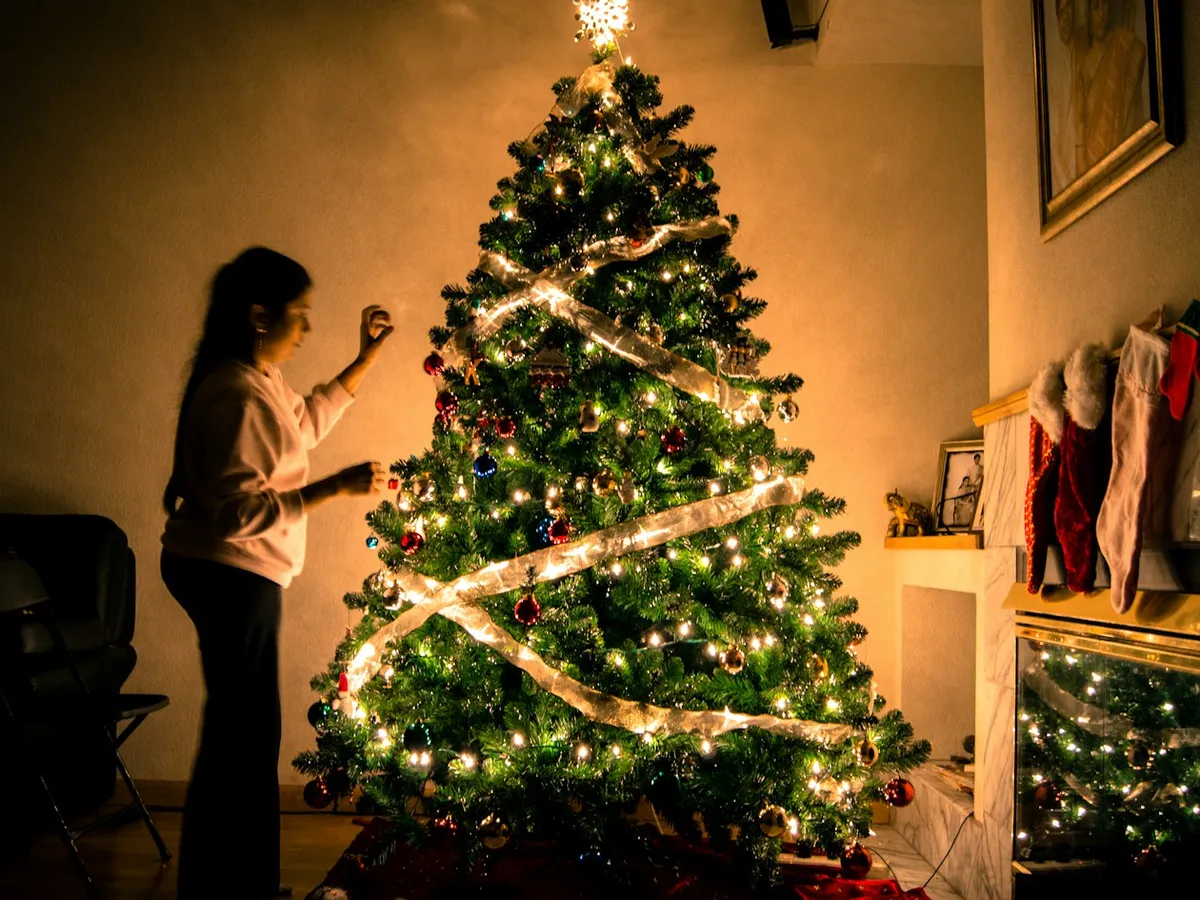
Ornament zones
Step 4: The three ornament zones (the heart of the plan)
This is the simple system that saves most families’ sanity. Mentally divide your tree into three bands, and decorate each one differently:
| Zone | Where | What goes here |
|---|---|---|
| 🔝 Grown-up zone | Top third, well above your child’s reach (even when standing on tiptoes) | Glass and breakable ornaments, heirlooms, anything sharp, anything with small parts, metal hooks, tinsel and anything battery-powered |
| 👀 Look zone | Middle third | Sturdy, unbreakable ornaments that are fine if touched but you’d rather stay put. Attach with ribbon tied in a knot rather than hooks |
| 🤲 My zone | Bottom third, toddler height | Soft, unbreakable, toddler-friendly ornaments: felt, fabric or plush ones, bigger than your child’s fist, with no small parts. Or nothing at all |
Why “bigger than a fist”? In the LVHN article above, a pediatric emergency doctor suggests only using decorative items larger than a child’s fist as an easy rule of thumb for avoiding choking hazards. It’s a quick test you can do in seconds while unpacking the box.
And the AAP adds one more important point: in homes with small children, avoid decorations that are sharp or breakable within reach, and skip trimmings that look like candy or food (think realistic candy canes, gingerbread or fruit ornaments) that might tempt a toddler to taste them.
🧶 Parent hack: let them “own” the bottom zone
Give your toddler a small basket of soft ornaments that are theirs. They can hang them, take them off, re-hang them and carry them around all day. Most toddlers are far less interested in your glass baubles when they have a job and their own collection. Expect the bottom of the tree to look wonderfully lopsided all season.

Hidden hazards
Step 5: The hidden hazards most parents miss
The tree itself is obvious. These are the smaller things around it that pediatric and poison-control experts flag every December.
1. Button and coin batteries
Light-up ornaments, flameless candles, musical cards, remotes and new electronic gifts often run on small round batteries. HealthyChildren.org points out these small batteries show up all over the house during the holidays and can cause serious, sometimes fatal injuries if swallowed. Poison Control says to secure battery compartments, and if they aren’t secured with a screw, tape them shut. If you think your child swallowed a battery, Poison Control’s advice is to head to an emergency room for an X-ray and call the National Battery Ingestion Hotline at 800-498-8666 on the way. Don’t wait for symptoms.
🔋 Two-minute battery sweep
Walk around the tree and the living room and look for anything that lights up, sings or flickers. Check the battery door on each: screwed shut? Great. Clip or slide door? Add strong tape, or move it to the grown-up zone. Put spare batteries in a high cupboard.
2. Holiday plants and berries
The AAP advises keeping potentially poisonous holiday plants out of reach, including mistletoe berries, Jerusalem cherry and holly berries. Poison Control explains that holly berries can cause nausea, vomiting and diarrhea, and suggests removing berries before decorating with fresh holly. The good news: Poison Control says poinsettias can be irritating (mouth irritation, upset stomach, a skin rash from the sap) but are not deadly, despite their reputation. Still, keep them up high. If you’re ever unsure, call Poison Control at 1-800-222-1222.
3. Tinsel, angel hair and fake snow
The AAP suggests choosing tinsel or artificial icicles made of plastic or non-leaded materials, wearing gloves with spun-glass “angel hair,” and following directions carefully with spray snow. With a toddler around, the simplest plan is to skip loose tinsel entirely, or keep it in the grown-up zone.
4. Gifts, ribbons and wrapping
Wrapped gifts under the tree are irresistible. The AAP advises removing wrapping paper, bags, ribbons and bows from the tree area after gifts are opened, since they can be suffocation and choking hazards. Many parents keep gifts somewhere else until the big day, or put only a few sturdy, ribbon-free boxes under the tree.
5. Visiting other homes
Poison Control notes that risks go up when kids are in unfamiliar places that haven’t been child-proofed, like a grandparent’s house or a hotel. Do a quick scan of the tree, the gifts and any medications within reach when you arrive. Our toddler packing list for holiday travel has a short “first five minutes” safety check too.
Gentle rules
Step 6: Teach gentle tree rules (without saying “no” all day)
Once the tree is safe, the goal shifts from protecting to teaching. Toddlers learn rules through repetition, short words and lots of positive attention. Here’s what tends to work:
- Keep rules few and positive. “Gentle hands,” “look with our eyes,” “ornaments stay on the tree.” Tell them what to do, not just what not to do.
- Show, don’t just tell. Hold your child’s hand and show a gentle touch on a branch. “See? Soft touch. Gentle.”
- Give a “yes.” Every time you redirect, offer something they can do: “Ornaments stay on. You can hang your felt star in your zone!”
- Praise the good moments. “You looked with your eyes! That was so gentle.” Toddlers repeat what gets attention.
- Expect testing. Pulling an ornament off to see your reaction is normal. Stay calm, put it back, repeat the rule, redirect. Boring responses take the fun out of the game.
💬 A script for the “grab and run” moment
Get down to their level: “That ornament is a grown-up ornament. It lives on the tree. Let’s put it back together.” Hang it up with them. Then: “Do you want to hang your ornament? Which one should we choose?” Calm, short, and always ending with a yes.
One idea that works for almost every toddler: their own tree
Here’s a single idea worth trying, because it scratches exactly the itch your toddler has: give them a tree they’re allowed to decorate. That might be a felt tree on the wall with stick-on felt ornaments, or simply a big paper tree they color and “decorate” again and again. The third page of our free printable is a ready-made “Decorate My Very Own Tree” coloring page for exactly this. When the urge to touch the big tree hits, “Let’s go decorate your tree!” is a far easier sell than “no.”
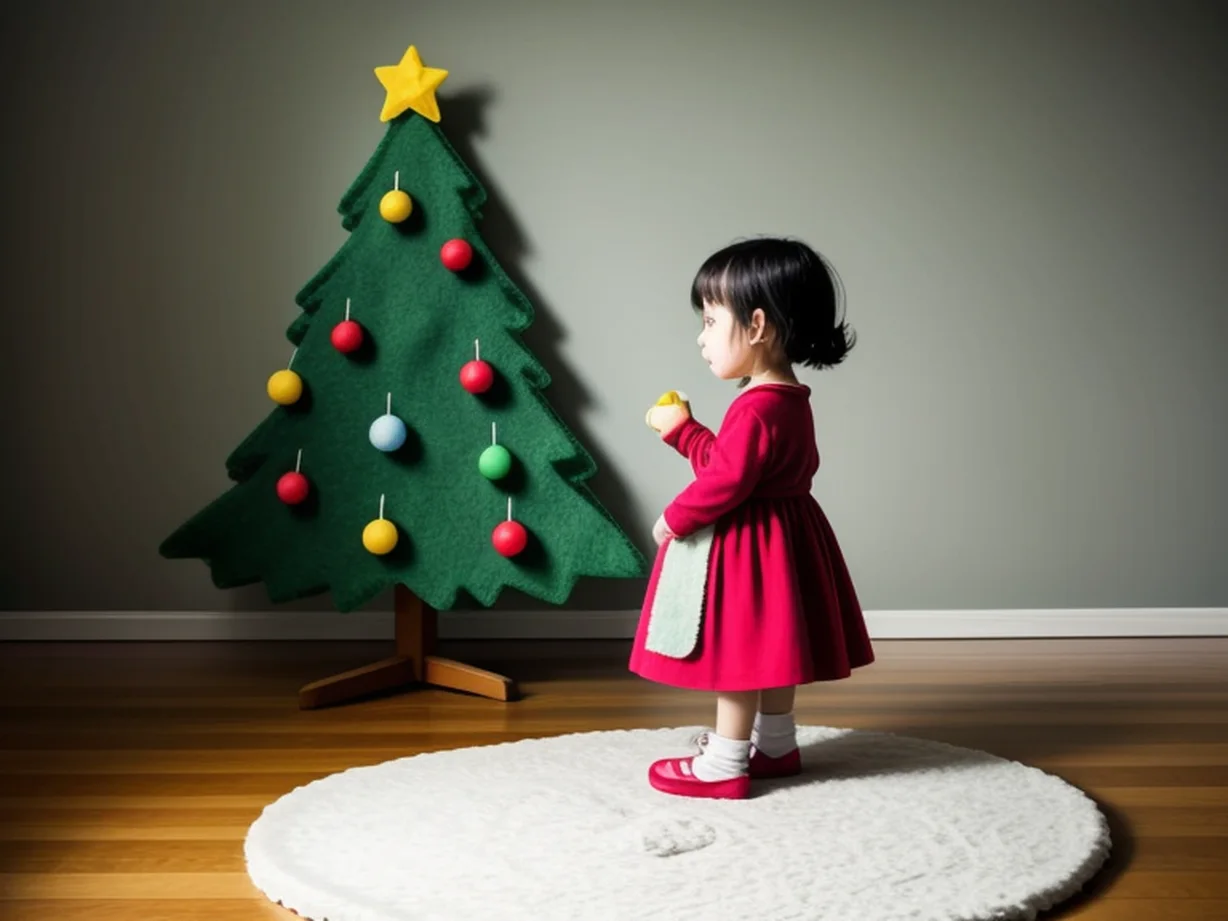
That’s just one idea. Our book 100 Indoor Play Adventures has dozens more low-prep, screen-free ideas for the long December afternoons when everyone’s indoors and the tree is the most interesting thing in the room. We won’t list them here (that’s what the book is for), but it’s designed for exactly these moments.
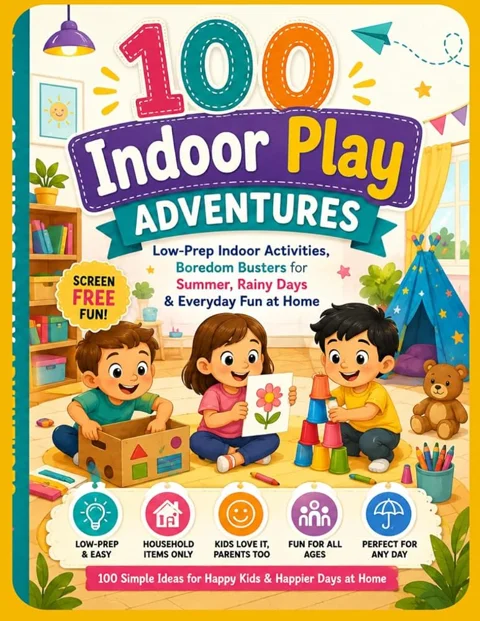
For long December days at home · ages about 3–11
100 Indoor Play Adventures
Our book for parents: low-prep, screen-free indoor activities using everyday household items, for snow days, winter break and “I’m bored” moments. Paperback, $14.99.
See 100 Indoor Play Adventures on Amazon →Our own book; we earn money if you buy it.
Big feelings when the answer is “not that ornament”? That’s normal too. Our calm-down corner guide and our guide to the overstimulated toddler can help on the wobbly days, and December has plenty of those.
Compare
Gate, tabletop, or full tree? Pick what fits your family
There’s no single right answer. It depends on your child’s age, personality and your space. Here’s an honest comparison of the most popular setups:
| Setup | Pros | Watch out for | Often best for |
|---|---|---|---|
| Full tree with zones (this guide) | Feels traditional; kids learn rules; no extra gear | Needs an anchored tree and daily checks | Most toddlers 18 months and up, especially with an adult nearby |
| Tree inside a gate or play yard | Physical barrier for crawlers and early walkers | Climbers may scale it; can feel “forbidden” and more tempting | Crawling babies and early walkers, or busy rooms where you can’t always watch |
| Tabletop tree | Completely out of reach; small and simple | The table must be stable and not climbable | Small spaces, very young babies, or a “take a year off” Christmas |
| “Bare bottom” tree | No ornaments or lights on the lower third at all | Looks a little unusual (many families find it charming) | Determined grabbers who ignore zones |
| Second “kid tree” | A felt, paper or small unbreakable tree just for them | One more thing to set up | Pairs well with any setup above |
Whatever you choose, it’s fine to change your mind mid-December. Lots of families start with a gate and remove it once their toddler gets the hang of “gentle hands,” or move to a bare-bottom tree after a week of ornament harvests.
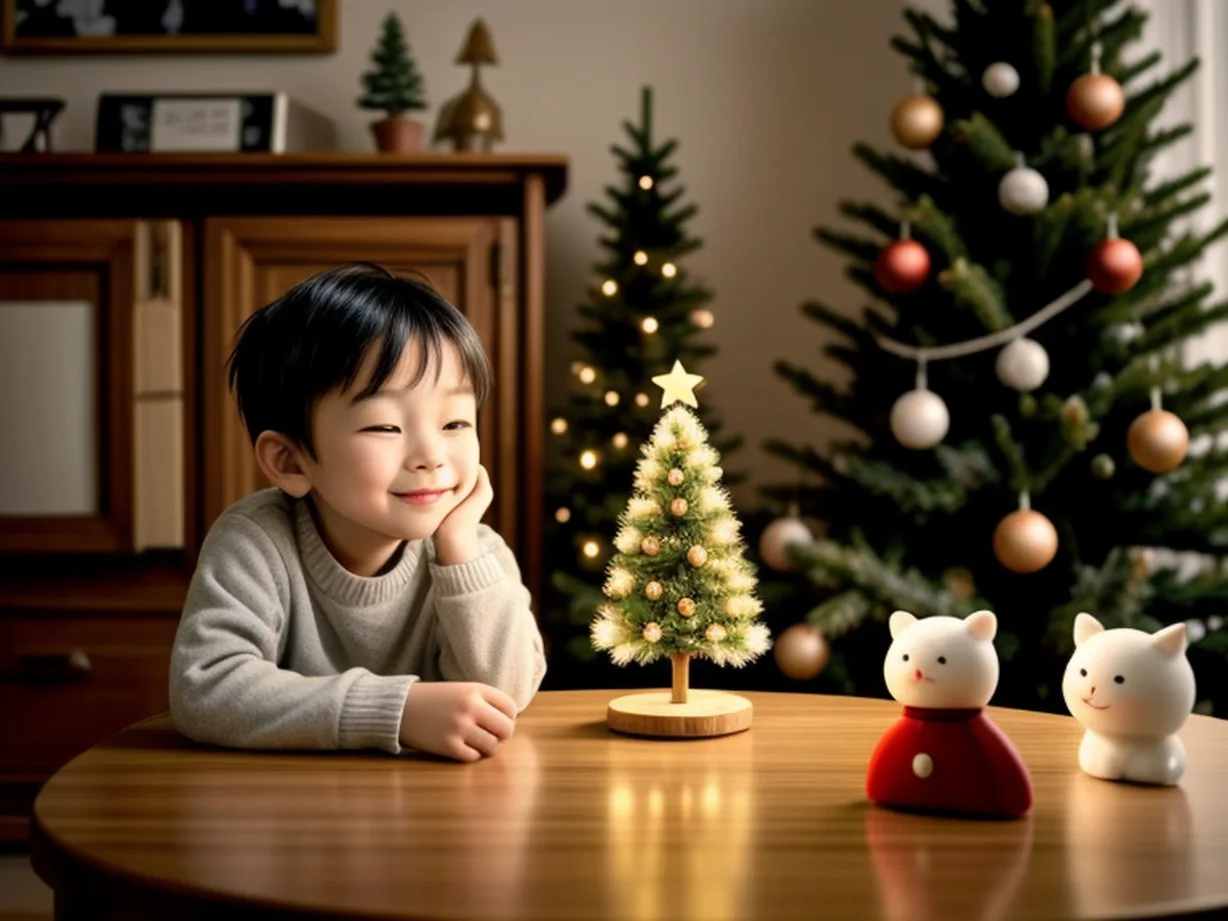
Your plan
Set up your toddler-proof tree tonight (about 45 minutes)
You don’t need a free weekend. Here’s a simple order of jobs for after bedtime, with page 1 of the free checklist in hand.
10 minutes
Pick and prep the spot
Choose a corner away from heat and walkways, near an outlet. Move climbable furniture away and a heavy, low piece of furniture to the open side if you can.
10 minutes
Stand, straighten, secure
Set the tree firmly in a wide stand, check it’s straight, do the wiggle test, and tie it back to a wall hook or bracket.
10 minutes
Lights and cords
Check each strand, wrap lights starting above toddler reach, run cords behind furniture and tape them down, add a timer.
10 minutes
Zone the ornaments
Sort the box into three piles: grown-up, look and “my zone.” Hang the top two zones tonight and leave the bottom for your toddler tomorrow.
5 minutes
Battery and berry sweep
Tape battery doors, move holly and mistletoe up high, put gifts with ribbons away, and print the tree rules poster for the morning.
💛 Be kind to yourself
If you only manage the stand and the lights tonight, that still counts. The ornaments can wait for tomorrow, and your toddler will love helping with “their” zone.
Troubleshooting
Common problems & easy fixes
| Problem | What to do |
|---|---|
| Your toddler keeps pulling ornaments off | Move everything breakable up a zone, give them their own basket of soft ornaments, and calmly re-hang with them. If it’s constant, try a bare-bottom tree for a week. |
| They pull up to stand on the branches | Check the stand and wall tie, then offer a better “handle” nearby, like a sturdy sofa or push toy. Stay close during the first few days. |
| They’re fascinated by the cords and plug | Reroute cords behind furniture, use a cord cover and outlet covers, and block access to the back of the tree with furniture. |
| They keep mouthing ornaments | Remove anything smaller than their fist and anything breakable from the lower two zones. Soft felt ornaments only at toddler height. |
| The dog or cat is also “helping” | The same zones help pets too. Poison Control notes tree-stand water and decorations can be hazards for pets, so a covered stand is a good idea. |
| Grandparents’ tree isn’t child-proofed | Ask kindly if you can move a few breakables up for the visit, bring a few soft ornaments for your child, and keep a close eye. |
| You’re worn out from saying no | Change the room, not the child: raise more ornaments, add a barrier, and set up a “yes” activity. Fewer temptations means fewer no’s. |
| Your toddler is upset they can’t touch the “pretty” ones | Lift them up to look closely with you, name the colors together, and let them choose where their own ornament goes. |

Need ideas for the cozy evenings ahead? Try our Christmas sensory bin ideas for toddlers or our advent calendar activities.
Save this
Toddler-proof Christmas tree checklist
Screenshot this, or print page 1 of the free kit below.
- Tree in a corner, at least 3 feet from heat sources and not blocking an exit
- Climbable furniture moved away; heavy, low furniture on the open side
- Wide, sturdy stand; trunk straight and tight
- Wiggle test passed; tree tied back to the wall if it wobbles
- Live tree: stand topped up with water every day
- Artificial tree: labeled “fire resistant”
- Lights checked for frayed wires and broken sockets
- Lowest light strand above toddler reach
- Cords hidden, taped down or covered; outlet covers on
- Lights off at bedtime and when you leave (timer)
- Top zone: glass, heirloom, sharp, small-part, hooked and battery ornaments
- Middle zone: sturdy, unbreakable ornaments tied with ribbon
- Bottom zone: soft, fist-sized-or-bigger ornaments only
- No candy- or food-look ornaments within reach
- Battery doors taped or screwed shut; spares locked away
- Holly and mistletoe berries out of reach
- Gifts with ribbons stored away until opening day
- Tree rules poster hung at toddler eye level

Free download
Free printable: Toddler-proof Christmas tree kit (3 pages)
🎁 Free printable
Free Toddler-Proof Christmas Tree Kit (3-page PDF)
A grown-up setup checklist (placement, stand, lights, ornament zones, hidden hazards and a daily check), a kid-friendly “Our Christmas Tree Rules” poster with tree zones to color in, and a “Decorate My Very Own Tree” coloring page. US Letter, prints in color or black and white.
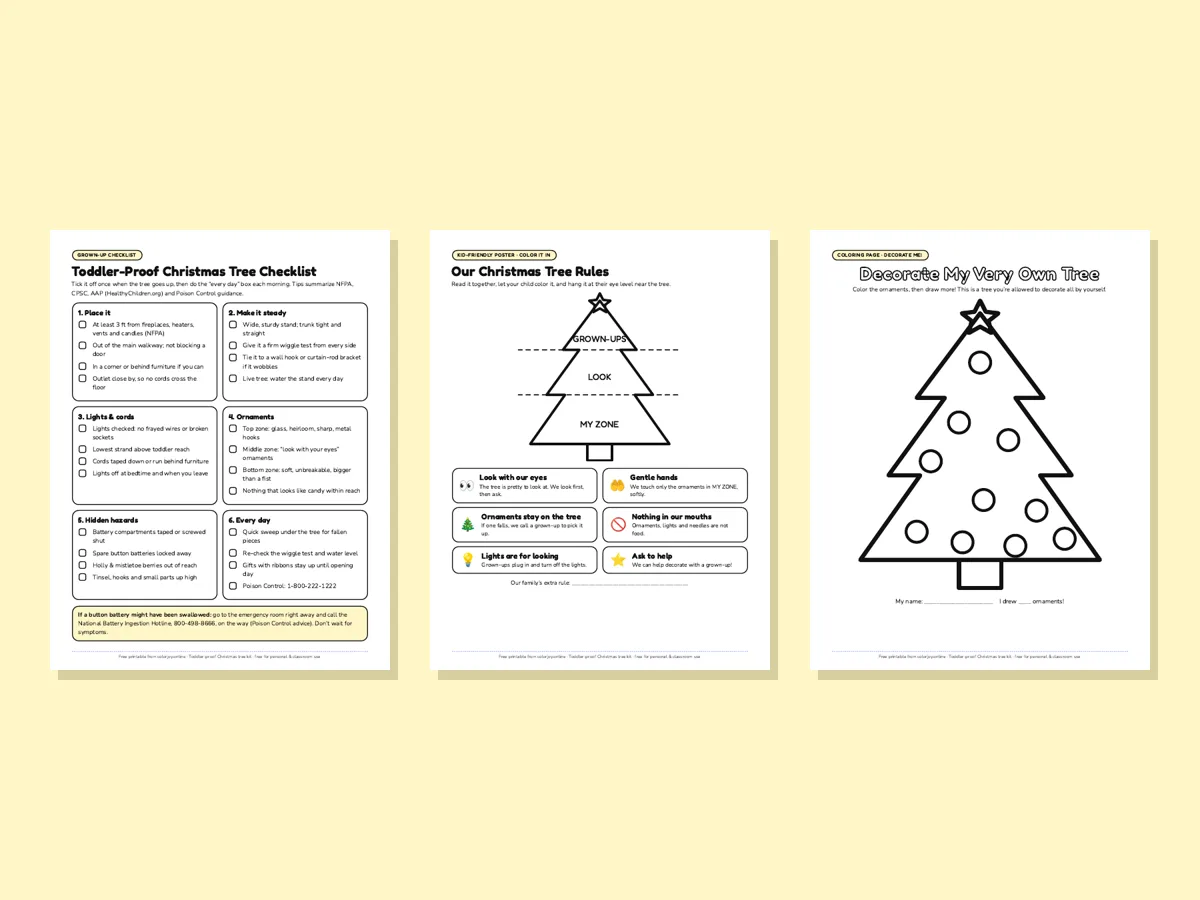
Download the free tree kit (PDF) →
Free for personal and classroom use. No email or sign-up needed.
Please save this page to Pinterest so you can find the checklist again next tree weekend, and share it with a friend who’s about to put up their first tree with a toddler. We add a new free printable every week through winter break, so check back soon, or browse all of them on our activity ideas hub. More from our holiday series: Christmas traditions for toddlers, Elf on the Shelf ideas for toddlers, Christmas Eve box ideas and stocking stuffers for toddlers.

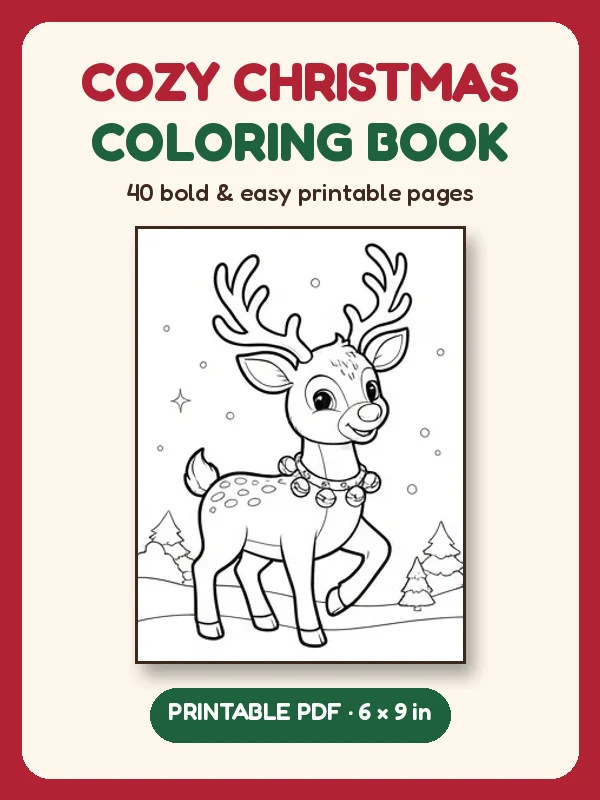
New for Christmas · printable PDF · kids, teens & adults
Cozy Christmas Coloring Book
Our brand-new printable: 40 bold, easy Christmas scenes in a 6 × 9 inch PDF, each followed by a blank page so markers don’t bleed through. We’ll keep the pages a surprise, but it’s made for exactly those cozy evenings by the tree. Instant download on Payhip, $5.00.
See the Cozy Christmas Coloring Book →Our own book; we earn money if you buy it.
You can peek at a few sample pages on the Cozy Christmas Coloring Book page here on ColorJoy.
From the ColorJoy shelf
Our picks for cozy December days at home
If you’d like calm, screen-free things to do near the tree this month, these are our own books and printables, made with bold lines and real family life in mind. Prices are as listed on Amazon.com and Payhip when we checked on 27 November 2026.
Top pick for parents · ages about 3–11
100 Indoor Play Adventures
Low-prep, screen-free indoor activities using everyday household items, for snow days, winter break, rainy afternoons and everyday fun at home. 53 pages, large 8.5 × 11 inch print. Open any page and start playing.
$14.99Paperback · Amazon.com
Our own book; we earn money if you buy it. Price as listed on Amazon.com when we checked on 27 November 2026; please confirm on the product page.

For calm evenings · kids, teens & adults
Calming Mindful Coloring Book for All Ages
Relaxing patterns, mandalas and nature scenes with thick lines and single-sided pages. One for you after bedtime, or to color side by side with an older child.
$9.99Paperback · Amazon.com
Our own book; we earn money if you buy it. Price as listed on Amazon.com when we checked on 27 November 2026; please confirm on the product page.
New for Christmas · printable PDF
Cozy Christmas Coloring Book
40 bold and easy Christmas scenes for kids, teens and adults in a 6 × 9 inch printable PDF, each page followed by a blank page so markers don’t bleed. Print at home as often as you like for your family.
$5.00Printable PDF · Payhip
Our own book; we earn money if you buy it. Price as listed on Amazon.com when we checked on 27 November 2026; please confirm on the product page.
Browse the Mr A G author store on Amazon for all our coloring and activity books. Prefer printables? Our full printable store is at payhip.com/BookBonbon.
📚 Related books from ColorJoy
If this topic is on your mind, these titles from our own shelf fit well alongside it.
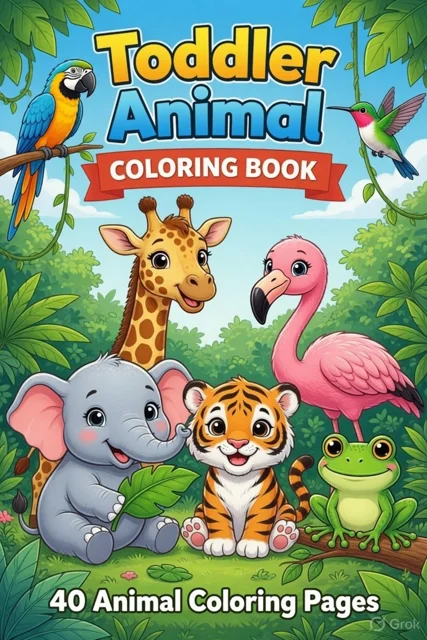
Toddler Animal Coloring Pages (printable PDF)
Toddler Animal Coloring Pages (printable PDF): 40+ big, bold animals with thick outlines for little hands. A tiny-cost “yes” activity for the coffee table.
$1.99 printable PDF on Payhip · Instant PDF download; print at home
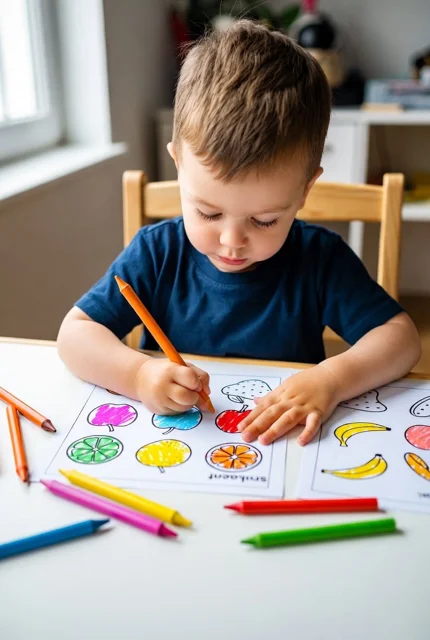
Preschool Coloring & Activity Bundle (printable PDF)
Preschool Coloring & Activity Bundle (printable PDF): seven kinds of activities and 100+ coloring pages for toddlers through kindergarten. Handy for winter break.
$8.99 printable PDF on Payhip · Instant PDF download; print at home
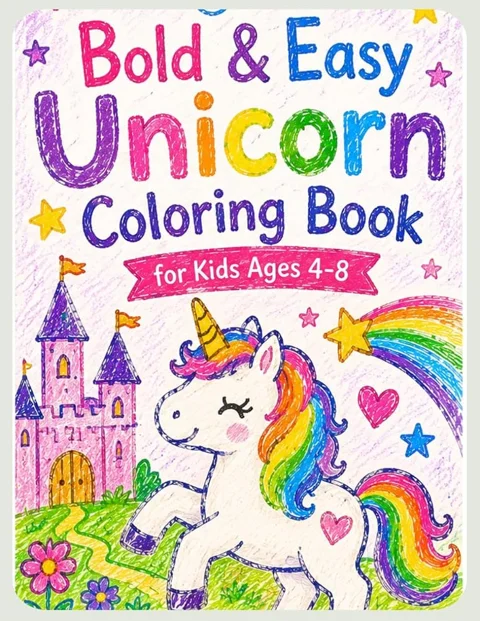
Bold & Easy Unicorn Coloring Book (Ages 4–8)
Bold & Easy Unicorn Coloring Book (paperback): jumbo, simple thick-line unicorn pages for ages 4–8. A sweet, screen-free stocking gift.
$9.99 paperback on Amazon.com · Paperback, shipped by Amazon
These are our own books and printables, and we earn money if you buy them. Prices as listed on Amazon.com and Payhip when we checked on 27 November 2026; prices can change, so please confirm on the product page.
Frequently asked questions
How do I toddler-proof a Christmas tree?
Put the tree in a corner away from heat and walkways, use a wide sturdy stand and tie the tree to the wall, start the lights above your child’s reach and hide cords, keep breakable, small and battery-powered ornaments in the top third, and use only soft, unbreakable ornaments at toddler height.
Should I put a baby gate around the Christmas tree?
A gate or play yard can help with crawling babies and early walkers, especially in busy rooms. Climbers may scale it, though, so the tree should still be steady and the lower branches safe. Many families start with a gate and remove it once their child learns “gentle hands.”
How do I keep my toddler from pulling the tree over?
Use a wide, heavy stand, make sure the trunk is straight and tight, do a firm wiggle test, and anchor the tree near the top to a wall hook or bracket with fishing line or thin wire. Re-check every few days.
What ornaments are safe for toddlers?
At toddler height, choose soft, unbreakable ornaments like felt, fabric or plush, bigger than your child’s fist, with no small parts or metal hooks. The AAP advises avoiding sharp or breakable decorations and anything that looks like candy or food within reach.
Is a real or artificial tree safer with a toddler?
Both can work. For a live tree, choose a fresh one and add water to the stand every day. For an artificial tree, look for a “fire resistant” label. Either way, keep the tree at least three feet from heat sources and turn the lights off at bedtime.
Are Christmas tree lights dangerous for toddlers?
They can be if children pull, chew or mouth them. Check lights for damage, keep the lowest strand above reach, hide cords, and wash hands after handling lights, since the AAP notes some strands contain lead in the sockets or wire coating.
What should I do if my child swallows a button battery?
Poison Control advises going to an emergency room for an X-ray right away and calling the National Battery Ingestion Hotline at 800-498-8666 on the way. Don’t wait for symptoms. For other poisoning questions, call Poison Control at 1-800-222-1222.
Are poinsettias poisonous to toddlers?
Poison Control says poinsettias can cause mouth irritation, an upset stomach or a skin rash from the sap, but are not deadly. Holly and mistletoe berries are more of a concern, so keep all holiday plants out of reach.
Is there a free printable toddler-proof Christmas tree checklist?
Yes. Our free 3-page kit includes a grown-up setup checklist, a kid-friendly Christmas tree rules poster with tree zones to color, and a “Decorate My Very Own Tree” coloring page. No email or sign-up needed; it’s free for personal and classroom use.
Wishing you a safe, sparkly, low-stress December ✨
We hope this guide helps your tree feel less like a battle and more like the heart of the season: a toddler proudly hanging a felt star in “my zone,” twinkle lights safely up high, and cozy evenings on the couch together. Come back soon: we add a new free printable every week through winter break.
For long December afternoons indoors, our pick is 100 Indoor Play Adventures ($14.99), packed with low-prep, screen-free ideas that use everyday household items.
See 100 Indoor Play Adventures on Amazon →
More December help: winter break activities for kids at home, Christmas fine motor activities and a calm toddler bedtime routine for those exciting December nights.
Photos: Unsplash (Unsplash License). Illustrations: AI-generated for ColorJoy. Book images and printable art: ColorJoy / Mr A G. Safety information summarizes CPSC, NFPA, AAP (HealthyChildren.org) and Poison Control guidance; it isn’t medical advice. In an emergency, call 911.