Holiday baking • Toddlers to age 7 • Free printable
Baking Christmas Cookies with Kids: A Calm, Mess-Smart Plan for Toddlers & Little Helpers
Flour on the floor, sprinkles in socks and a toddler who wants to crack every egg? Here’s a calm, step-by-step way to bake Christmas cookies with little kids: which cookies to choose, how to set up the kitchen, the safety rules that matter, and a free printable baking day kit.
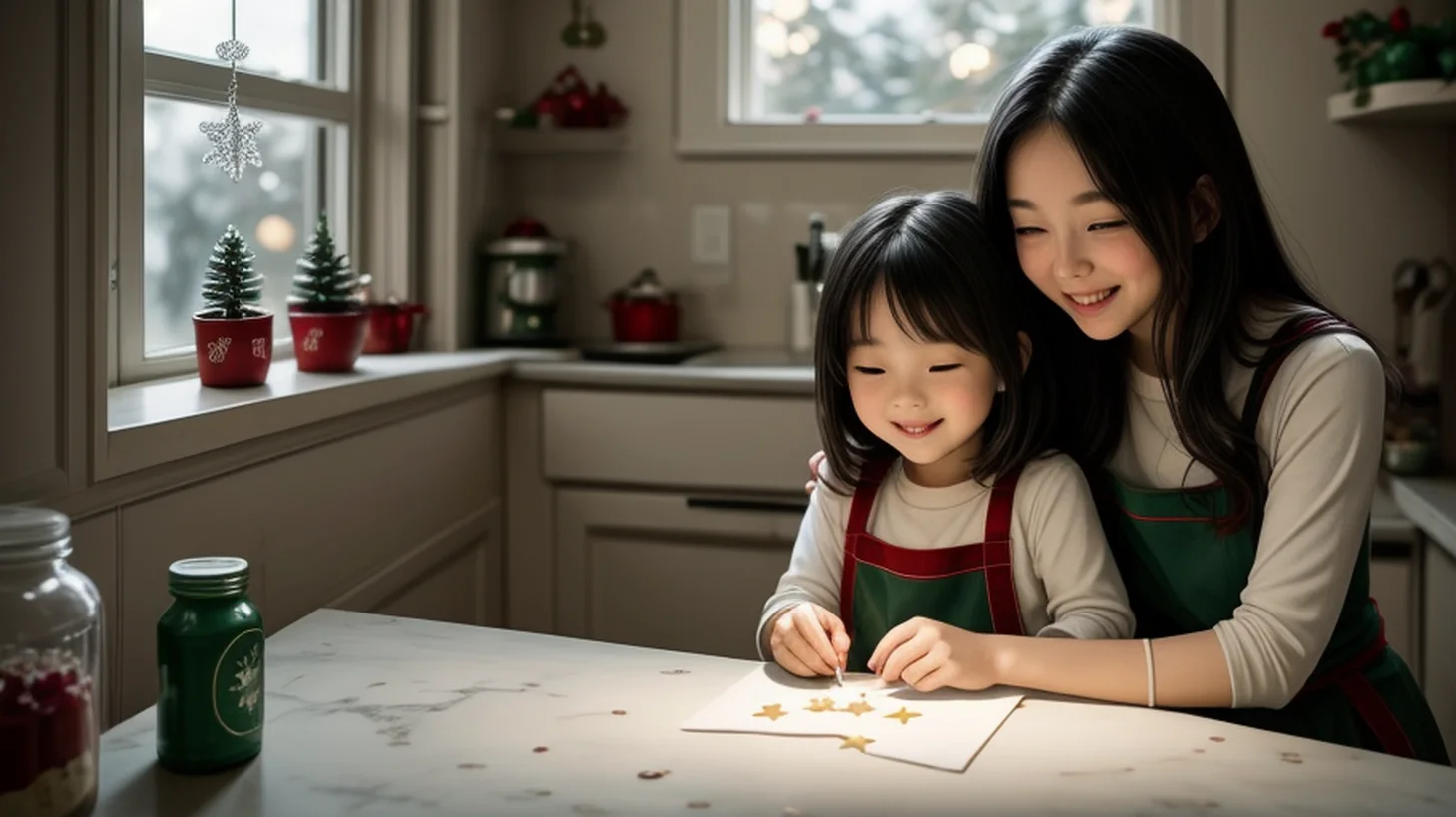
Somewhere between the last slice of Thanksgiving pie and the first Christmas song on the radio, it happens: your child asks, “When are we making Christmas cookies?” Maybe you have happy memories of baking with your own mom or grandma. Maybe you have a Pinterest board full of perfect iced snowflakes. And maybe you also have a two-year-old who thinks flour is a sensory bin and a five-year-old who wants to do every job, right now, by themselves.
This guide from ColorJoy (we make bold, easy coloring books and free printables for little hands) is here to make cookie day calmer, safer and genuinely fun, for you as much as for them. You’ll get a simple plan you can start tonight, honest fixes for the moments that usually go sideways, and a free printable kit with a kid’s helper chart, a grown-up planner and a cookie decorating coloring page.
🌟 By the end of this page you’ll have…
- why baking with little kids is worth the mess (and what they actually learn)
- how to choose a cookie that fits your child’s age, attention span and your energy
- a mess-smart kitchen setup that keeps flour on the counter and off the dog
- kitchen jobs small hands can really do, and the jobs that stay with grown-ups
- the safety rules that matter most: raw dough, handwashing, allergies, choking and “edible” glitter
- a 30-minute “plan it tonight” routine, a troubleshooting table and a free 3-page printable
🎨 New here? Hi, we’re ColorJoy
ColorJoy makes bold, easy coloring books, early-learning workbooks and free printables, plus practical guides for real family life. This guide is part of our holiday series, alongside Christmas traditions for toddlers and our Christmas bucket list for kids.
Real-life moments
Sound familiar?
Baking with little kids rarely looks like the photos. These are the moments parents mention most, and a gentle way through each one.
“I want to do it MYSELF!”
Your four-year-old grabs the measuring cup, the flour, the egg and the spoon, all at once. Every job is “mine,” and every “let me help” ends in tears.
Try this: give them a job list before you start (our free helper chart does this). When every job has a name and a turn, kids fight less for control.
The raw-dough sneak
You turn around for one second and there’s a small hand in the bowl and dough on a little chin. You remember reading something about raw flour… but what exactly?
Try this: the short answer is “no tasting raw dough, even egg-free.” The safety section below explains why, in plain words, and gives you a script that works.
Sprinkle avalanche
One tip of the jar and half the sprinkles are on the cookie, the table, the floor and somehow inside a sock.
Try this: pour sprinkles into small bowls and decorate inside a rimmed baking tray. The decorating section has the full setup.
Meltdown at minute 25
Everyone was having fun. Then the cookies had to bake for 10 minutes and cool for 20, and your toddler fell apart.
Try this: plan the waiting part. It’s the step most recipes skip, and it’s where most meltdowns happen.
The why
Why baking with kids is worth the flour on the floor
It’s fair to ask whether baking with a toddler is worth it when you could make cookies in half the time on your own. The American Academy of Pediatrics’ parenting site makes a warm case for cooking with children. In “5 Great Reasons to Cook with Your Kids”, pediatrician Nimali Fernando explains that cooking gives children rich sensory experiences with food, and that recipes naturally teach counting, measuring and fractions, new vocabulary, and the skill of following a plan from start to finish. She also describes cooking together as a way to build family traditions and pass down recipes.
Holiday cookies are a perfect “first recipe” for this. The steps are short and concrete (scoop, pour, stir, press, place), the result is something kids can see, smell and share, and the whole thing happens once a year, which makes it feel special. A child who pressed a star cutter into dough at three will often ask for “our cookie day” every December after.
🍪 What this means for you
The goal of cookie day with little kids isn’t perfect cookies. It’s a happy hour in the kitchen together. Lopsided stars, thumbprints in the dough and too many sprinkles all count as success. If you go in with that mindset, everything below gets easier.
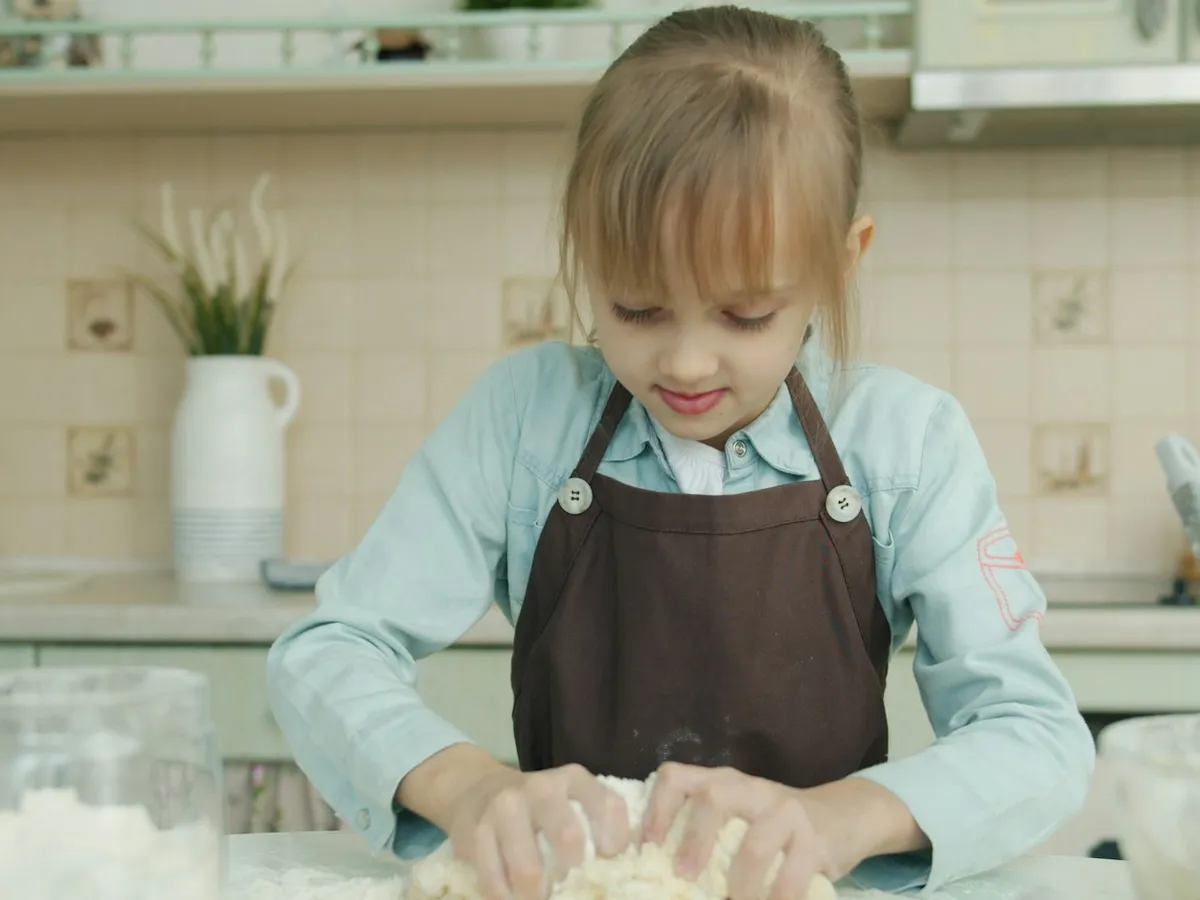
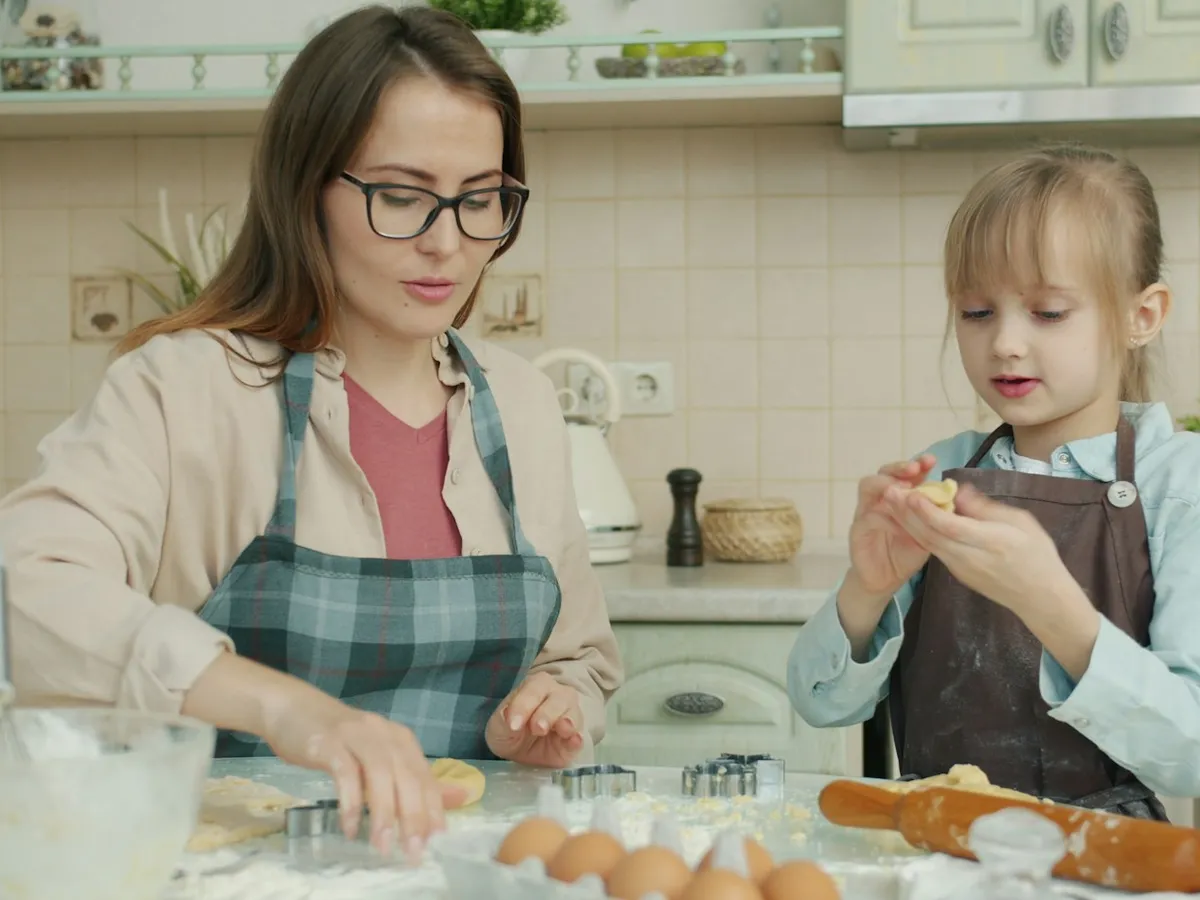
Choose
Step 1: Choose the right cookie (this matters more than the recipe)
Most cookie-day stress comes from choosing a recipe that’s too long for the child in front of you. A beautiful iced cut-out cookie can take a whole afternoon; many two-year-olds are happily done after a short burst of stirring and pressing. So before you look at recipes, ask yourself three questions:
- How long can my child happily stay with one activity? Plan the “kid part” for about that long, and do the rest yourself.
- What do they love doing most? Scooping and pouring? Pressing and squishing? Decorating? Choose a cookie that’s mostly that.
- How much energy do I have today? On a tired day, decorate-only cookies are a complete and wonderful cookie day.
| Cookie type | Mess level | Grown-up effort | Best for |
|---|---|---|---|
| Decorate-only (store-bought plain cookies or cookies you baked earlier) | Low | Very low | Toddlers, short attention spans, busy weeknights, a first try |
| Slice-and-bake or ready-made dough | Low–medium | Low | Kids who want to “bake” but you want less flour; follow the package directions |
| Drop cookies (scoop-and-plop, like chocolate chip) | Medium | Medium | Preschoolers who love scooping and counting; no rolling or cutting |
| Cut-out sugar or gingerbread cookies | High | Higher (make and chill the dough ahead) | Ages about 4 and up, or two short sessions: cut one day, decorate the next |
| Classic family recipe | Varies | Varies | When you want to pass down a tradition; pick the 2–3 steps your child can own |
✂️ Our favorite trick: split it into two days
For cut-out cookies, make and chill the dough the night before (or buy ready-made dough), then let kids roll, cut and help fill the trays on day one. Store the cooled, plain cookies in an airtight tin and decorate on day two. Two short, happy sessions beat one long, frazzled one, and decorating feels like a fresh treat.
There’s no rule that says homemade from scratch is “better.” If ready-made dough or plain store-bought cookies make it possible to do this with a smile, they’re the right choice. If you’re hosting a crowd, our kids’ table ideas work just as well for a December cookie party.
Setup
Step 2: A mess-smart kitchen setup (10 minutes that save an hour)
A little setup before you call the kids in is the single biggest difference between “that was lovely” and “never again.” Think of it as making a small, safe “yes space” where your child can touch everything in front of them.
Set up the station
- A sturdy step stool or learning tower so your child stands at counter height, or move everything to the kitchen table.
- A rimmed baking sheet or tray in front of each child. It catches spills and sprinkles and defines “your space.”
- Ingredients pre-measured into small bowls or cups, so kids pour rather than measure from big bags.
- An apron or old T-shirt, sleeves pushed up, long hair tied back.
- A damp cloth and a small dustpan within reach (kids love the clean-up job if it’s “theirs”).
- Hot zone cleared: the oven area and anything sharp moved well away from little hands.
Plan the flow
Walk through the recipe in your head and decide, step by step, who does what. Write two or three “kid jobs” on our free helper chart. Then tell your child the plan before you start: “First we wash hands, then you pour, then I mix with the big mixer, then you press the cutters.” Young children cope much better with waiting and turn-taking when they know what’s coming.
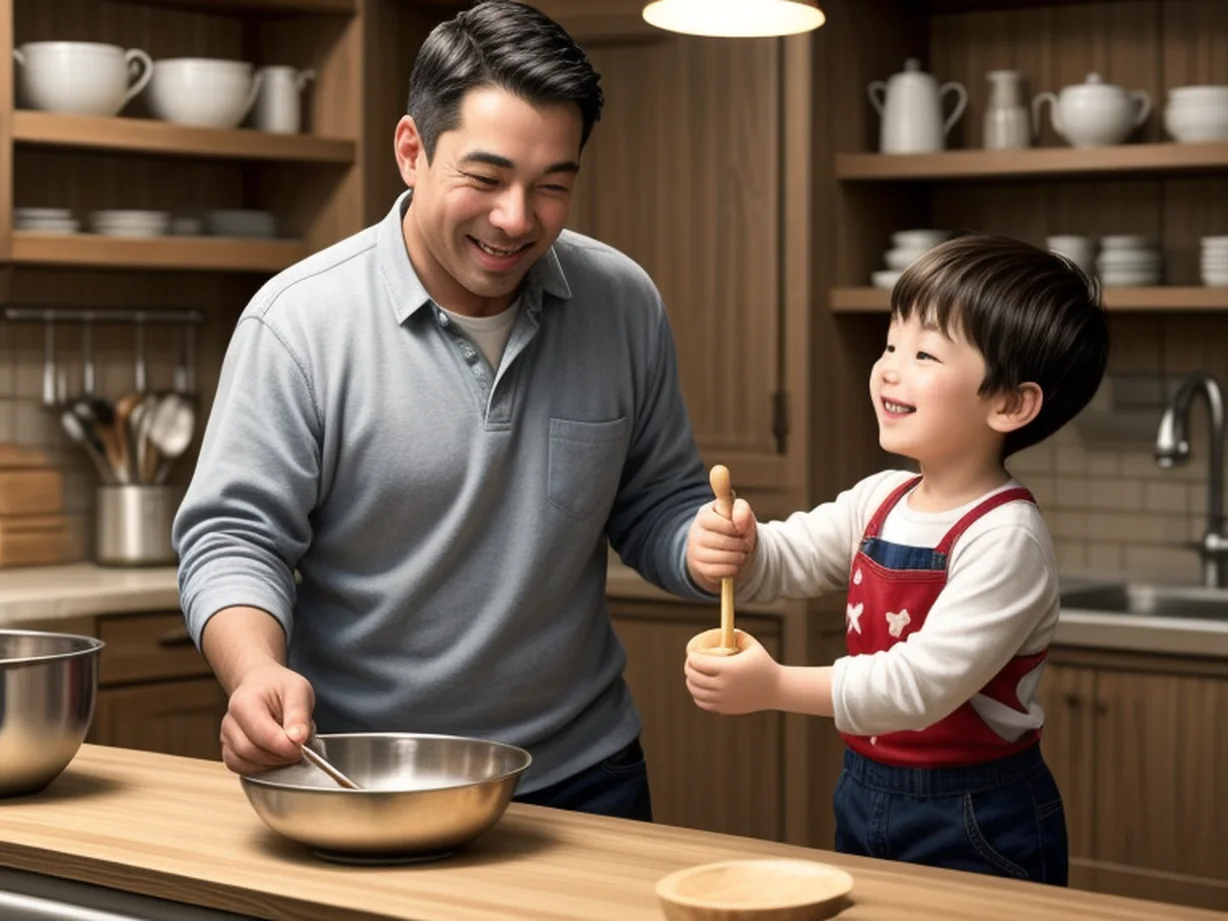
🧺 Parent hack: the “flour zone”
Tape a large piece of parchment or a cheap plastic tablecloth to the table. Everything with flour stays inside the zone. When you’re done, fold it in from the edges and shake it into the trash. Floor stays (mostly) clean.
If you have a toddler who gets overwhelmed in busy, noisy kitchens, keep the group small and the music soft. Our guide to the overstimulated toddler has more on spotting the signs early.
Little helpers
Step 3: Jobs little hands can really do
Kids love to help when the job is real. The AAP’s HealthyChildren.org suggests toddler-friendly kitchen tasks like sifting, stirring and counting ingredients, always with lots of supervision. As kids grow, they can take on more of the process. Instead of a strict age chart, match the job to what your child can do today:
| Type of job | What it looks like | Grown-up’s part |
|---|---|---|
| Pouring | Tipping pre-measured sugar, flour or chocolate chips into the bowl | Measure first; hold the bowl |
| Stirring & mixing | Stirring room-temperature ingredients with a big spoon | Use electric mixers yourself; take over when dough gets stiff |
| Counting | “Two eggs, one cup, three spoons.” Counting scoops onto the tray | Say the numbers together |
| Pressing & cutting | Pressing cookie cutters into rolled dough; rolling with a small pin | Roll the dough evenly first; lift shapes with a spatula |
| Placing | Putting shapes or scoops on the lined tray (with space between) | Oven in and out is always a grown-up job |
| Decorating | Sprinkles, icing dots and swirls on fully cooled cookies | Set up the tray and bowls; manage the icing bag |
| Tidying | Wiping the table, carrying spoons to the sink, sweeping crumbs | Praise the effort, not the result |
A good rule: kids get the fun, safe, hands-on steps; grown-ups get the hot, sharp and heavy steps. That includes the oven, hot trays, knives, electric mixers and cracking eggs for younger kids (shells and raw egg get everywhere, and you’ll want to wash hands right after). As your child gets older and more careful, you can teach one new job each year, which becomes a lovely “look how big you are” moment.
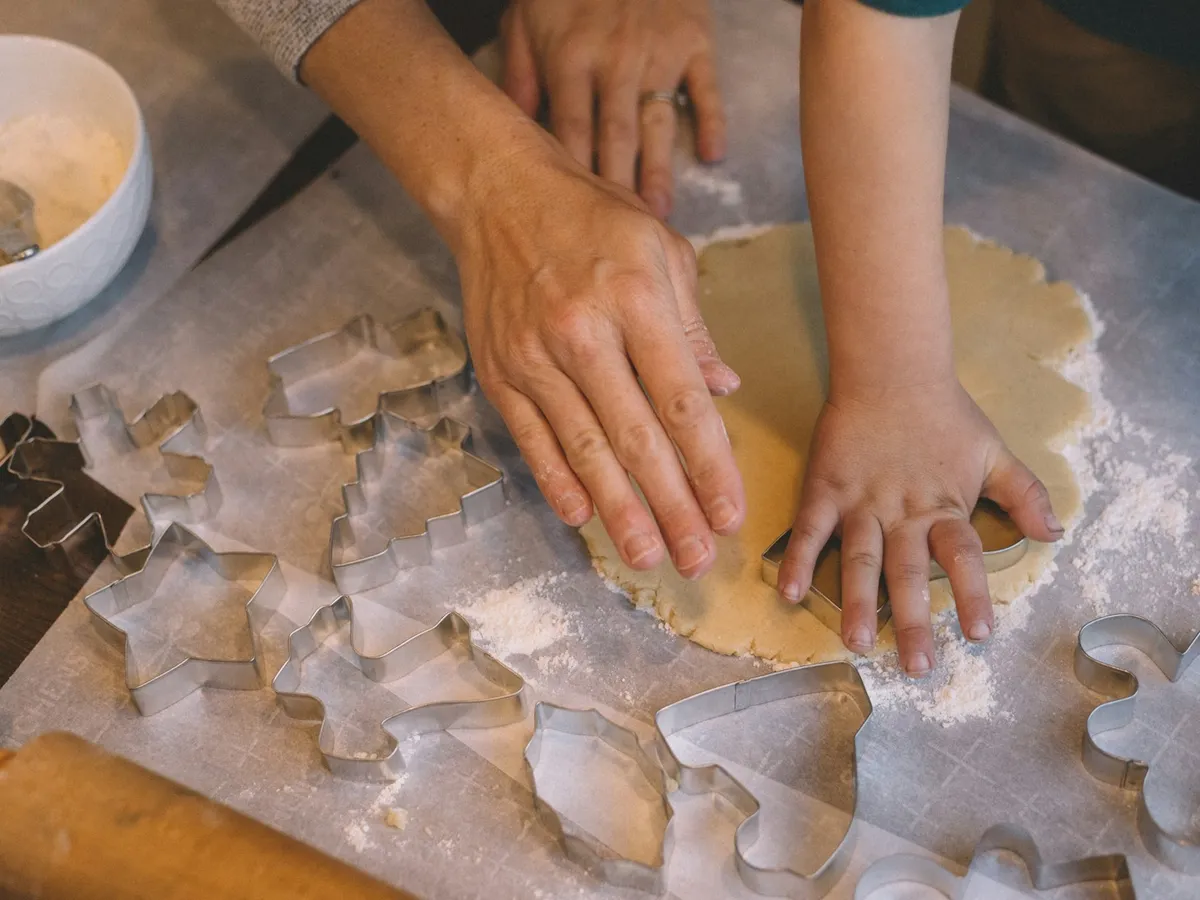
💬 A script for the “I want to do everything” child
“You are the Head Presser today. That’s your special job, and nobody else does it. I’m the Oven Boss, because ovens are a grown-up job. Let’s look at your job chart and see what else you get to do!” Giving the job a title makes it feel important, and it’s much easier to hand over than “no, let me do that.”
Safety
Step 4: The safety rules that matter most
You don’t need to worry about everything. These are the few rules worth knowing, from US food-safety and health agencies, explained simply.
1. No tasting raw dough or batter (yes, even the flour)
Many parents know about raw eggs, but fewer know about flour. The FDA explains that flour is a raw food: the grains are grown outdoors and may carry harmful bacteria like Salmonella and E. coli, and grinding grain into flour doesn’t kill them. The FDA says cooking is the only way to be sure foods made with flour and raw eggs are safe, and advises: don’t eat or taste raw flour, dough or batter, and don’t let children eat or play with raw dough before cooking. It also advises against using raw dough for play clay or crafts.
🛑 What to say when a little hand heads for the bowl
“Cookie dough is still ‘sleeping.’ It has to bake in the oven to wake up and be safe to eat. Let’s put it on the tray so it can bake!” Then give them something they can do, like counting the scoops. For a dough to squish and play with, use playdough, not cookie dough.
2. Wash hands before, during and after
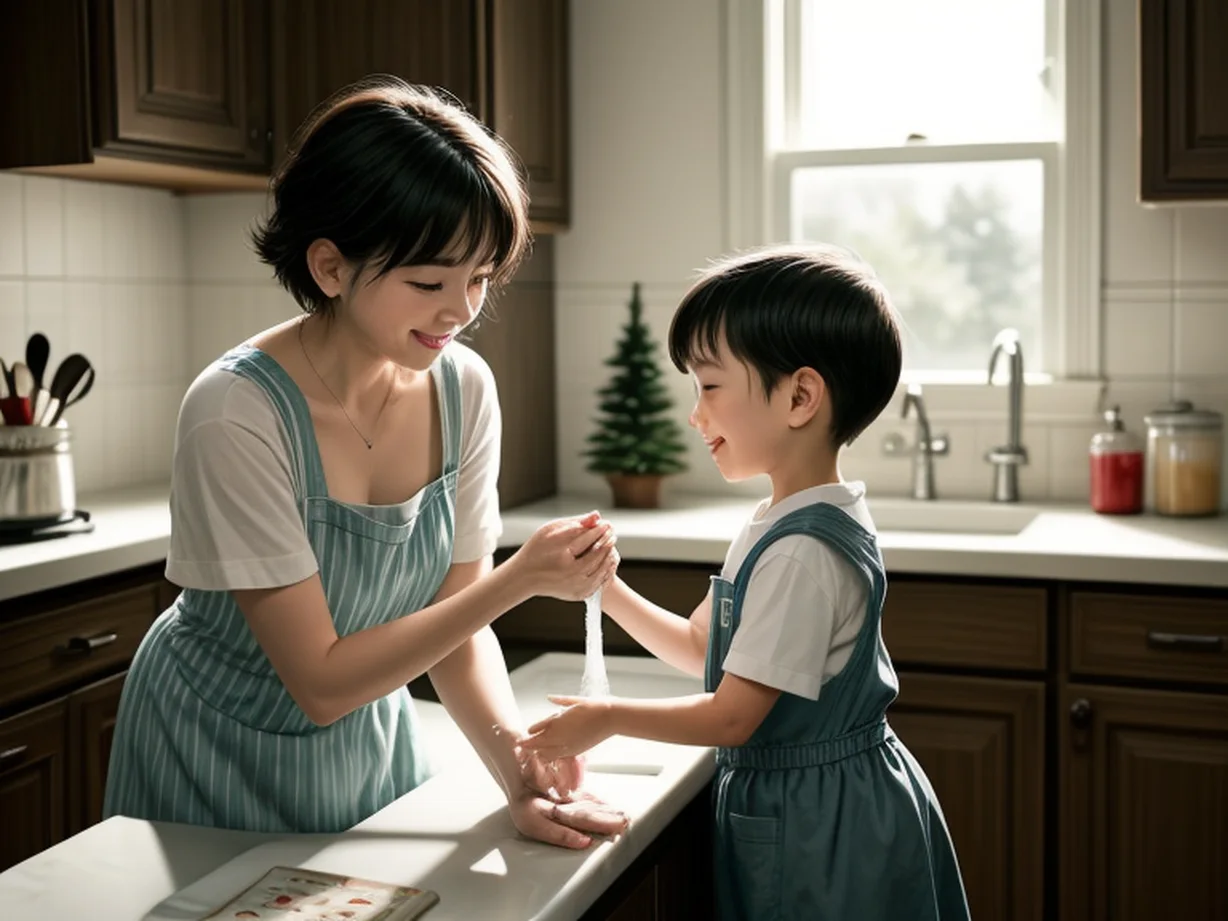
The CDC lists “before, during, and after preparing food” as a key time to wash hands, and recommends scrubbing for at least 20 seconds, about the time it takes to hum “Happy Birthday” twice. Make it part of the ritual: aprons on, sleeves up, wash hands, sing. Wash again after touching raw dough or eggs, and before decorating and eating.
3. Check allergies before you bake, not after
Holiday cookies are often shared, so it helps to know what’s in them. The FDA lists nine major food allergens in the US: milk, eggs, fish, crustacean shellfish, tree nuts, peanuts, wheat, soybeans and sesame. Typical cookie recipes include wheat, eggs and milk (butter), and some sprinkles, chips and toppings contain or may be made alongside nuts, soy or sesame, so it’s worth checking every label. Read labels, ask about allergies before you send cookies to school or to a friend’s house, and label your cookie plates.
4. Choking: choose toppings with little ones in mind
USDA guidance notes that children under 4 are at high risk of choking, and the CDC’s list of choking hazards for young children includes round or hard candy, jelly beans, gum drops, marshmallows, whole or chopped nuts and seeds, and even cookies themselves. For toddlers and preschoolers, skip hard candies, whole nuts and big gummy toppings, offer small pieces of soft cookie, and make sure everyone eats sitting down. The CDC also notes that foods with added sugars aren’t recommended for infants and young children, so for very young toddlers, cookie day can be all about the pressing and decorating, with a tiny taste or none at all.
5. Only use decorations that say “edible”
Sparkly dusts and glitters are popular on holiday cookies. The FDA advises bakers to avoid glitters and dusts that aren’t made to be edible: edible products list their ingredients on the label, and most say “edible.” If a product only says “non-toxic” or “for decorative purposes only” and has no ingredients list, the FDA says it should not be used directly on food. Craft glitter stays at the craft table.
6. Ovens and hot trays are grown-up jobs
HealthyChildren.org suggests teaching kids how to hold kitchen tools safely and how to use oven mitts, and always supervising children while cooking. With little ones, the simplest rule is: the oven, hot trays and cooling racks are the grown-up zone. Show your child where to stand while the oven door opens (we like “back to the table, hands on your tummy”).
The fun part
Step 5: Decorating without the chaos
For most kids, decorating is the best part, and it’s also where the mess multiplies. A little structure keeps it joyful:
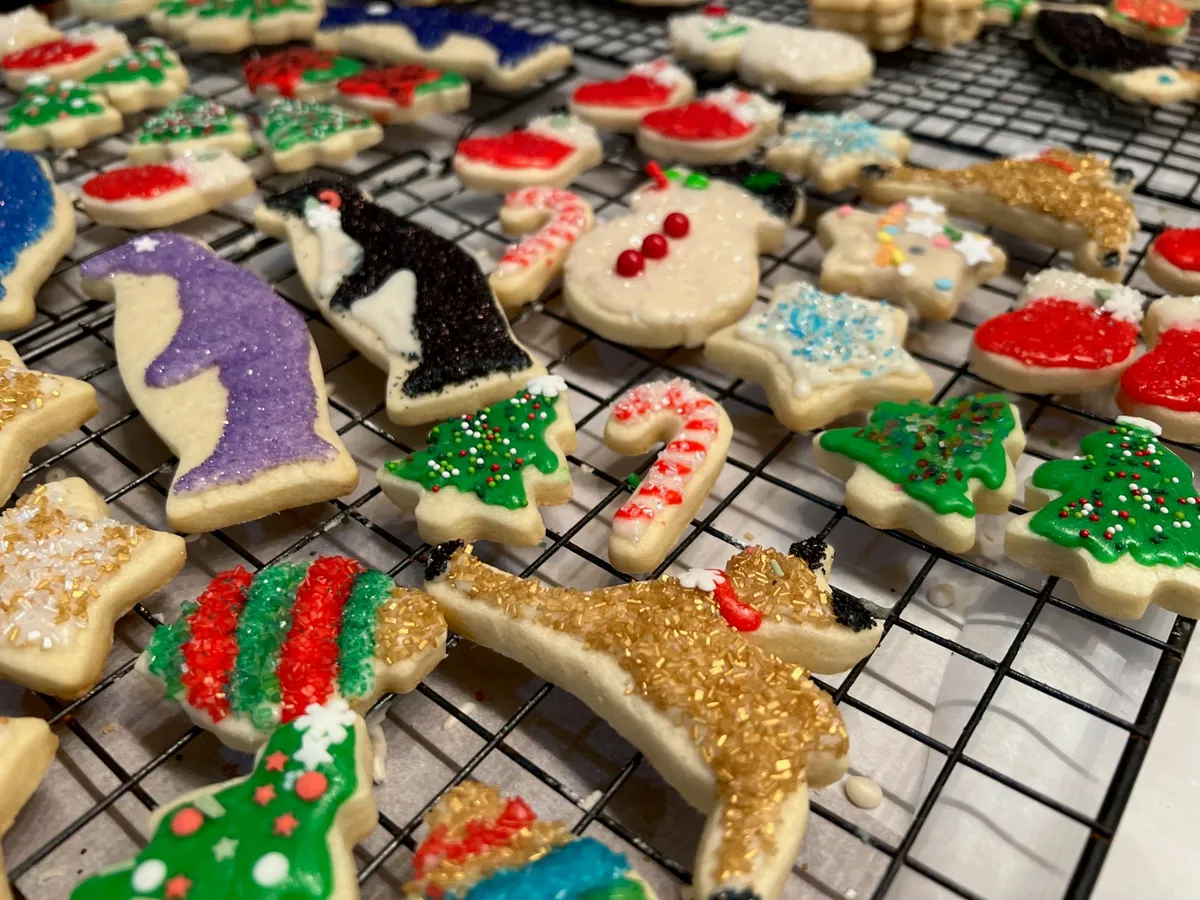
- Cool completely first. Icing slides off warm cookies, and patience runs out fast. Bake earlier in the day or the day before.
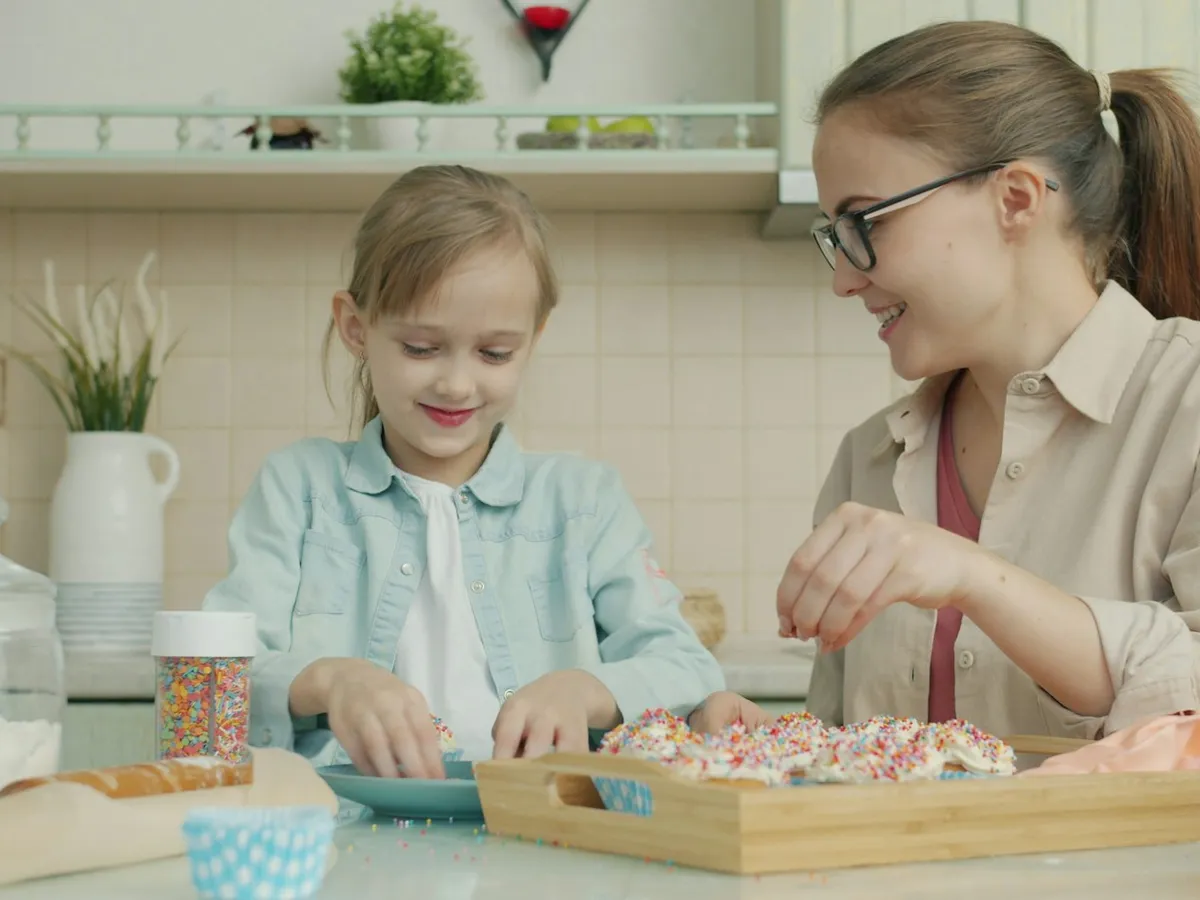
- Decorate inside a rimmed tray. One tray per child. Sprinkles that escape stay in the tray and can be reused.
- Small bowls, small spoons. Pour a little of each sprinkle into a bowl. Refill as needed rather than handing over the jar.
- Icing in a zip-top bag. Snip a tiny corner so little hands can squeeze dots and lines. Grown-ups fill and close the bag.
- Set a “one more” rule. Decide together how many cookies each person decorates; the rest can be plain or grown-up decorated.
Here’s one simple idea to try, because it works for almost every age: the “dot snowman.” Ice a round cookie white (or leave it plain), then let your child add two chocolate-chip eyes (skip for under-4s and use icing dots instead), a row of icing “buttons,” and a tiny orange icing nose. It’s quick, it looks adorable even when wonky, and kids feel proud of it. There are plenty more ways to play with holiday food art, but we’ll leave those for another day.


For kids who love food art · kids, teens & adults
Delicious Food Coloring Book
Our own coloring book of desserts, snacks and favorite meals with bold, easy designs, 87 pages in a large 8.5 × 11 inch size. We won’t show the pages here (opening it is half the fun), but it’s a calm, screen-free way to keep “baking” after the cookies are gone. Paperback, $15.99.
See the Food Coloring Book on Amazon →Our own book; we earn money if you buy it.
Waiting
Step 6: Plan the waiting part (where most meltdowns happen)
Here’s a step most recipes skip: baking and cooling take time, and young kids aren’t built for waiting next to a warm oven full of cookies. If you plan this part, cookie day stays happy.
Why the wait is hard
Little kids have been busy and excited. Then, suddenly, there’s nothing to do and the most tempting thing in the house is hot and off-limits. Add a late afternoon and a sugar-scented kitchen, and it’s no surprise when things wobble.
What helps
- Tidy together first. Wiping the table and carrying spoons to the sink is a real job, and it fills the first few minutes.
- Use a visual timer. Let your child watch the oven timer or a sand timer so “10 minutes” has a shape.
- Have one calm activity ready. Set it up before you start baking so you’re not scrambling.
- Snack first. A small, non-sugary snack before baking takes the edge off “I want a cookie NOW.”
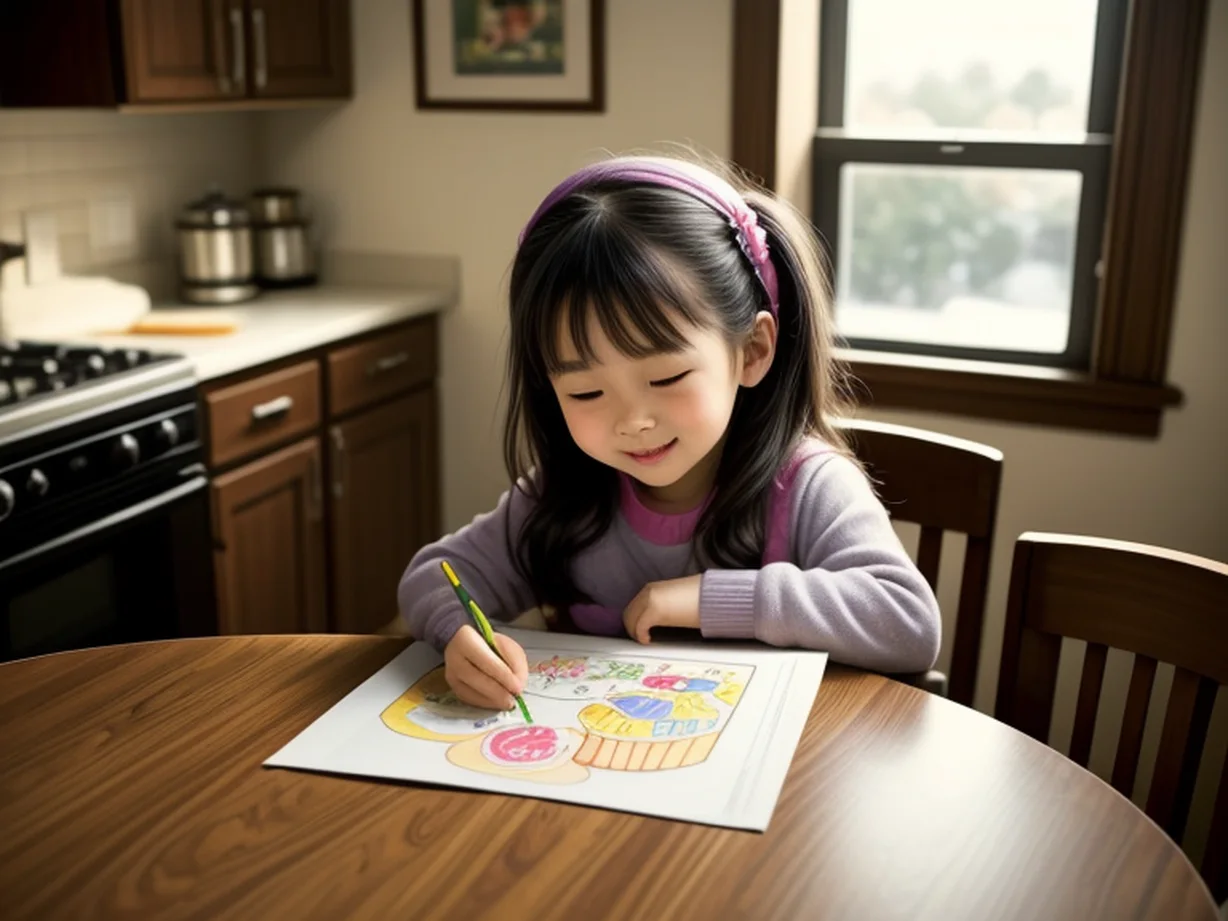
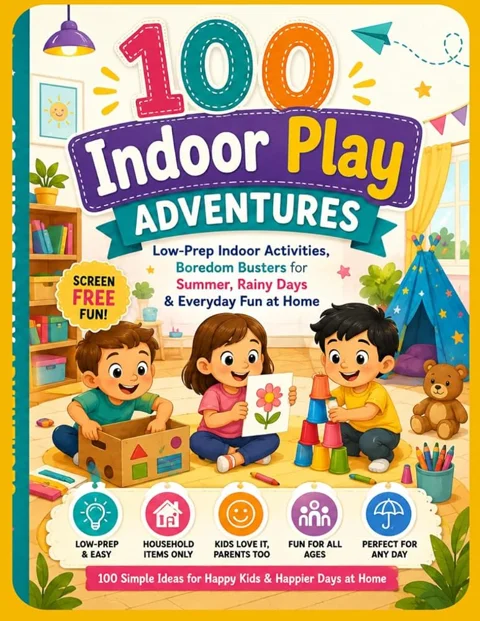
Our favorite calm activity for the wait is in the free printable kit below: a “decorate your cookies” coloring page. Kids design their dream cookies on paper while the real ones bake, and it often gives them ideas for decorating later. That’s just one idea; our book 100 Indoor Play Adventures has dozens more low-prep, screen-free ideas for exactly these in-between moments, from snow days to winter break.
For winter break at home · ages about 3–11
100 Indoor Play Adventures
Our book for parents: low-prep, screen-free indoor activities using everyday household items, for snow days, long afternoons and the waiting parts of the holidays. Paperback, $14.99.
See 100 Indoor Play Adventures on Amazon →Our own book; we earn money if you buy it.
For more winter-break help, see our winter break activities for kids at home and snow day activities for toddlers.
Giving
Step 7: Sharing your cookies (the part kids remember)
Giving cookies away is one of the sweetest holiday traditions you can start with a young child. Kids get to see that something they made can make someone else happy. It doesn’t need to be fancy:
- A paper plate and a homemade card for a neighbor, grandparent, mail carrier or teacher.
- Let your child choose who gets cookies and draw a picture to go with them. Our planner has a “who gets a cookie plate?” list.
- Label what’s inside. A simple “contains wheat, eggs, milk” note helps families managing food allergies.
- Wrap only once cookies are fully cool, so they don’t get soggy.
If you’re sending treats to school, check the classroom’s food policy first; many classes ask for non-food items. Our guide to Christmas gifts for classmates has easy non-food ideas, and our gratitude activities for kids help make giving feel meaningful. Little ones can also make a Christmas craft for grandparents to go with the cookies.

Your plan
Plan cookie day tonight (about 30 minutes)
You don’t need a free weekend. Here’s a simple routine for after bedtime, with a cup of tea and page 2 of the free planner.
5 minutes
Pick the day and the length
Choose a relaxed morning or weekend afternoon, not right before bedtime. Decide how long the kid part will be (keep it under an hour, and stop while it’s still fun).
5 minutes
Choose one cookie
Decorate-only, ready-made dough, drop cookies or cut-outs. Pick the one that fits your child and your energy.
5 minutes
Write the shopping list
Check the pantry, then list ingredients, sprinkles labeled for food use, parchment and small bowls.
5 minutes
Assign the jobs
Write two or three kid jobs on the helper chart. Give each child a job title.
10 minutes
Prep for tomorrow
Check allergies, plan the waiting activity, print the coloring page, and (for cut-outs) make the dough to chill overnight.
💛 Be kind to yourself
If cookie day ends early because someone’s tired, that still counts. You can always decorate tomorrow.
Troubleshooting
Common problems & easy fixes
| Problem | What to do |
|---|---|
| Siblings fight over who does what | Give each child their own tray, their own bowl of dough and a job title. Take turns with a timer for shared jobs. |
| Your toddler keeps eating raw dough | Move the bowl out of reach between steps, offer a safe snack, and give them a non-dough job like counting or placing. |
| Dough is sticky and won’t roll | Chill it longer, and roll it between two sheets of parchment so little hands can press without sticking. |
| Cookies spread into blobs | Chill shaped cookies on the tray for 10–15 minutes before baking. Blobs still taste great; call them “snow clouds.” |
| Your child loses interest halfway | That’s normal. Let them go play and call them back for decorating. Short is better than forced. |
| Decorating turns into a sprinkle storm | One small bowl at a time, inside a tray. Refill when empty rather than handing over the jar. |
| Your child is upset their cookie “looks wrong” | Admire the effort out loud: “You chose all the colors yourself!” Avoid fixing their cookie for them. |
| You’re exhausted before you start | Switch to decorate-only cookies. Same joy, a quarter of the work. |

If big feelings show up, our calm-down corner guide and emotional regulation activities can help.
Save this
Christmas cookie day checklist
Screenshot this, or use the planner page in the free kit below.
- Pick a calm day and time, not right before bedtime
- Choose one cookie that fits your child and your energy
- Check allergies of everyone who will eat the cookies
- Buy decorations labeled edible (no craft glitter)
- Make or buy the dough ahead (chill cut-out dough overnight)
- Set up a step stool, trays, small bowls and a damp cloth
- Pre-measure ingredients into small cups
- Write 2–3 kid jobs on the helper chart
- Wash hands for 20 seconds before, during and after
- No tasting raw dough or batter
- Oven, hot trays and knives stay with grown-ups
- Skip hard candy and whole nuts for under-4s
- Plan a calm activity for baking and cooling time
- Decorate only fully cooled cookies
- Choose who gets a cookie plate and label what’s inside
Free download
Free printable: Christmas cookie baking day kit (3 pages)
🎁 Free printable
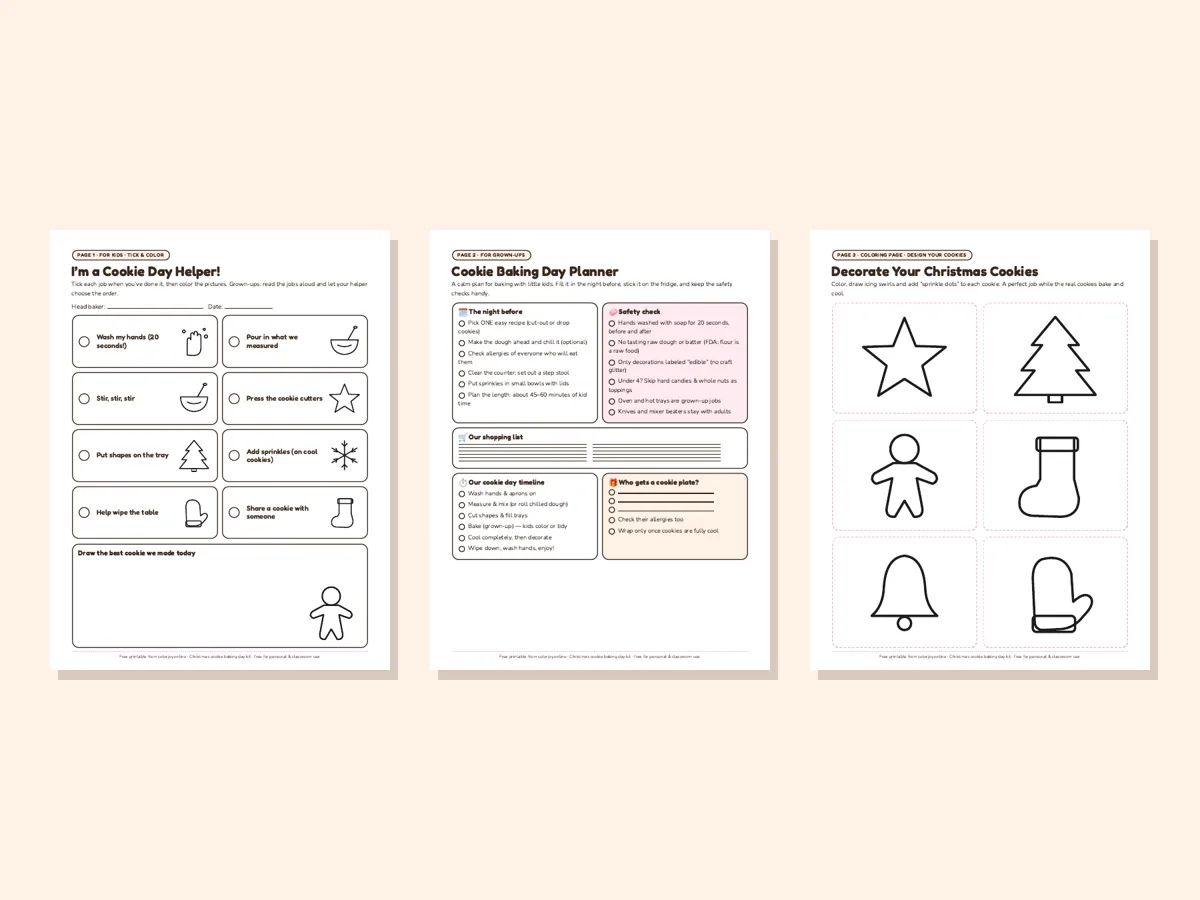
Free Christmas Cookie Baking Day Kit (3-page PDF)
An “I’m a Cookie Day Helper!” job chart for kids to tick and color, a grown-up baking day planner with a night-before list, safety checks, shopping list and timeline, and a “decorate your cookies” coloring page with six holiday cookie shapes. US Letter, prints in color or black and white.
Download the free cookie day kit (PDF) →
Free for personal and classroom use. No email or sign-up needed.
Please save this page to Pinterest so you can find the printable again next December, and share it with a friend who’s brave enough to bake with a toddler too. We add a new free printable every week through winter break, so check back soon, or browse all of them on our activity ideas hub. More from our holiday series: Christmas traditions for toddlers, gingerbread man activities, advent calendar activities and Christmas Eve box ideas.
From the ColorJoy shelf
Our picks for little bakers
If you’d like a calm, screen-free gift for a child who loves the kitchen, these are our own books, made with bold lines and little hands in mind. Prices are as listed on Amazon.com when we checked on 26 November 2026.
Top pick for food-loving kids · kids, teens & adults
Delicious Food Coloring Book
Desserts, snacks and favorite home-cooked and restaurant meals in bold, easy designs. 87 pages in a large 8.5 × 11 inch size; works with crayons, colored pencils or markers. A lovely screen-free gift for families who love to cook and color together.
$15.99Paperback · Amazon.com
Our own book; we earn money if you buy it. Price as listed on Amazon.com when we checked on 26 November 2026; please confirm on the product page.
For winter break at home
100 Indoor Play Adventures
Our book for parents of kids about 3–11: low-prep, screen-free indoor activities using everyday household items, for snow days and long afternoons.
$14.99Paperback · Amazon.com
Our own book; we earn money if you buy it. Price as listed on Amazon.com when we checked on 26 November 2026; please confirm on the product page.

For little helpers ages 4–8
Crunchy & Cute Vegetable Coloring Book
Big, simple veggie pictures with thick lines and single-sided pages. A friendly way to keep the “food” conversation going after the cookies.
$9.99Paperback · Amazon.com
Our own book; we earn money if you buy it. Price as listed on Amazon.com when we checked on 26 November 2026; please confirm on the product page.
Browse the Mr A G author store on Amazon for all our coloring and activity books. Prefer printables? Our full printable store is at payhip.com/BookBonbon. You can also read more about the Food book on its ColorJoy page.
📚 Related books from ColorJoy
If this topic is on your mind, these titles from our own shelf fit well alongside it.

Fruit Coloring Pages for Toddlers (printable PDF)
Fruit Coloring Pages (printable PDF): simple fruit pictures for toddlers and preschoolers learning food names and colors. A tiny, low-cost add-on for cookie-day waiting time.
$0.99 printable PDF on Payhip · Instant PDF download; print at home
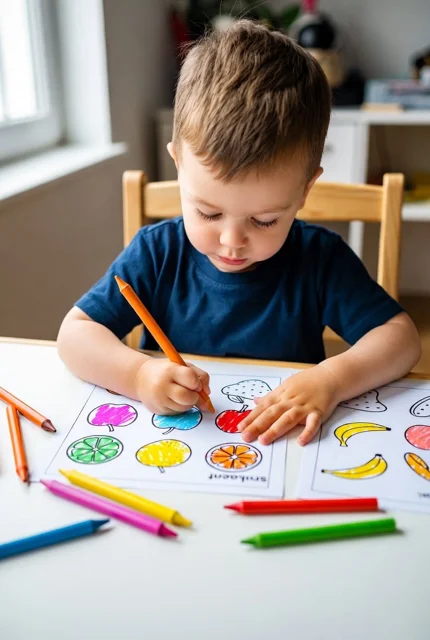
Preschool Coloring & Activity Bundle (printable PDF)
Preschool Coloring & Activity Bundle (printable PDF): seven kinds of activities and 100+ coloring pages for toddlers through kindergarten. Handy for winter break.
$8.99 printable PDF on Payhip · Instant PDF download; print at home

Bold & Easy Unicorn Coloring Book (Ages 4–8)
Bold & Easy Unicorn Coloring Book (paperback): jumbo, simple thick-line unicorn pages for ages 4–8. A sweet stocking gift for a young baker.
$9.99 paperback on Amazon.com · Paperback, shipped by Amazon
These are our own books and printables, and we earn money if you buy them. Prices as listed on Amazon.com and Payhip when we checked on 26 November 2026; prices can change, so please confirm on the product page.
Frequently asked questions
What age can kids start baking Christmas cookies?
Many toddlers can help with simple, supervised jobs like pouring pre-measured ingredients, stirring and pressing cookie cutters. Match the job to what your child can do today, keep the oven and anything sharp or hot as grown-up jobs, and keep the kid part short.
What are the easiest Christmas cookies to make with toddlers?
Decorate-only cookies (plain store-bought or cookies you baked earlier) are the easiest. Ready-made or slice-and-bake dough and simple drop cookies are next. Cut-out cookies are lovely but work best split over two days: cut one day, decorate the next.
Is it safe for kids to eat raw cookie dough?
No. The FDA explains that flour is a raw food that can carry harmful bacteria, and that raw eggs can too. It advises not to eat or taste raw flour, dough or batter, and not to let children eat or play with raw dough before it’s cooked.
How do I keep baking with kids from getting messy?
Set up before you start: pre-measure ingredients, give each child a rimmed tray, put sprinkles in small bowls, tape down parchment as a “flour zone,” and keep a damp cloth nearby. Decorating inside a tray catches most of the mess.
How long should cookie baking with a toddler take?
Plan the hands-on part for about as long as your child can happily stay with one activity, which for many little ones is well under an hour. You can do the rest yourself or split the project over two days.
What decorations are safe for young children?
Use decorations labeled edible; the FDA advises against glitters and dusts that aren’t made to be eaten. For children under 4, skip hard candies, whole nuts, gum drops and marshmallows, which the CDC lists as choking hazards, and use icing dots instead.
What can kids do while the cookies bake and cool?
Tidy up together, watch a visual timer, have a small non-sugary snack, and set up one calm activity in advance, like the cookie decorating coloring page in our free printable kit.
How can we share cookies safely with friends and teachers?
Check allergies first, add a simple label with the main allergens (often wheat, eggs and milk), wrap cookies only when fully cool, and check your school’s food policy before sending treats to class.
Is there a free printable for baking cookies with kids?
Yes. Our free 3-page kit includes a kid’s cookie helper job chart, a grown-up baking day planner with safety checks and a shopping list, and a cookie decorating coloring page. No email or sign-up needed; it’s free for personal and classroom use.
Wishing you a cozy, flour-dusted December ✨
We hope this guide helps cookie day feel a little less stressful and a lot more fun: little hands pressing stars into dough, a sprinkle storm safely inside a tray, a plate of wonky cookies carried proudly to a neighbor. That’s the memory that lasts. Come back soon: we add a new free printable every week through winter break.
If you’d like a calm, screen-free gift for a food-loving kid this year, our pick is the Delicious Food Coloring Book ($15.99).
See the Food Coloring Book on Amazon →
More December help: Christmas gifts for 5-year-olds, stocking stuffers for toddlers and Christmas coloring pages for toddlers.
Photos: Unsplash (Unsplash License). Illustrations: AI-generated for ColorJoy. Book images and printable art: ColorJoy / Mr A G. Safety information summarizes FDA, CDC, USDA and AAP (HealthyChildren.org) guidance; always follow your recipe, package directions and your pediatrician’s advice.