Free printable • Ages 2–8
Want, Need, Wear, Read: A Calm 4-Gift Plan for Little Kids (+ Free List)
It’s late November, the toy catalogs are piling up, and your four-year-old has circled half of them. You want Christmas morning to feel magical, not like an avalanche of plastic you’ll be tidying until March. The “want, need, wear, read” rule gives you a simple, kind way through: four thoughtful gifts per child, each with a job. Here’s how to make it work for little kids, with a free printable wish list, planner and gift tags.
🌟 By the end of this page you’ll have…
- a plain-English explanation of the want, need, wear, read rule (and the popular 5-gift version)
- what research and the American Academy of Pediatrics say about fewer, simpler gifts for young kids
- a budget table that splits any total across the four categories before you shop
- how to choose each gift well for ages 2 to 8, plus the safety checks that matter for toys and pajamas
- kind scripts for explaining the rule to your child and to grandparents
- a 30-minute “plan it tonight” routine, fixes for common hiccups, and a free 4-page printable kit
🎨 New here? Hi, we’re ColorJoy
ColorJoy makes bold, easy coloring books, early-learning workbooks and free printables for little hands, plus practical guides for real family life. We love the four-gift rule because one of its four gifts is always a book, and a book is a gift that gets opened again and again. This guide pairs well with our non-toy gifts for kids list and our Christmas traditions for toddlers.
Real-life moments
Sound familiar?
The four-gift rule sounds tidy on Pinterest. Real life is messier. These are the moments parents tell us about most, and a gentle way through each one.
The 40-item wish list
Your child “wrote” a Christmas list by circling everything in a toy catalog, including a ride-on tractor and a pink hair dryer. You love their excitement. You also have a budget and a small living room.
Try this: turn the catalog into a game: “If you could only pick ONE thing to be your big want, which would it be?” Ask again in a week. The answer that sticks is the real want.
Last year’s pile
You remember last Christmas: a mountain of presents, a toddler who opened three and then played with the box, and toys still sitting unopened in February.
Try this: decide on four categories now, before Black Friday deals start shouting at you. A plan made early is much easier to keep.
“But Grandma always…”
You’re ready to simplify, but the grandparents love to shop, and you don’t want to hurt anyone’s feelings.
Try this: give them a job instead of a rule: “Would you love to be in charge of the ‘read’ gift this year?” Most grandparents light up at being asked.
Sibling math
Your six-year-old’s “want” costs three times your two-year-old’s, and you worry someone will feel shortchanged.
Try this: kids mostly count boxes, not prices. Four gifts each, wrapped the same way, feels fair to little ones.
Start here
What is the want, need, wear, read rule?
The want, need, wear, read rule (often called the 4-gift rule) is a simple way to plan children’s Christmas gifts. Each child gets four presents, one in each category:
- Something they want: the gift your child is most excited about, the one they’d pick themselves.
- Something they need: something genuinely useful that they’ll use a lot.
- Something to wear: clothing, pajamas, a hat, slippers or anything they’ll put on.
- Something to read: a book, or something reading-related, ideally one you’ll enjoy together.
Nobody knows exactly who started it. It spread through parenting blogs and Pinterest over the past decade or so because the rhyme is easy to remember and the categories naturally add variety. Many families add a fifth gift, “something to do” (an outing, a craft or an experience), which is sometimes called the 5-gift rule. Others keep a separate gift from Santa. There’s no official version, so you can shape it to fit your family.
What makes the rule work isn’t really the number four. It’s that every gift has a purpose. Without a plan, gifts tend to pile up in one corner (usually “want”), and you end up with five versions of the same toy. The categories quietly make sure your child also gets something cozy, something useful and a story to share.
💛 It’s a guide, not a law
If four gifts feels too few for your family, use the categories as a shape instead of a cap: one or two items in each. If it feels like too many, combine them: a pajama set that comes with a matching bedtime book covers “wear” and “read” at once.

The why
Why fewer, chosen gifts can mean better play
If you’ve ever watched a toddler unwrap present after present and then wander off, you’ve seen why many parents are drawn to fewer gifts. There’s some interesting research behind that feeling.
In a small study at the University of Toledo, published in Infant Behavior and Development, Dauch and colleagues (2018) watched 36 toddlers aged 18 to 30 months play in a room with either 4 toys or 16 toys. With fewer toys, the toddlers played with each toy for longer and found more different ways to play with it. With more toys, they hopped from toy to toy. In the university’s summary, the researchers suggest that fewer toys at once can support longer, more focused and more creative play. It’s one study with very young children, not proof that four gifts is a magic number, but it fits what many parents notice at home.
The American Academy of Pediatrics agrees that great toys don’t have to be fancy. In its clinical report “Selecting Appropriate Toys for Young Children in the Digital Era”, the AAP says high-quality toys “need not be expensive,” favors simple toys that invite play with a caregiver (blocks, puzzles, pretend play, art supplies), and notes that reading aloud and play go hand in hand for language and early literacy. That’s pretty much the four-gift rule in a nutshell: a few good things, chosen with care, plus a book to share.
- Less overwhelm: four gifts is a manageable number for a small child to open, notice and enjoy.
- Deeper play: a few chosen toys tend to get played with longer (see the study above).
- Easier budgeting: four slots make it simple to see where the money goes.
- Less clutter in January: fewer things to find a home for when the decorations come down.
- A reading habit: one gift each year is guaranteed to be a book.
🌱 A gentle reminder
Fewer gifts doesn’t mean less love or less magic. The magic of Christmas for little kids is mostly in the rituals: lights, stories, baking, time with you. If you want ideas, our Christmas traditions for toddlers and Christmas bucket list for kids are full of them.
Honest check
Is the 4-gift rule right for your family?
It’s a lovely idea, but it isn’t for everyone, and that’s okay. Here’s an honest look at when it shines and when you might want to bend it.
| Works well when… | Might need bending when… |
|---|---|
| You want to spend less or spend more intentionally | Relatives send lots of gifts anyway, so your four are a small part of the pile |
| Your kids are overwhelmed by big gift piles | Your family tradition is many small gifts (stocking stuffers, an advent calendar) |
| You have limited space for new things | Your child has a genuine need that’s bigger than one gift (say, a bed or a car seat) |
| You want a reading habit to grow | You celebrate several holidays and gifts are spread out |
| You have several kids and want an easy way to keep things fair | Your child has special interests or therapy tools that don’t fit neatly |
If you’re unsure, try it for one year. Many families find the planning itself is the biggest win: you think about each child as a person, not a shopping list. And if you already have stockings, stocking stuffers can live outside the rule. Our stocking stuffers for toddlers guide has small, safe ideas that won’t undo your plan.

Before you shop
Set the budget first (then split it)
The four categories don’t need matching price tags. A common approach is to let the “want” take the biggest share, since it’s the gift your child is most excited about, and share the rest between need, wear and read. Here’s simple math for three example totals per child (just a starting point; move the numbers to fit your family):
| Category | Share | $40 total | $80 total | $120 total |
|---|---|---|---|---|
| Want | about 50% | $20 | $40 | $60 |
| Need | about 20% | $8 | $16 | $24 |
| Wear | about 20% | $8 | $16 | $24 |
| Read | about 10% | $4 | $8 | $12 |
Books are often the easiest category to stretch: a paperback picture book, an activity book or a used copy from a library sale can cost very little. Clothing can be the one you’d buy anyway (winter pajamas, a warmer coat), so it may not feel like extra spending at all.
💡 The “we’d buy it anyway” trick
Look at what your child will need in the next three months: boots, a coat, a bigger backpack, new pajamas. Moving one of those purchases to Christmas morning and wrapping it makes the “need” and “wear” categories almost free in your yearly budget.
Shopping during the big sales? Make your list before you open the ads. A written plan with a number next to each category is the easiest way to avoid the “but it was such a good deal” extras.
Gift 1
Something they want: finding the real “want”
The want is the star of the show. Get it right and the other three gifts can be sensible without anyone feeling disappointed. With little kids, though, “want” changes daily. Here’s how to find the one that matters.
Listen for repeats, not requests
Young children ask for whatever they just saw. The real want is the thing they bring up again and again, play-act about, or draw. Keep a note on your phone for two weeks and you’ll usually see a clear winner.
Ask “why?”
“Why do you want the fire truck?” “Because I want to rescue my animals.” Now you know the want is really about rescue play, and a cheaper truck plus a few figures may delight them just as much as the giant one.
Match their age and stage
For toddlers, the best wants are often simple and open-ended: a push toy, a doll, chunky blocks. Preschoolers love pretend play and anything that matches a passion (dinosaurs, unicorns, vehicles). Five- to eight-year-olds often want a building set, a craft kit or something tied to a favorite character. Our age guides go deeper: Christmas gifts for 4-year-olds, Christmas gifts for 5-year-olds and gifts for a 3-year-old who loves cars.

⚠️ Safety check for the want
Read the age label: it’s about safety, not just skill. The U.S. Consumer Product Safety Commission bans small parts in toys for children under 3 because they’re a choking hazard. If there’s a toddler or baby in the house, think about older siblings’ toys too. Skip toys with loose button batteries or small powerful magnets for young kids, and remember that “for ages 3+” labels are there for a reason.
Does your child love to color? A themed coloring book can be a want, not just a filler. Our Bold & Easy Unicorn Coloring Book ($9.99) has 50+ big, simple pictures for ages 4–8, and our gifts for kids who love to color guide has more ideas for little artists.
Gift 2
Something they need (that still feels like a gift)
This is the category parents worry about. Nobody wants a four-year-old unwrapping a toothbrush on Christmas morning. The trick is to choose something they genuinely need and will enjoy using.
Think about the spots in your daily routine that are hard or about to change. A child who hates the dark might need a soft night light they choose themselves. A child starting to ride might need a helmet in their favorite color. A child heading into a snowy winter might need warm boots they can pull on by themselves. That last part matters: needs that build independence feel like a big-kid gift.
Other good “need” directions: art supplies for a child who draws all day (a real art box feels very grown-up), a sturdy backpack for preschool, or a step stool so they can reach the sink and help in the kitchen. Choose one. You don’t need a list, just the gap in your child’s day that a gift could fill.


🎀 Make the need feel special
Wrap it well, add a little note (“For all your puddle adventures!”), and put it on early in the morning so they can use it the same day. A need that gets used on Christmas Day is a need that feels like a gift.
If your child is working on a skill, a learning workbook can be a need too, as long as it feels fun and not like homework. Keep it short, colorful and pitched just right. Our guide on how to teach letter sounds to preschoolers explains how to keep early learning playful.
Gift 3
Something to wear: cozy, comfy and their choice
For little kids, “wear” gifts are a winner when they’re comfortable and a little bit special: pajamas with their favorite animal, a hat with ears, slippers that look like dinosaurs, a twirly skirt, a superhero cape. Kids this age care about soft fabric and fun details far more than brands.
- Size up. Little kids grow fast. Going one size up usually means they can wear it into spring.
- Let them help choose. Offer two options and let them pick the color or print. They’re far more likely to wear it.
- Think “easy on, easy off.” Elastic waists, big zippers and pull-on boots support independence.
- Comfort first. Scratchy tags and stiff seams can make a sensory-sensitive child refuse an outfit.
A quick note on pajama safety
Pajamas are the most popular “wear” gift, so it’s worth knowing the rules. According to the U.S. Consumer Product Safety Commission, children’s sleepwear sized above 9 months and up to size 14 must either be flame resistant or be “tight-fitting” (snug) to meet federal flammability standards. Snug-fitting pajamas carry a label saying “Wear snug-fitting, not flame resistant.” The CPSC’s sleepwear safety guide explains why: loose cotton clothing can catch fire more easily. So if you love a loose cotton nightgown or oversized tee, keep it for daytime lounging and choose snug or flame-resistant pajamas for sleep.

Gift 4
Something to read: the gift that keeps getting opened
This is our favorite category, and it’s the one with the strongest backing. The American Academy of Pediatrics encourages parents to read aloud with children from birth, and its literacy policy describes shared reading as a way to build language, early literacy and a close parent-child bond. A book on Christmas morning is a small, lasting invitation to do exactly that.
Match the book to how your child reads right now
| Stage | What tends to work | Tip |
|---|---|---|
| Toddlers (about 1–3) | Sturdy board books, touch-and-feel, simple rhymes | Choose one you won’t mind reading 50 times |
| Preschoolers (about 3–5) | Picture books, lift-the-flap, books about their passions | A book about their “want” topic doubles the excitement |
| Early readers (about 5–8) | Easy readers, phonics practice, short chapter books, activity books | Mix one they read to you with one you read to them |
“Read” gifts don’t have to be storybooks. A magazine subscription, an activity book with words to sound out, a library-card holder with a promise of a library date, or a book that inspires play all count. The best ones are the ones you’ll open together.


For kids just starting to read · Ages 4–6
Phonics Practice Workbook for Kids Ages 4–6
Our own early-reading workbook with letter sounds, beginning sounds and simple word building, on single-sided pages with a blank back for extra writing practice. A “read” gift for the child who’s curious about letters. We won’t list what’s on every page here; there’s plenty to discover inside. $12.99 on Amazon.
See the Phonics Workbook on Amazon →Our own book; we earn money if you buy it.
If your child is a reluctant reader, choose a book about the thing they love most, and read it together without pressure. Our guide on teaching a child to write their name is a nice next step for the preschooler who’s starting to notice letters everywhere.
Optional
The optional 5th gift: something to do
Many families add a fifth category, often “something to do” or “something to share.” For little kids, this is where time with you becomes the gift: a trip to the zoo, a family sledding day, a baking afternoon, or a homemade “coupon book” of special one-on-one activities.
Here’s one idea we love: a “Pajama Coloring Night” coupon. Wrap a new pack of crayons with a handwritten coupon: “Good for one night of hot cocoa, pajamas and coloring together, any night in January.” It costs almost nothing and gives your child something to look forward to after the holidays, when the post-Christmas slump hits.
For the “something to do” gift
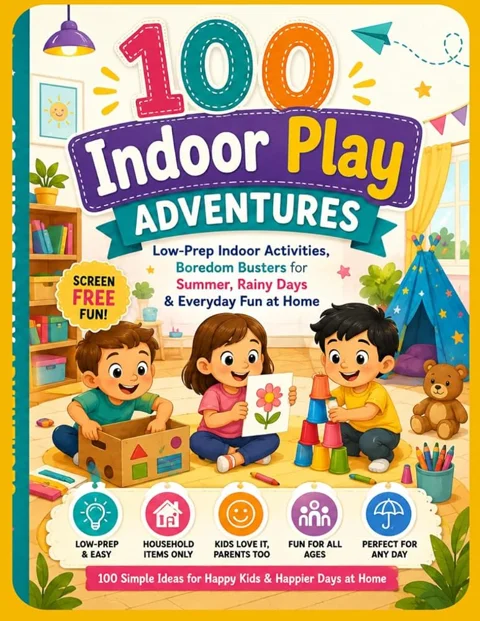
100 Indoor Play Adventures
Our own book for parents of kids about 3–11: low-prep, screen-free indoor activities using everyday household items, for snow days, quiet afternoons and “I’m bored!” moments. We’ve shared just one idea above; the book has 100. $14.99 on Amazon.
See 100 Indoor Play Adventures →Our own book; we earn money if you buy it.
For more ways to fill the long days after Christmas, see our winter break activities for kids at home and snow day activities for toddlers.
Family
Grandparents, siblings and Santa: making it work for everyone
Grandparents and relatives
The four-gift rule can feel like it shuts out generous relatives. Flip that around: invite them in. Some families let grandparents “claim” a category (“Grandma always gives the read gift”). Others share the printable wish list so relatives can see what your child is excited about. A gentle message works best:
💬 A script you can borrow
“We’re trying something new this year to keep Christmas a little simpler: something to want, need, wear and read. Would you like to be in charge of one of those for Maya? She’s really into dinosaurs and space right now.”
If they still go big, that’s okay. Gratitude matters more than rules. Our gratitude activities for kids have easy ways to help little ones say thank you.
Siblings
Little kids notice the number and size of boxes more than price. Give each child the same number of gifts, wrap them in each child’s own paper so they’re easy to find, and avoid comparing costs out loud. A toddler’s “want” might be a $12 doll while their big brother’s is a $40 building set, and both will feel equally special.
What about Santa?
Every family handles this differently. Some let Santa bring the “want.” Others keep one separate gift “from Santa” plus the four from parents. Some treat stockings as Santa’s department. There’s no wrong answer; just decide before you shop so the numbers don’t creep up.

Talking points
How to explain the rule to your child
Kids under five won’t need much explanation; they’ll be thrilled with four presents. Older preschoolers and early-elementary kids may notice a change, especially if friends talk about big gift piles. Keep it positive and simple:
- Focus on the fun: “This year you get to help plan your gifts! We have four special kinds: want, need, wear and read.”
- Make it a project: fill in the free wish list together. Little ones can draw; bigger kids can write.
- Talk about choosing: “If you could pick just one big wish, what would it be?” Choosing is a real skill.
- Don’t criticize other families: “Every family does Christmas differently, and this is our way.”
Filling in the list is also a lovely, screen-free activity for a chilly afternoon. Grab crayons, put on some music, and let your child draw their dream “want” in the first box. You’ll learn a lot from what they choose and why. If they want to keep coloring afterward, our Christmas coloring pages for toddlers are free to print.
Your plan
Plan the whole thing tonight (about 30 minutes)
You don’t need a free weekend to plan Christmas gifts. Here’s a simple routine for after bedtime, with a cup of tea and the free planner below.
5 minutes
Set the budget
Write a total per child at the top of the planner. Then split it using the table above, or your own numbers.
10 minutes
Fill in the categories
One idea per category per child, from what you’ve heard them ask for again and again. Pencil is fine.
5 minutes
Check the “already have”
Look in closets and drawers. Maybe you already bought pajamas or a book during the year. Tick it off.
5 minutes
Hand out jobs
Text grandparents or relatives to offer them a category. Note who’s covering what.
5 minutes
Shop or save
Order what you can, or save links for the sales. Then close the laptop. You’re done.
💛 Be kind to yourself
If your list isn’t perfect tonight, that’s fine. A rough plan you finish beats a perfect one you never start.
Troubleshooting
Common problems & easy fixes
| Problem | What to do |
|---|---|
| Your child’s “want” is way over budget | Look for the smaller version, a secondhand one, or ask a relative to share the cost as their gift. |
| Your child is disappointed with “only four” | Acknowledge the feeling, then remind them about the fun of choosing. Plan a special “do” day to look forward to. |
| The “need” gift feels boring | Pick a version in their favorite color or character, add a playful note, and let them use it right away. |
| Clothes are the wrong size | Keep gift receipts. Buying one size up avoids most of this. |
| Relatives send lots of gifts anyway | Let it go gracefully. Rotate some toys into a closet and bring them out in February when boredom hits. |
| You have kids of very different ages | Same number of gifts each, wrapped differently. Kids compare counts, not price tags. |
| You already bought too much | Save extras for birthdays, a rainy-day box, or donate. No guilt needed. |
Save this
Want, need, wear, read checklist
Screenshot this, or use the planner page in the free kit below.
- Decide whether you’ll use 4 gifts, 5 gifts, or the categories as a loose guide
- Agree on how Santa and stockings fit in
- Set a total budget per child
- Listen for two weeks to find the real “want”
- Pick one “need” that fills a gap in your child’s day
- Check sizes for the “wear” gift (and choose snug or flame-resistant pajamas)
- Choose a “read” gift that matches how your child reads now
- Offer grandparents or relatives a category
- Check age labels and small parts for kids under 3
- Keep gift receipts
- Print the gift tags and label each present
Free download
Free printable: want, need, wear, read Christmas kit (4 pages)
🎁 Free printable
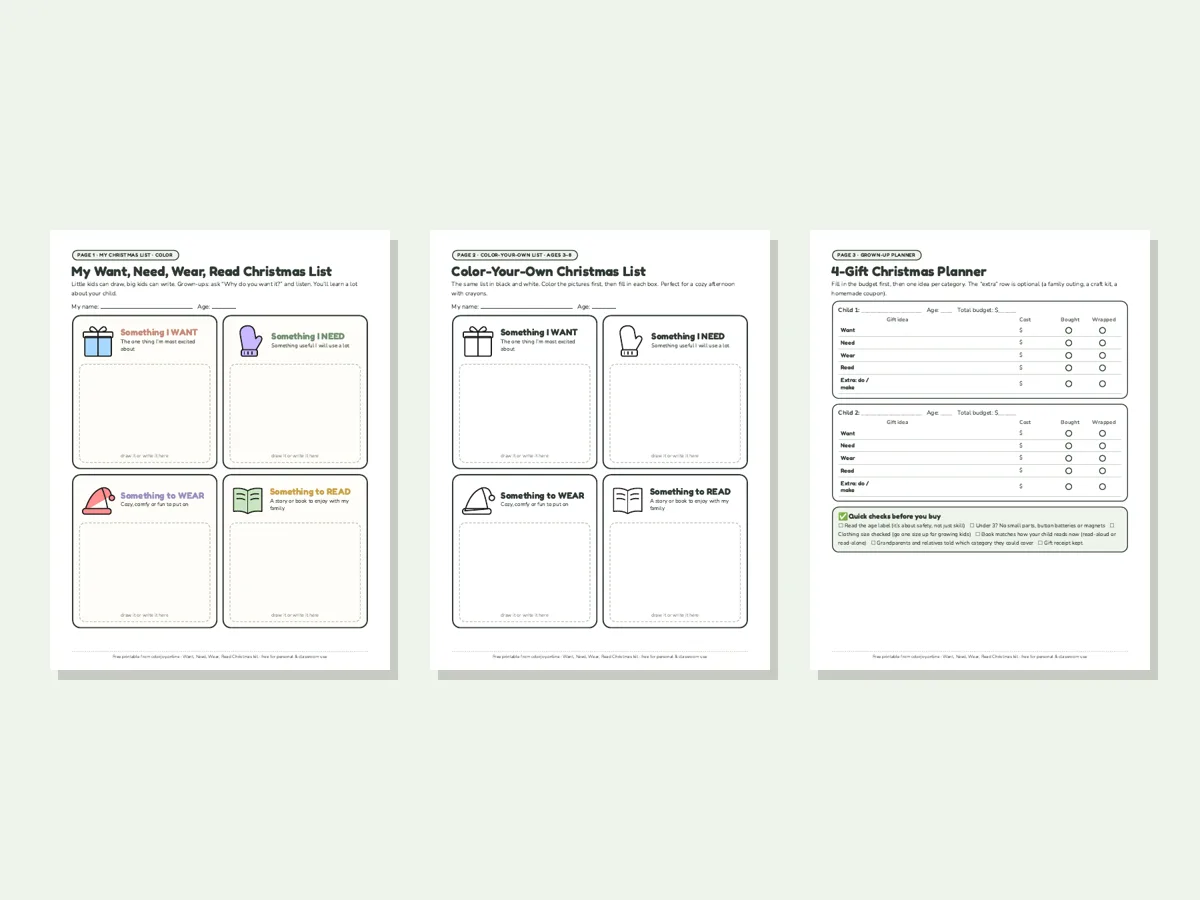
Free Want, Need, Wear, Read Christmas Kit (4-page PDF)
Everything you need to plan tonight: a kid’s wish list in color and a color-your-own version (draw it or write it in each box), a grown-up 4-gift planner for two children with budget, bought and wrapped columns plus a quick safety check, and 8 gift tags (“Something you want / need / to wear / to read”). US Letter, prints in color or black and white.
Download the free want, need, wear, read kit (PDF) →
Free for personal and classroom use. No email or sign-up needed.
Please save this page to Pinterest so you can find the printable again next year, and share it with a friend who’s planning Christmas too. We add a new free printable every week through winter break, so check back soon, or browse all of them on our activity ideas hub.
Keep reading
From the ColorJoy shelf
Our picks for the “read” (and “want”) gift
If you’re looking for a “read” or “want” gift for a child aged about 4 to 8, these are our own books, made with bold lines, big pictures and single-sided pages for little hands. Prices are as listed on Amazon.com when we checked on 21 November 2026.
The “read” gift · Ages 4–6
Phonics Practice Workbook for Kids Ages 4–6
Fun letter sounds, beginning reading activities and simple word building for preschool and kindergarten. Single-sided pages with a blank back for extra writing practice.
$12.99Paperback · Amazon.com
Our own book; we earn money if you buy it. Price as listed on Amazon.com when we checked on 26 October 2026; please confirm on the product page.
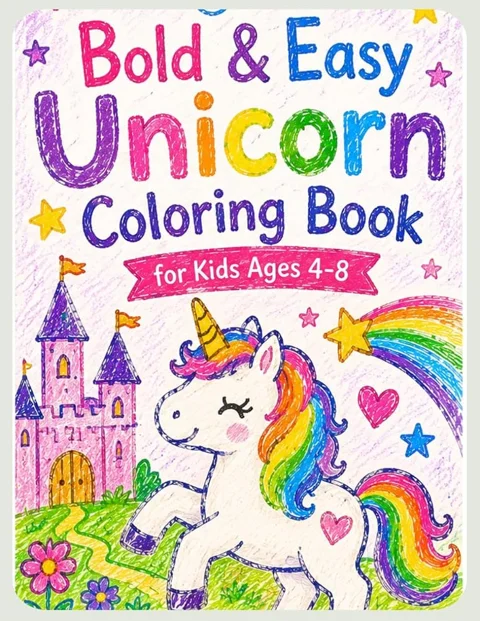
The “want” gift for unicorn fans · Ages 4–8
Bold & Easy Unicorn Coloring Book for Kids
50+ big, cute unicorn, rainbow and magical pictures with jumbo thick lines and single-sided pages.
$9.99Paperback · Amazon.com
Our own book; we earn money if you buy it. Price as listed on Amazon.com when we checked on 26 October 2026; please confirm on the product page.

For little nature lovers · All ages
Birds Coloring Book: 80 Types of Birds
80 kinds of birds to color, from backyard favorites to birds from around the world, in a handy 6 × 9 inch size. Lovely for a family bird-watcher.
$9.99Paperback · Amazon.com
Our own book; we earn money if you buy it. Price as listed on Amazon.com when we checked on 26 October 2026; please confirm on the product page.
The “something to do” gift · For parents of kids 3–11
100 Indoor Play Adventures
Low-prep, screen-free indoor activities using everyday household items, for snow days, quiet afternoons and winter break.
$14.99Paperback · Amazon.com
Our own book; we earn money if you buy it. Price as listed on Amazon.com when we checked on 26 October 2026; please confirm on the product page.
Browse the Mr A G author store on Amazon for all our coloring and activity books. Prefer printables? Our full printable store is at payhip.com/BookBonbon.
📚 Related books from ColorJoy
If this topic is on your mind, these titles from our own shelf fit well alongside it.
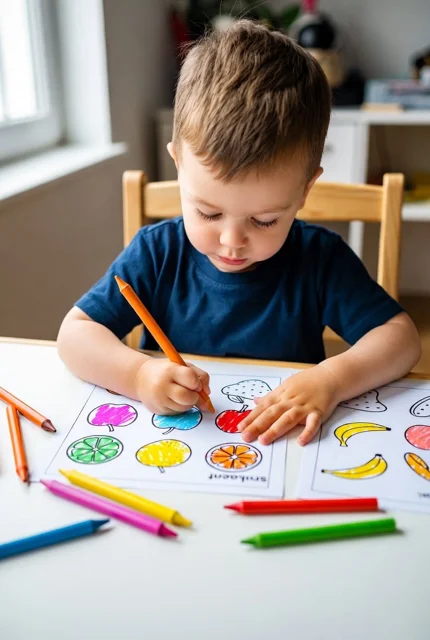
Preschool Coloring & Activity Bundle (printable PDF)
Preschool Coloring & Activity Bundle: 100+ coloring pages plus matching and cut-and-paste sheets. A budget-friendly “something to do” you can print all winter.
$8.99 printable PDF on Payhip · Instant PDF download; print at home
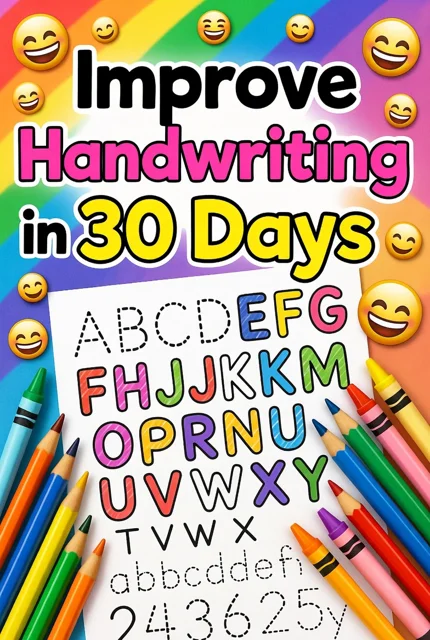
Alphabet & Number Tracing Worksheets PDF | Preschool & Kindergarten
Alphabet & Number Tracing Worksheets: a gentle “need” for preschoolers practicing letters and numbers 1–10.
$3.99 printable PDF on Payhip · Instant PDF download; print at home
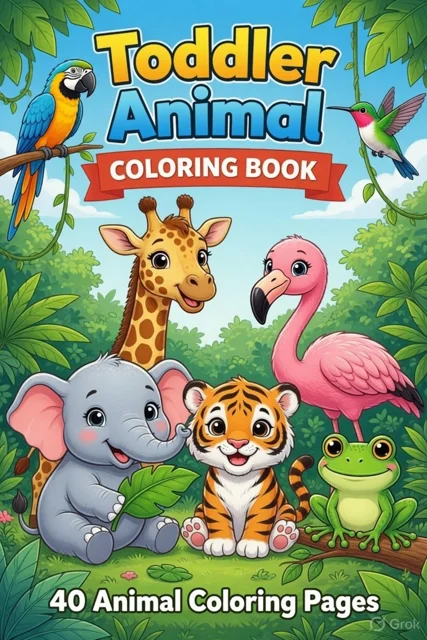
Toddler Animal Coloring Pages (printable PDF)
Toddler Animal Coloring Pages: 40+ big, bold animals, an easy add-on for a wish-list drawing afternoon.
$1.99 printable PDF on Payhip · Instant PDF download; print at home
These are our own books and printables, and we earn money if you buy them. Prices as listed on Amazon.com and Payhip when we checked on 21 November 2026; prices can change, so please confirm on the product page.
Frequently asked questions
What is the want, need, wear, read rule?
It’s a simple way to plan kids’ Christmas gifts: each child gets four presents, something they want, something they need, something to wear and something to read. Some families add a fifth, “something to do.” There’s no official version, so you can adapt it.
What is the 5-gift rule for Christmas?
The 5-gift rule adds a fifth category to want, need, wear and read. It’s usually “something to do” (an outing or experience) or “something to share.” It’s a nice way to add time together without adding more stuff.
What counts as a “need” gift for a toddler or preschooler?
Something useful that fills a real gap in their day and that they’ll enjoy using: warm boots they can pull on themselves, a helmet, a night light, a backpack, art supplies or a step stool. Choose a fun color or character to make it feel special.
How much should I spend on each category?
There’s no rule. Many families give the “want” the biggest share (around half) and split the rest between need, wear and read. Set a total per child first, then divide it. Books are often the easiest category to keep inexpensive.
Is the 4-gift rule good for toddlers?
Many parents find it works especially well for toddlers, who can be overwhelmed by big gift piles. A small 2018 study found toddlers played longer and more creatively with fewer toys available. Always check age labels and avoid small parts for children under 3.
What if grandparents buy lots of gifts anyway?
Invite them to take a category, such as the “read” gift, or share your child’s wish list. If they still give a lot, accept with gratitude and rotate some toys into storage to bring out later.
Are there safety rules for kids’ pajamas?
Yes. The U.S. CPSC requires children’s sleepwear sized above 9 months through size 14 to be flame resistant or snug-fitting. Snug pajamas carry a “Wear snug-fitting, not flame resistant” label. Keep loose cotton clothes for daytime.
Is there a free want, need, wear, read printable?
Yes. Our free 4-page kit includes a kid’s wish list in color, a color-your-own version, a grown-up 4-gift planner and 8 gift tags. No email or sign-up needed; it’s free for personal and classroom use.
Wishing you a calm, cozy Christmas 🎄
ColorJoy makes bold, easy coloring books, early-learning workbooks and free printables for little hands, plus practical guides for real family life. We hope this plan helps you spend a little less time shopping and a little more time on the floor by the tree, reading a new book together. Four gifts, chosen with love, are plenty. Come back soon: we add a new free printable every week through winter break.
For the “read” gift this year, our pick is the Phonics Practice Workbook for Kids Ages 4–6 ($12.99).
See the Phonics Workbook on Amazon →
More December help: Christmas Eve box ideas, letter to Santa template and Christmas gifts for classmates.
Photos: Unsplash (Unsplash License). Illustrations: AI-generated for ColorJoy. Book images and printable art: ColorJoy / Mr A G. Safety information summarizes CPSC guidance; always follow product age labels.