Space gift guide • Ages 3–8 • Free printable
Gifts for Kids Who Love Space: How to Pick One That Sparks Real Wonder
For the child who says goodnight to the Moon and asks if we can live on Mars: a calm, step-by-step way to choose a space gift that gets used after December, the honest truth about first telescopes, free sky dates for this winter, and printable gift tags.

Some kids don’t just like space. They line up planets on the breakfast table, ask how far away the Moon is (again), and announce at dinner that they’ll be an astronaut “after kindergarten.” So when Christmas comes, the answer seems obvious. Then you start shopping and meet a wall of telescopes, rocket kits, star projectors and glow-in-the-dark everything, and it’s hard to tell what will be loved and what will live in the closet by February.
This guide from ColorJoy (we make bold, easy coloring books and free printables for little hands) helps you pick one or two space gifts your child will actually use, decide whether a telescope makes sense yet, and plan a few free “under the real sky” moments this winter. You can finish the whole plan tonight.
🌟 By the end of this page you’ll have…
- a simple way to work out what kind of space fan your child is, so the gift fits how they play
- why so many little kids fall hard for space, and why 2026 has been a big year for it
- an honest answer to “should we buy a telescope?”, plus cheaper ways to try one first
- safety checks for space toys: small parts, button batteries, magnets, lasers and the Sun
- free and low-cost space experiences, with real December 2026 sky dates
- a 30-minute “sort it tonight” plan and a free 3-page printable: wish list, planner and 8 gift tags
🎨 New here? Hi, we’re ColorJoy
ColorJoy makes bold, easy coloring books, early-learning workbooks and free printables, plus practical guides for real family life. This guide is part of our “gifts for kids who love…” series, alongside gifts for kids who love dinosaurs and gifts for kids who love animals.
Real-life moments
Sound familiar?
Buying for a space-loving child sounds simple. These are the moments parents run into most, and a gentle way through each one.
“Can we go to the Moon for Christmas?”
Your five-year-old watched astronauts fly around the Moon this year and now wants to go too. Every drawing has a rocket in it, and the wish list just says “space stuff.”
Try this: that big, dreamy wish is a gift in itself. Below you’ll find ways to turn it into something real, like watching the space station fly over your own house.
The telescope in the closet
A relative bought a telescope two Christmases ago. Nobody could get it to point at anything, the kids got cold and bored, and it hasn’t moved since.
Try this: the problem usually isn’t the child, it’s the match. There’s a whole section below on when a telescope makes sense and what to try first.
The glow-star ceiling that fell down
You spent a Saturday sticking stars on the ceiling. By Tuesday half of them were on the carpet, and the toddler was trying to eat one.
Try this: small, sticky, glowing things are magical and also small parts. A few quick safety checks below keep the fun without the worry.
“He likes planets, I think?”
Grandma wants to help but isn’t sure if your child likes rockets, aliens or the solar system, and she’s about to buy the biggest box in the store.
Try this: send a short list early and give each relative a “lane”: one does a book, one does an outing, one does something cozy.
The why
Why little kids love space so much
If your child seems completely captured by planets and rockets, you’re in good company. In a study published in Developmental Psychology, DeLoache, Simcock and Macari (2007) surveyed and interviewed 177 parents and found that nearly one third of young children had what the researchers called an “extremely intense interest” in a particular category of things. The examples they describe are things like vehicles, dinosaurs and tea sets, but any parent of a planet-obsessed four-year-old will recognize the pattern: a topic that lights a child up, again and again.
Space has everything a curious young mind loves. It is huge (bigger than anything they can imagine), real (you can step outside and see the Moon), and full of mystery (nobody knows everything about it, not even grown-ups). It mixes facts kids can collect, like planet names and “which is hottest,” with endless room for pretending.
And 2026 has given space fans a lot to talk about. In April, NASA’s Artemis II crew, NASA astronauts Reid Wiseman, Victor Glover and Christina Koch and Canadian Space Agency astronaut Jeremy Hansen, flew around the Moon and splashed down safely in the Pacific on April 10. NASA described them as the first astronauts to travel to the Moon in more than half a century. If your child caught any of that, it’s no surprise the Moon is on the wish list.
🚀 What this means for gifts
The best space gift isn’t the biggest or the one with the most buttons. It’s the one that lets your child do more of what they already love doing with space: building, looking up, knowing, pretending or making. The next section helps you figure out which one that is.

Start here
What kind of space fan is your child?
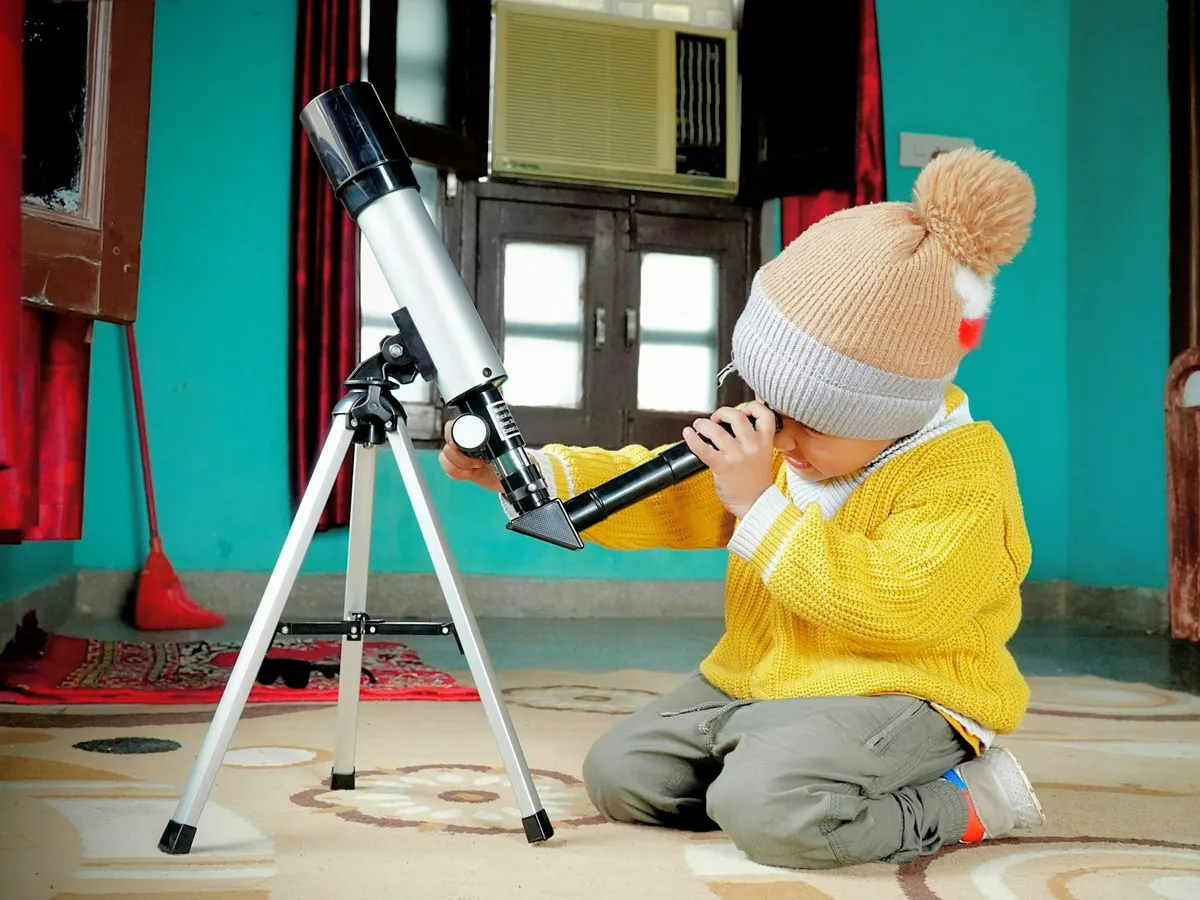
Here’s the idea that makes space gift shopping much easier: “loves space” isn’t one thing. Watch your child for a few days and you’ll usually notice one or two patterns. Some kids want to build and launch. Some want to look up. Some want to know everything. Match the gift to the pattern and it is far more likely to get pulled out again after the wrapping paper is gone.
| If your child loves… | They might be a… | Gift types that usually fit | Maybe skip |
|---|---|---|---|
| Making rockets from boxes, counting down, “blasting off” from the couch | Builder & launcher | A sturdy rocket or shuttle toy made for their age, big cardboard and tape (honestly), an air-powered stomp rocket for older kids with a yard | Fiddly model kits meant for much older kids |
| Spotting the Moon in the daytime, asking “is that a star or a plane?” | Sky-watcher | Kid binoculars, a simple Moon or star chart, a red flashlight, a “Moon date” coupon, a trip to a star party | A complicated telescope as a surprise (see the next section) |
| Reciting planet names, sizes and “which is hottest?” facts | Fact-finder | A good picture book about space, a solar system floor puzzle, a poster for their wall, fact cards | Toys that are all lights and noise with nothing to learn |
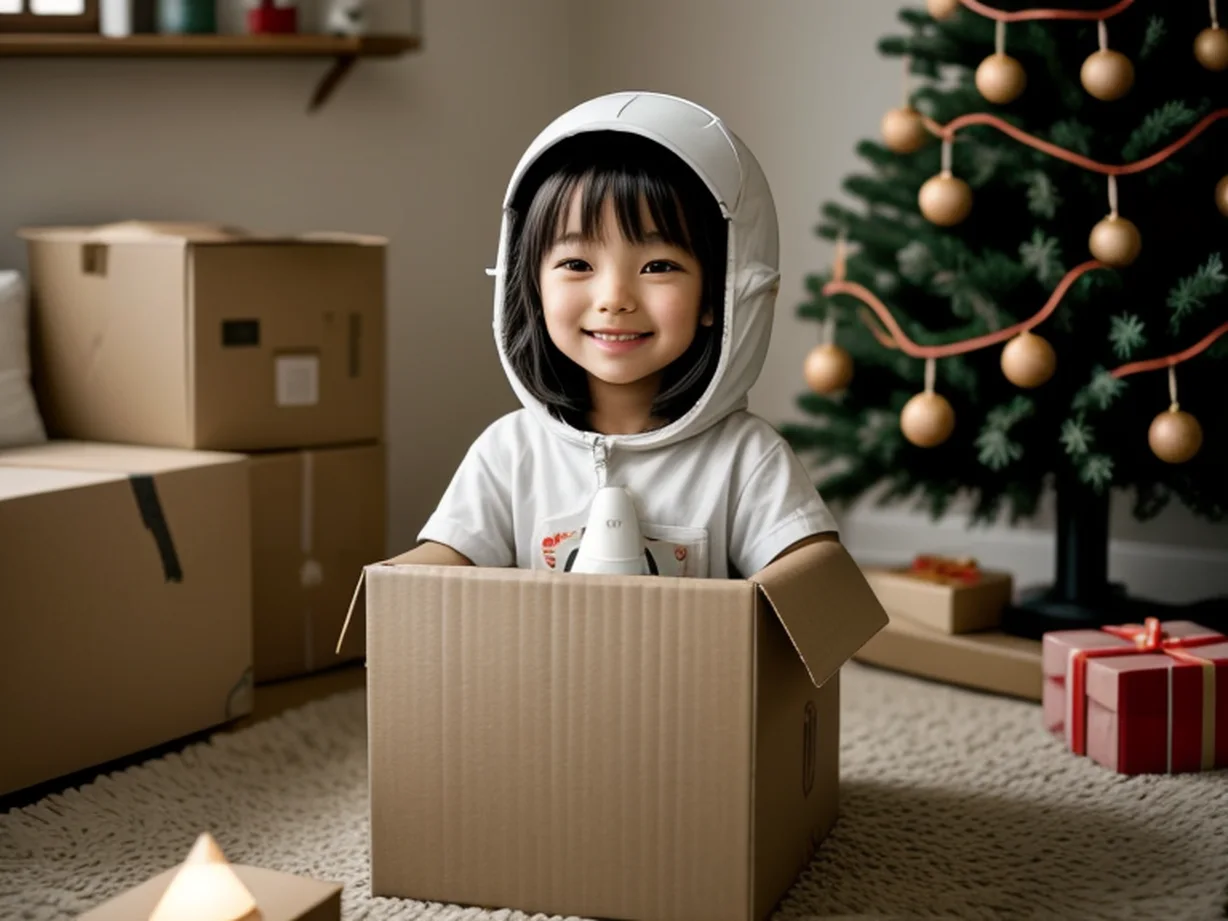
| Being the astronaut, mission control, or a friendly alien | Pretender | An astronaut costume or helmet, a play tent “space station,” a toy rocket with little astronaut figures (3+) | Costumes with small, loose parts for a toddler |
| Drawing rockets, coloring planets, making “galaxy” art | Maker | A space coloring book, chunky crayons or markers, a sketchbook with their name on it, a simple planet craft | Messy kits you don’t have the energy to supervise |
| Talking for weeks about “the night we saw the space station” | Night-out kid | A planetarium or science museum visit, a library telescope loan, a local astronomy club event | A huge one-off trip for a very young child |
How to spot the pattern in one weekend
- Watch, don’t ask. Most young kids will say “yes!” to anything with a rocket on it. What they do with space play tells you more than what they ask for.
- Notice where the play goes. Does the cardboard box become a rocket, a space station, a planet map, or a drawing?
- Listen for the questions. “How do rockets fly?” is often a builder. “Where is the Moon going?” is often a sky-watcher. “Is Jupiter bigger than the Sun?” is a fact-finder.
- Write it down. Tick the boxes on page 2 of our free printable. It takes two minutes and makes the final decision much easier.
💡 The “one step further” rule
The sweet spot is a gift that takes their favorite kind of space play one small step further. A child who builds box rockets might love a real astronaut helmet to wear inside one. A child who points at the Moon every night might love binoculars and a promise of a “Moon date.” Familiar enough to grab right away, new enough to feel exciting.
The big one
The telescope question: is your child ready?
A telescope is the dream gift for many space fans, and for the right child at the right time it can be magical. It’s also a gift that can easily end up in the closet if the timing isn’t right. Three honest questions help you decide.
1. Is there a grown-up who wants to do this too?
For a young child, a telescope is a “together” gift, not a toy they play with alone. Someone has to set it up, find the Moon, focus it, and stand out in the cold at bedtime. If a parent or grandparent is excited to be that person, it’s a great sign. If not, a telescope may become one more job on your list.
2. Can your child wait, keep still and look with one eye?
Looking through an eyepiece takes patience. Many preschoolers find it frustrating: the image wobbles, the Moon drifts out of view, and squinting with one eye is hard. Older kids often do better. Watch how your child handles a magnifying glass or a toy microscope. That’s a good preview.
3. Have you tried one first?
You may not need to buy one to find out. Some public libraries lend beginner telescopes, much like borrowing a book. The Library Telescope Program has a locator to search for participating libraries; rules, ages and loan periods vary, so call ahead. Local astronomy clubs also host free public viewing nights where kids can look through big telescopes with friendly volunteers (more on that below).
⚠️ The one rule every family needs
Never point a telescope or binoculars at the Sun. NASA’s eye safety guidance says that viewing any part of the bright Sun through binoculars, a telescope or a camera lens without a special-purpose solar filter secured over the front “will instantly cause severe eye injury.” Teach this before the first use, and keep optics put away during the day unless an adult is right there.
If the answer is “not yet”
Kid binoculars are a lovely first step: easy to hold, no setup, and the Moon looks wonderful through them. Pair them with a simple Moon calendar and a “Moon date” coupon, and you have a sky-watcher’s gift without the closet risk. If a telescope is on the horizon, a “future telescope” card with a library loan or club visit lets your child be part of the plan.

Safety first
Safety checks for space gifts (read this before you buy)
Space toys come in every size, from giant rocket playsets to tiny glow stars. A few minutes of checking keeps the fun safe, especially if a toddler or baby lives in the house.
1. Small parts and children under 3
U.S. rules don’t allow small parts in toys intended for children under 3, and toys with small parts meant for kids aged 3 to 6 must carry a choking-hazard warning. The U.S. Consumer Product Safety Commission (CPSC) explains the small parts rules here. Mini astronaut figures, planet sets, and peel-and-stick glow stars often fall into this group. If a younger sibling is around, put stars high on the ceiling, out of reach, and keep little figures for “big kid” play.
2. Button and coin batteries
Light-up rockets, star projectors and remote controls sometimes use small button or coin cells. The CPSC warns that a swallowed button battery can cause serious burns in as little as two hours, and says toys with these batteries must have a secure compartment that needs a screwdriver, coin or tool to open. Check the compartment when you unwrap, and store spare batteries out of reach.
3. Small, powerful magnets
Some building sets and “floating planet” toys use magnets. The CPSC’s magnet safety page explains why swallowed high-powered magnets are so dangerous. Choose sets where magnets are sealed inside large pieces, and check them now and then for cracks.
4. Laser toys and laser pointers
Star projectors and “galaxy” lights are usually LED-based, but some space toys use lasers. The FDA’s advice on laser toys says to look for the label “Class 1 Laser Product” on children’s laser toys, never to aim a laser at a person or animal, and not to buy laser pointers for children or let them use pointers as toys. If you’re buying a projector, read the label.
5. The Sun
As above: binoculars and telescopes never point at the Sun. Regular sunglasses are not safe for looking at the Sun either.
✅ Quick safety check before you wrap
Age label read (it’s about safety, not just skill) · small parts kept from under-3s · battery compartment screwed shut · no loose small magnets · any laser toy says “Class 1” · optics: never at the Sun · gift receipt kept.
Money
A budget that works (without buying everything with a rocket on it)
Space gifts range from a few dollars to a few hundred. More money doesn’t always mean more use. Research backs up the simple approach: in its clinical report on toys, the American Academy of Pediatrics (2019) encourages families to choose toys that support play and interaction with caring adults, rather than relying on electronic toys and apps marketed as educational. For space fans, that often means a simple gift plus your time.
| Budget | What usually fits | Tip |
|---|---|---|
| Free | Spotting the space station, a backyard Moon date, a library visit for space books, a star party with a local club | Wrap a homemade “ticket” so it feels like a real gift. |
| Small | A picture book, a coloring book, a Moon or star chart, a red flashlight, glow stars (out of reach for toddlers) | Great for stockings, travel and grandparents on a budget. |
| Medium | Kid binoculars, an astronaut costume, a sturdy rocket toy, a solar system floor puzzle, a planetarium visit | Pick one main gift that matches their space fan style. |
| Bigger | A first telescope (with a grown-up who’s excited to use it), a science museum membership | Try before you buy: library loan or club viewing night first. |
A good rule for young kids: one main gift, one small quiet gift, one experience. That covers the excitement of unwrapping, something calm for travel days, and a memory you make together. For more clutter-free ideas, see our non-toy gifts for kids and the want, need, wear, read gift method.
Experiences
Free space experiences this winter (real dates)
Some of the best space gifts aren’t things at all. Here are a few you can give for free or close to it, with real dates for this December. Write one on a card, put it in a box, and let your child unwrap the promise.
Watch the International Space Station fly over your house
NASA’s free Spot the Station app and website tell you when the space station will pass over your location. NASA explains that it looks like a very bright star or airplane moving across the sky, but without flashing lights, and that sightings happen within a few hours before or after sunrise or sunset. For many families, an evening pass lands right around a young child’s bedtime. Telling a five-year-old “there are astronauts up there, right now” is a moment they remember.
December 2026 sky dates to circle
- Geminid meteor shower: night of December 13–14. The International Meteor Organization lists this as the peak night and notes the Moon will be a thin crescent, so the sky should be fairly dark. EarthSky notes the radiant rises in mid-evening, so families can look before midnight. Little kids may only last 15 minutes in the cold, and that’s fine: even one “shooting star” is a win.
- Full Moon: evening of December 23 (US time). Full Moon falls at 01:28 GMT on December 24, which is the evening of December 23 across the US. That means Christmas Eve has a big, bright, nearly full Moon to look for on the way home or from the window.
- Any clear evening: look up a space station pass, step outside for five minutes, and wave.
Find a star party near you
NASA’s Night Sky Network is a coalition of amateur astronomy clubs across the U.S. that share their time and telescopes at public events. Its calendar lets you search for upcoming events near you. Volunteers at these events are often wonderful with kids, and looking through a big telescope with an expert is a great way to find out if your child is ready for one of their own.
Planetariums and science museums
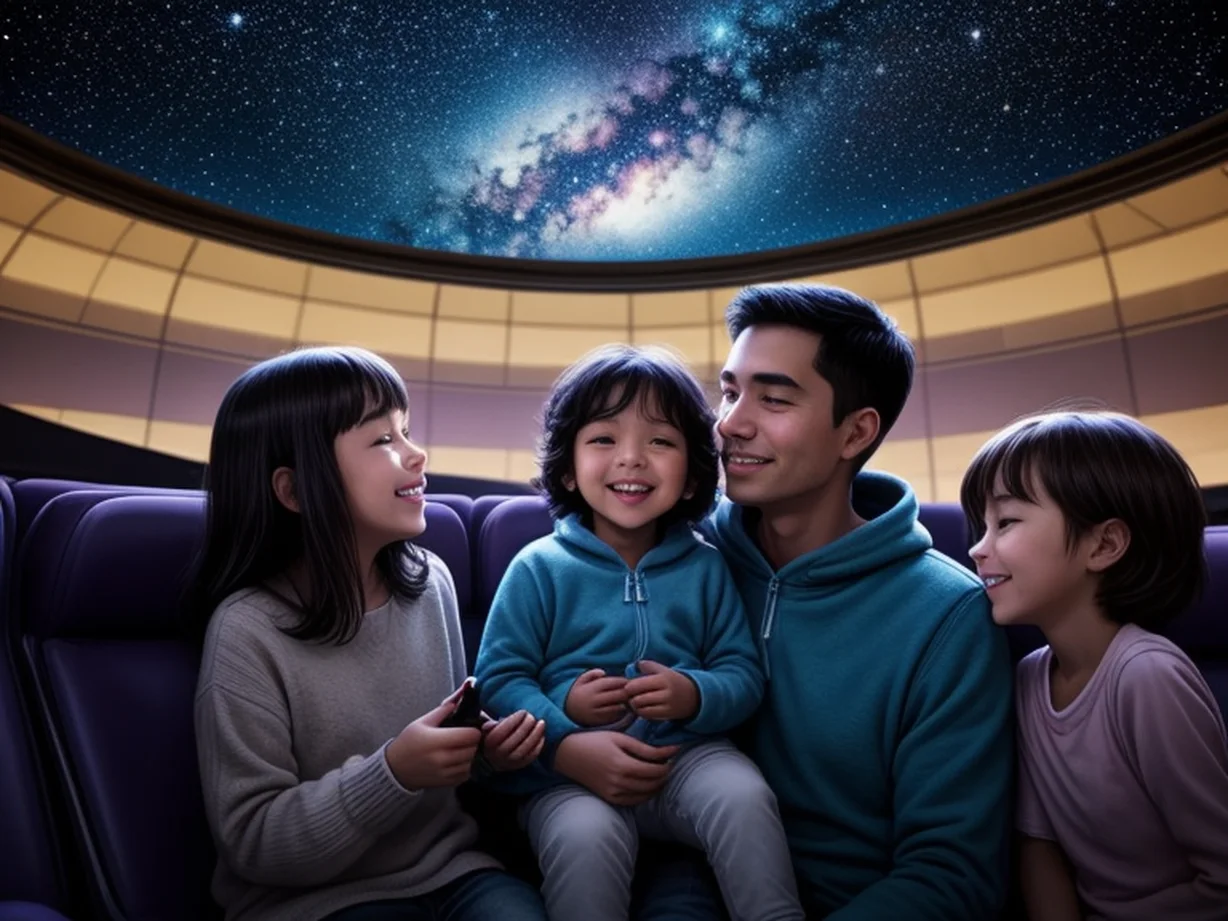
A planetarium show is a cozy, warm way to “see” the night sky in winter, especially for kids who can’t stay up late. Many science museums have one; check age guidance and show length, since a short show is better for little ones. For fun, free space reading at home, NASA Space Place has kid-friendly explainers and games.

🌙 One “do together” idea to start with: the Moon date
Pick a clear evening this month. After dinner, put on coats, grab a flashlight and step outside for ten minutes. Find the Moon together, talk about its shape, and give it a silly name. Come back inside for warm milk and draw what you saw. That’s it. Repeat once a week and your child will start noticing the Moon changing shape. We share plenty more simple ideas like this in our books, but this one is a perfect start.
For more ways to fill the long days after Christmas, see our winter break activities for kids at home and Christmas bucket list for kids.
Calm gifts
Quiet-time space gifts (for travel days and winter break)
Every space fan needs at least one gift that isn’t loud, bouncy or battery-powered. Quiet gifts are the ones you’ll be grateful for on a long drive to grandma’s, a snowy afternoon, or a bedtime when someone isn’t ready to sleep.
What makes a good quiet space gift?
- No setup: they can start on their own, in the car or at the kitchen table.
- Fits their age: big, simple pictures for little ones; more detail for older kids.
- Calm, not wired: no flashing lights or sound effects.
- Portable: easy to pack in a travel bag or a Christmas Eve box.
Good choices include a space picture book for bedtime, a sticker book, and a coloring book. Coloring in particular is a lovely way for a space fan to “make” the universe: deep blue skies, swirly galaxies, planets in any color they like. If you want ideas for the toddler on your list, our guide to gifts for kids who love to color has more.
Made for space fans · reading age 4–17
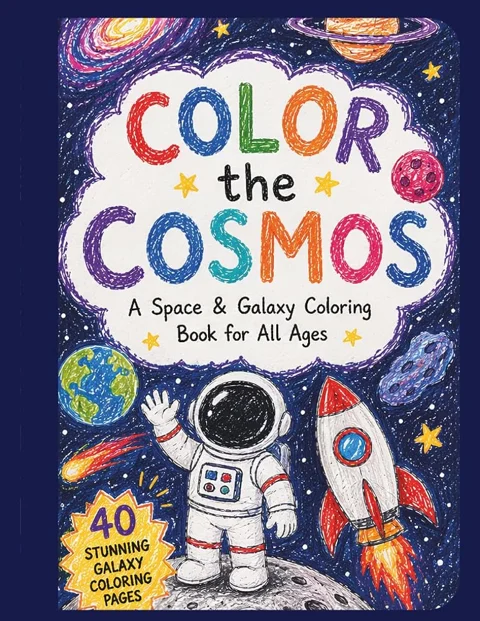
Color the Cosmos: A Space & Galaxy Coloring Book
Our own coloring book of planets, stars, galaxies, nebulae and astronauts, with thick lines and single-sided pages in a large 8.5 × 11 inch size. We won’t show every page here (that’s half the fun of opening it), but it’s made for the whole family to share. Paperback, $9.99.
See Color the Cosmos on Amazon →Our own book; we earn money if you buy it.


Family
Grandparents, siblings and the duplicate problem
Give each relative a “lane”
When a child loves one thing, everyone buys that thing. A short, friendly message in early December saves a lot of returns:
💬 A message you can copy
“Leo is still completely in love with space, especially the Moon right now! To avoid doubles this year, would you like to be in charge of a space book? Aunt Mia is doing astronaut pajamas, and we’re planning a planetarium trip. Here’s his little wish list if it helps.”
Most relatives are relieved to be told what to get. Grandparents also make wonderful “experience givers”: a promise to watch the space station fly over together, or a planetarium afternoon, can mean more to both of them than another toy.
When a younger sibling is in the house
A set of mini astronauts labeled 3+ is a great gift for a five-year-old and a choking risk for a one-year-old. Give the older child a special box or high shelf for “mission control” pieces, and make it part of the gift: “These are yours, and they live up here so the baby stays safe.” Many kids love being trusted with that job.
When it’s all getting too much
Space-themed everything can pile up fast. Try a simple rotation: keep a few favorites out and put the rest in a lidded box, then swap every few weeks. Kids often rediscover old toys with real excitement, and you don’t need to buy more.
The fun part
Wrapping and the big reveal
For a space fan, the unwrapping can be half the fun. You don’t need elaborate crafts; one playful touch is plenty. Here’s our favorite, because it takes five minutes:
The “launch countdown.” Before your child opens their space gift, everyone counts down together from ten, “3, 2, 1… blast off!”, and the paper comes off on “blast off.” Tape our free “3, 2, 1… open me!” tag from the printable kit to the box so they know it’s coming. Little ones love the drama, and it slows the unwrapping rush for a moment.
Beyond that, keep it simple: dark blue or brown paper your child can decorate with star stickers, and our free space gift tags. Small space gifts also make lovely stocking stuffers for toddlers.

Your plan
Sort the whole space gift plan tonight (about 30 minutes)
You don’t need a free weekend. Here’s a simple routine for after bedtime, with a cup of tea and page 2 of the free planner.
5 minutes
Name the space fan style
Think about the last few days of play and tick the boxes: builder, sky-watcher, fact-finder, pretender, maker or night-out kid.
5 minutes
Decide on the telescope
Yes, not yet, or “try first.” If it’s “try first,” look up your library or a local club event now.
10 minutes
Pick one main gift and one small one
One gift that takes their favorite space play a step further, plus one quiet gift for stockings or travel.
5 minutes
Run the safety check
Age label, small parts (if a sibling is under 3), button batteries, magnets, laser labels.
5 minutes
Hand out lanes and circle a sky date
Text relatives a category each, and put December 13 (meteors) and December 23 (full Moon) on the family calendar.
💛 Be kind to yourself
If the plan isn’t perfect tonight, that’s fine. A rough plan you finish beats a perfect one you never start.
Troubleshooting
Common problems & easy fixes
| Problem | What to do |
|---|---|
| Your child wants “a real rocket to the Moon” | Honor the dream: a cardboard rocket, an astronaut costume and a space station sighting make the wish feel real without a rocket in the driveway. |
| The telescope never gets used | Make it a regular event: one short “Moon date” a week with a grown-up. The Moon is the easiest first target, and five minutes is enough. |
| It’s cloudy every night | Plan a backup: a planetarium show, a library space book, or “sky-watching” from the window when it clears. |
| Your child is scared of the dark | Start indoors with a planetarium visit or star stickers, use a red flashlight outside, and keep sky-watching short and cuddly. |
| Their interest shifts from planets to aliens to robots | Choose flexible gifts (a big space book, binoculars, a coloring book, an outing) rather than one expensive single-topic toy. |
| Relatives send duplicates | Thank them warmly, keep one, and save the other for a birthday or a rainy-day box. No guilt needed. |
| Big gift, short attention | Rotate: put half the space toys away in January and bring them back in March. “New” toys, no spending. |
Need ideas for the quiet hours? See our quiet time activities for 3-year-olds and our toddler bedtime routine guide (handy after a late night of sky-watching).
Save this
Space gift checklist
Screenshot this, or use the planner page in the free kit below.
- Watch your child play for a few days and note their space fan style
- Decide: telescope yes, not yet, or try first (library or club)
- Set a total budget per child
- Pick one main gift that takes their favorite play one step further
- Add one small quiet gift (book, coloring, stickers) for stockings or travel
- Plan one experience: space station sighting, star party, planetarium or Moon date
- Check age labels and small parts if anyone in the house is under 3
- Check battery compartments are screwed shut
- Avoid loose or small magnets
- Check laser toys say “Class 1 Laser Product”; no laser pointers for kids
- Teach the rule: binoculars and telescopes never point at the Sun
- Give relatives a “lane” to avoid duplicates
- Circle December 13–14 and December 23 on the calendar
- Print the free space gift tags
Free download
Free printable: space fan’s gift kit (3 pages)
🎁 Free printable
Free Space Gift Tags & Wish List (3-page PDF)
A “My Space Wish List” page your child can draw or write on and color, a grown-up space gift planner with the space-fan quiz, December 2026 sky dates and a quick safety check, and 8 space explorer gift tags to color. US Letter, prints in color or black and white.

Download the free space gift kit (PDF) →
Free for personal and classroom use. No email or sign-up needed.
Please save this page to Pinterest so you can find the printable again next year, and share it with a friend who has a little astronaut too. We add a new free printable every week through winter break, so check back soon, or browse all of them on our activity ideas hub. More in this series: dinosaur lovers, animal lovers, car lovers and kids who love to color.
From the ColorJoy shelf
Our picks for little space fans
If you’re looking for a quiet, screen-free gift for a space-loving child, these are our own books, made with bold lines, big pictures and little hands in mind. Prices are as listed on Amazon.com when we checked on 25 November 2026.
Top pick for space fans · Reading age 4–17
Color the Cosmos: A Space & Galaxy Coloring Book
Planets, stars, galaxies, nebulae and astronauts, with thick lines and single-sided pages. 89 pages in a large 8.5 × 11 inch size, made for kids, teens and grown-ups to share.
$9.99Paperback · Amazon.com
Our own book; we earn money if you buy it. Price as listed on Amazon.com when we checked on 25 November 2026; please confirm on the product page.
For sci-fi and robot fans
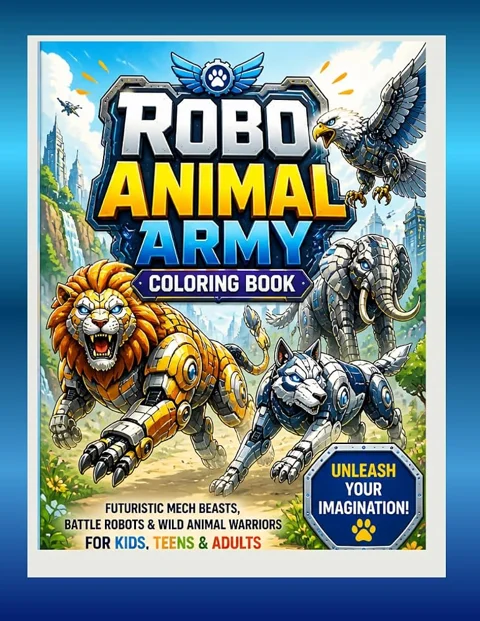
Robo Animal Army Coloring Book
Futuristic mech beasts, battle robots and humanoid bots with bold, easy thick lines, for kids, teens and adults. A fun match for the child whose space stories always include robots.
$9.99Paperback · Amazon.com
Our own book; we earn money if you buy it. Price as listed on Amazon.com when we checked on 25 November 2026; please confirm on the product page.
For winter break at home
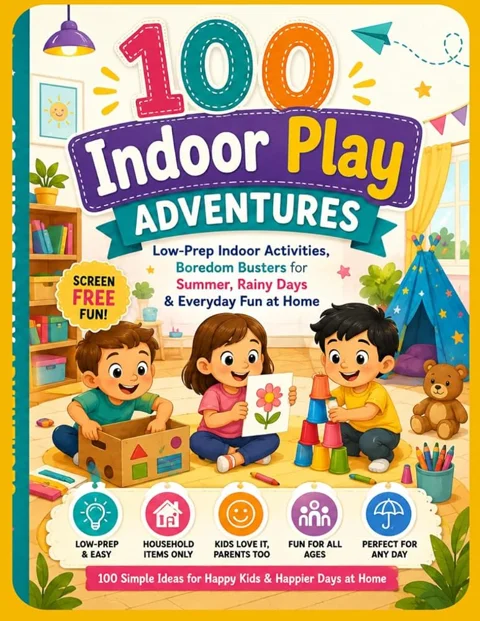
100 Indoor Play Adventures
Our book for parents of kids about 3–11: low-prep, screen-free indoor activities using everyday household items, for snow days and long afternoons.
$14.99Paperback · Amazon.com
Our own book; we earn money if you buy it. Price as listed on Amazon.com when we checked on 25 November 2026; please confirm on the product page.
Browse the Mr A G author store on Amazon for all our coloring and activity books. Prefer printables? Our full printable store is at payhip.com/BookBonbon.
📚 Related books from ColorJoy
If this topic is on your mind, these titles from our own shelf fit well alongside it.
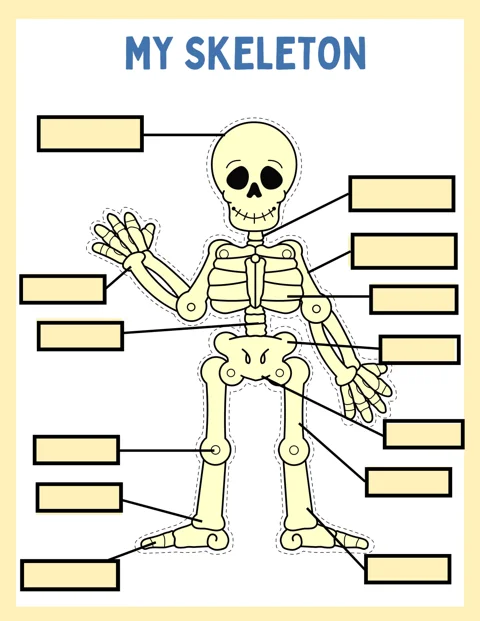
Human Body Busy Book (printable PDF, ages 3–8)
Human Body Busy Book (printable PDF): 20+ pages of matching, labeling and cut-and-paste for curious kids ages 3–8. For the fact-finder who wants to know how everything works, including themselves.
$3.99 printable PDF on Payhip · Instant PDF download; print at home
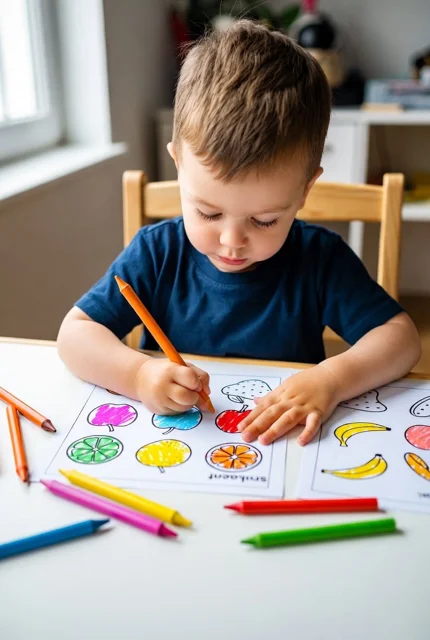
Preschool Coloring & Activity Bundle (printable PDF)
Preschool Coloring & Activity Bundle (printable PDF): seven kinds of activities and 100+ coloring pages for toddlers through kindergarten. Handy for a younger sibling over winter break.
$8.99 printable PDF on Payhip · Instant PDF download; print at home
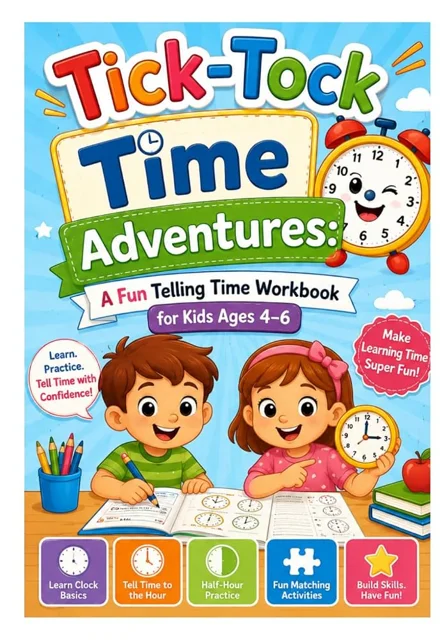
Tick-Tock Time Adventures: Telling Time Workbook (Ages 4–6)
Tick-Tock Time Adventures (paperback): a telling-time workbook for kids. A nice next step for the child who keeps asking “how long until the space station comes?”
$9.99 paperback on Amazon.com · Paperback, shipped by Amazon
These are our own books and printables, and we earn money if you buy them. Prices as listed on Amazon.com and Payhip when we checked on 25 November 2026; prices can change, so please confirm on the product page.
Frequently asked questions
What are good gifts for kids who love space?
Start with how your child plays. Builders love rocket toys and cardboard; sky-watchers enjoy kid binoculars and a Moon chart; fact-finders like space picture books and solar system puzzles; pretenders love astronaut costumes; makers enjoy space coloring books; and night-out kids love a planetarium or a star party.
Is a telescope a good gift for a young child?
It can be, if a grown-up is excited to use it with them and the child can be patient with an eyepiece. Many families try first: some public libraries lend beginner telescopes, and local astronomy clubs host free public viewing nights. Kid binoculars are an easy first step.
What is a good space gift for a 3-year-old?
Choose big, sturdy things made for their age: a board book or picture book about the Moon and stars, a chunky rocket toy, an astronaut costume without small loose parts, or a planetarium visit. Avoid small parts, button batteries and loose magnets, and keep glow stars out of reach.
Are glow-in-the-dark stars safe for toddlers?
Many are small enough to be a choking hazard, so they’re usually labeled for older children. If you use them in a toddler’s room, put them high on the ceiling, out of reach, and check for any that fall down.
Are star projectors and laser toys safe?
Most star projectors use LEDs. If a toy uses a laser, the FDA advises looking for a “Class 1 Laser Product” label, never aiming a laser at people or animals, and not giving laser pointers to children.
When is the Geminid meteor shower in 2026?
The International Meteor Organization lists the peak night as December 13–14, 2026, with only a thin crescent Moon, so skies should be fairly dark. You can start looking in the evening; even a short look with little kids can catch a meteor.
How can my child see the International Space Station?
Use NASA’s free Spot the Station app or website to find upcoming passes over your location. Sightings happen near sunrise or sunset, and the station looks like a bright, steady light moving across the sky without flashing.
Is a space coloring book a good gift?
For many kids, yes. It’s affordable, screen-free and easy to pack for travel. For younger children, look for thick lines and single-sided pages; for families, a book that kids and grown-ups can share is a nice bonus.
Is there a free printable for space gifts?
Yes. Our free 3-page kit includes a kid’s space wish list to color, a grown-up gift planner with December 2026 sky dates and a safety check, and 8 space gift tags to color and cut out. No email or sign-up needed; it’s free for personal and classroom use.
Wishing your little astronaut a cozy, starry Christmas ✨
We hope this guide helps you spend a little less time scrolling through rocket toys and a little more time looking up together: waving at the space station, naming the Moon, coloring planets at the kitchen table. One well-chosen gift is plenty. Come back soon: we add a new free printable every week through winter break.
If you’d like a quiet, screen-free space gift this year, our pick is Color the Cosmos: A Space & Galaxy Coloring Book ($9.99).
See Color the Cosmos on Amazon →
More December help: Christmas gifts for 4-year-olds, Christmas traditions for toddlers and snow day activities for toddlers.
Photos: Unsplash (Unsplash License). Illustrations: AI-generated for ColorJoy. Book images and printable art: ColorJoy / Mr A G. Safety information summarizes CPSC, FDA and NASA guidance; always follow product age labels. Sky dates from the International Meteor Organization and EarthSky; check local weather.